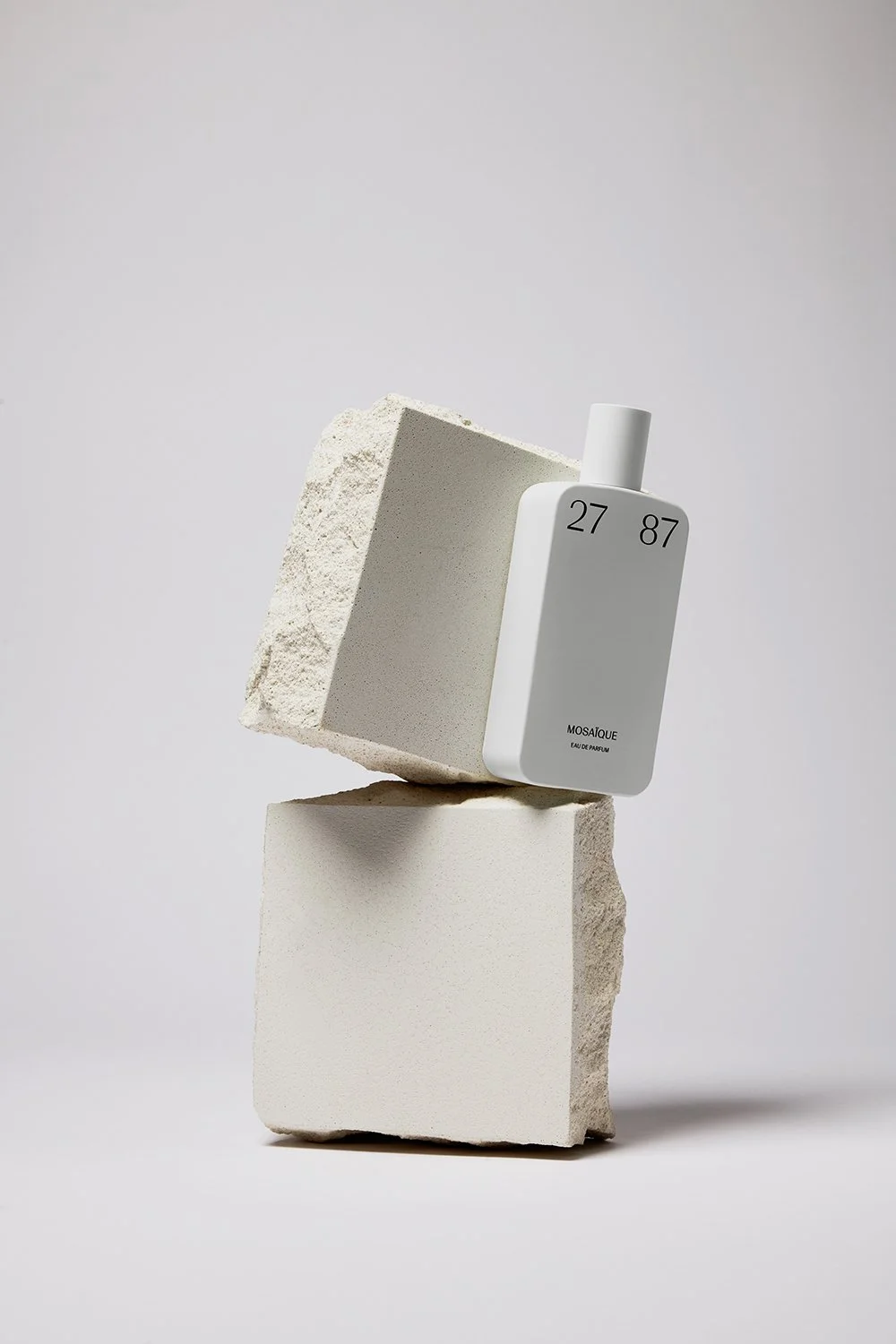
WHAT DOES NOW SMELL LIKE?
THE SCENT OF THE PRESENT
THE SCENT OF THE PRESENT
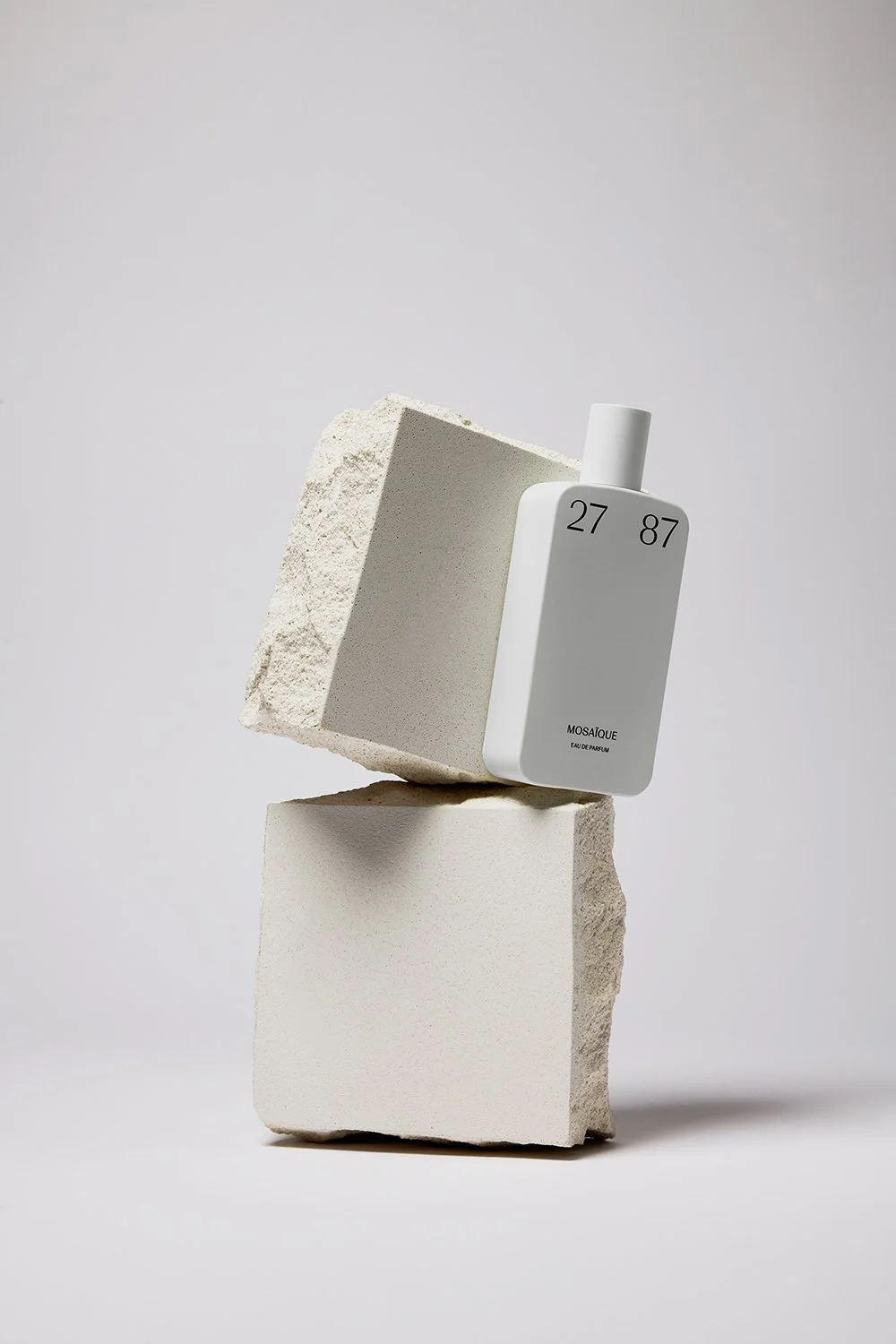
In a world deeply rooted in tradition, 27 87 introduces a fresh, personal, and dynamic approach to the art of perfumery. Guided by the powerful principle that “No scent like the present,” the brand founded by Romy Kowalewski in 2016 aims to create fragrances that not only evoke memories but also enhance the experience of the present moment.
For centuries, fragrance creation has followed a well-trodden path, relying on time-honoured ingredients and techniques. These traditions have crafted a rich tapestry of scents, each tied to past memories, stories, and emotions. While 27 87 respects this heritage, its focus is firmly on capturing the vitality of the present.
Romy Kowalewski’s vision has been shaped by her lifelong passion for scent. Her journey began during her school years when her mother gifted her a handmade perfume: “Everyone at school recognized me by my scent. What I found most appealing was that this aroma was uniquely mine and couldn’t be associated with anyone else.” This early experience was the foundation for 27 87, where Romy realised that a fragrance is more than just a scent—it’s an experience. “The art of perfumery can’t simply be mastered with dedication and patience alone, as many of us have a dulled sense of smell,” she reflects.
27 87 creates fragrances not for mass appeal but for self discovery. This meticulous approach is evident in every aspect of their process. The brand uses maceration—a slow ageing method that enhances depth and longevity—to ensure each scent reaches its full potential. “Once you have the perfume formula and mix the various oils, it must be macerated. If it’s a fresh perfume with bright notes, it will macerate for less time than a dense floral, which requires more time to develop its intricate facets. It’s an art with no strict rules.”
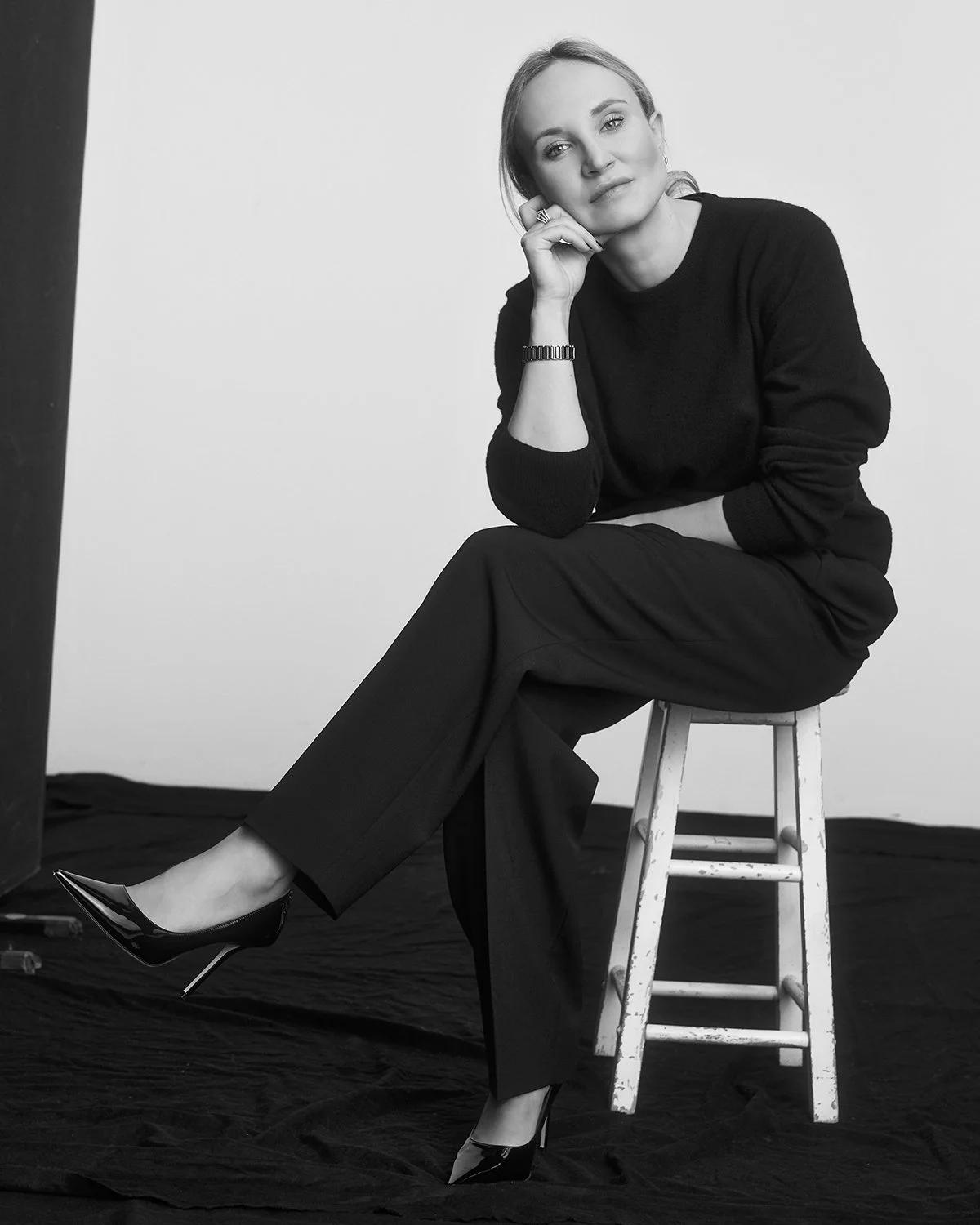
Before launching Per sē, the scent logo of 27 87, Romy had been creating them for other brands such as FC Barcelona, UNGER and Brooke Gregson. So it just felt natural to her to give a perfume brand its own olfactive logo. “The most enjoyable part of creating a perfume brand was capturing a concept in a smell. However, it is not until the fragrance is launched that the creative process is complete”. In the competitive world of perfumery, Romy emphasises that talent alone isn’t enough: “To stand out in the perfume industry, you need the right team.” The production, marketing, and distribution of 27 87’s scents have been crucial to the brand’s growth, which now spans over forty countries. Barcelona, the company’s headquarters, plays a vital role in its success. “Although we’re a global company, we conduct everything here, where the industry is well-developed thanks to companies like Puig. The only thing not from Barcelona at 27 87 is me,” Romy laughs, noting her German origins. “There’s so much potential here that I want to explore.”
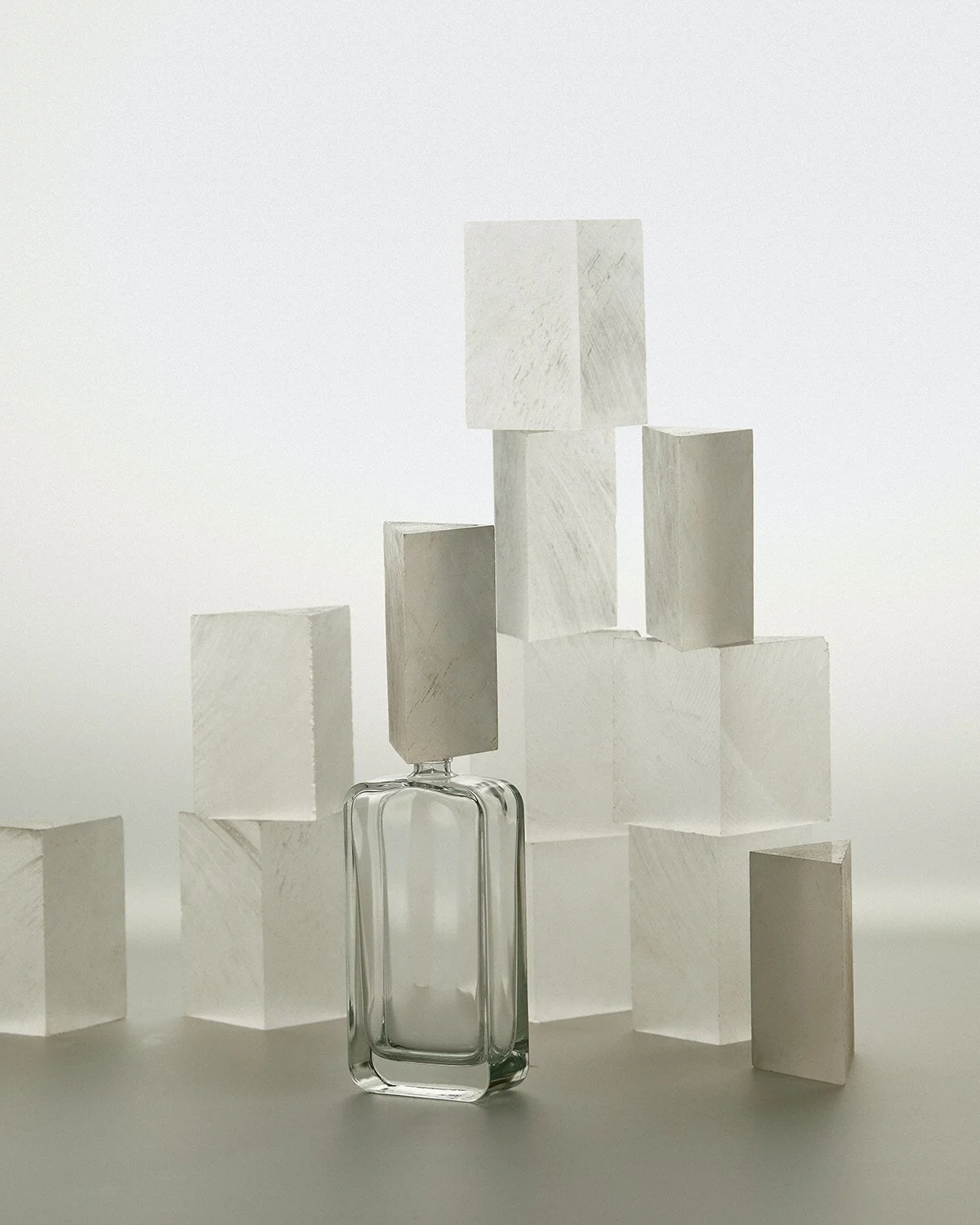
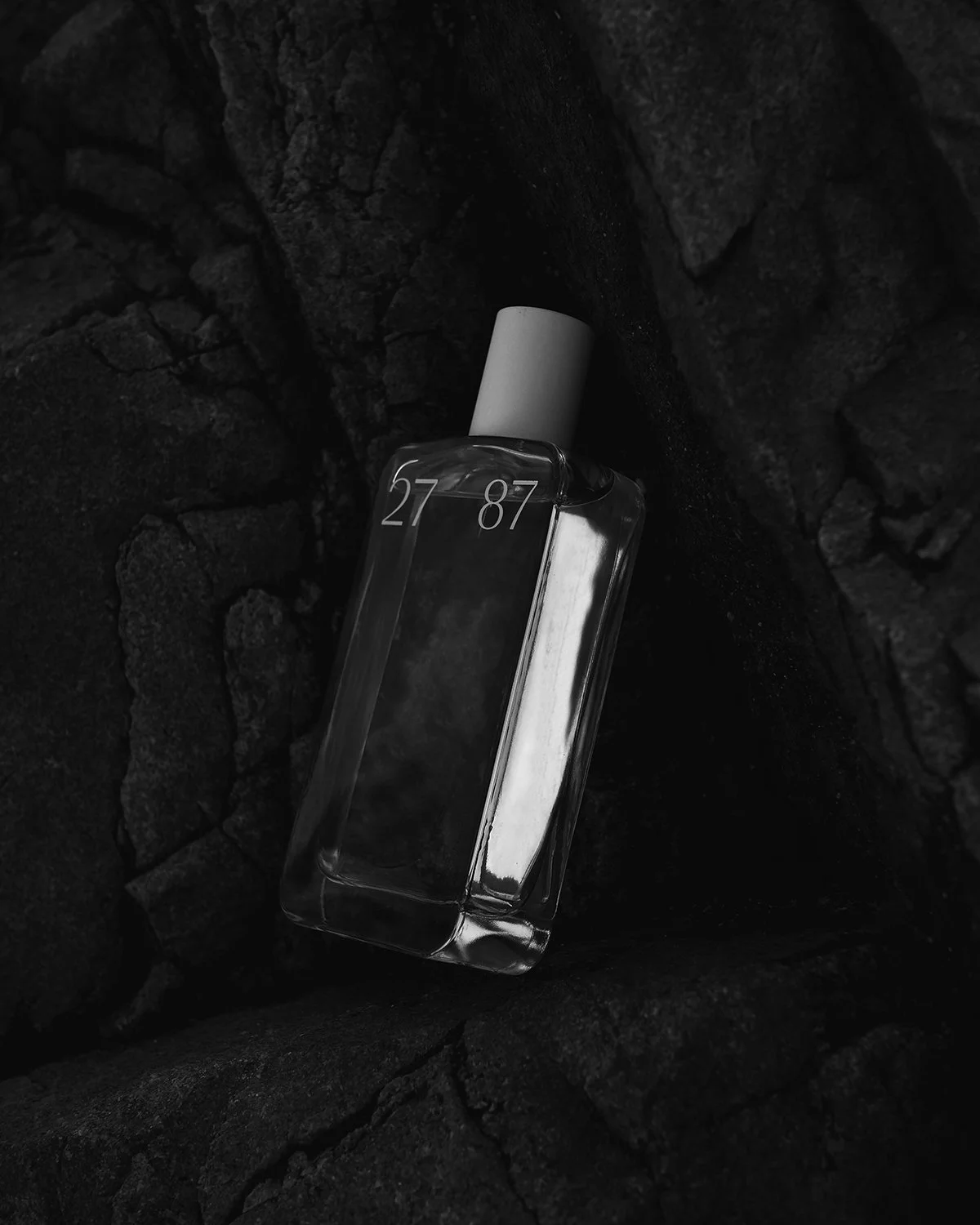
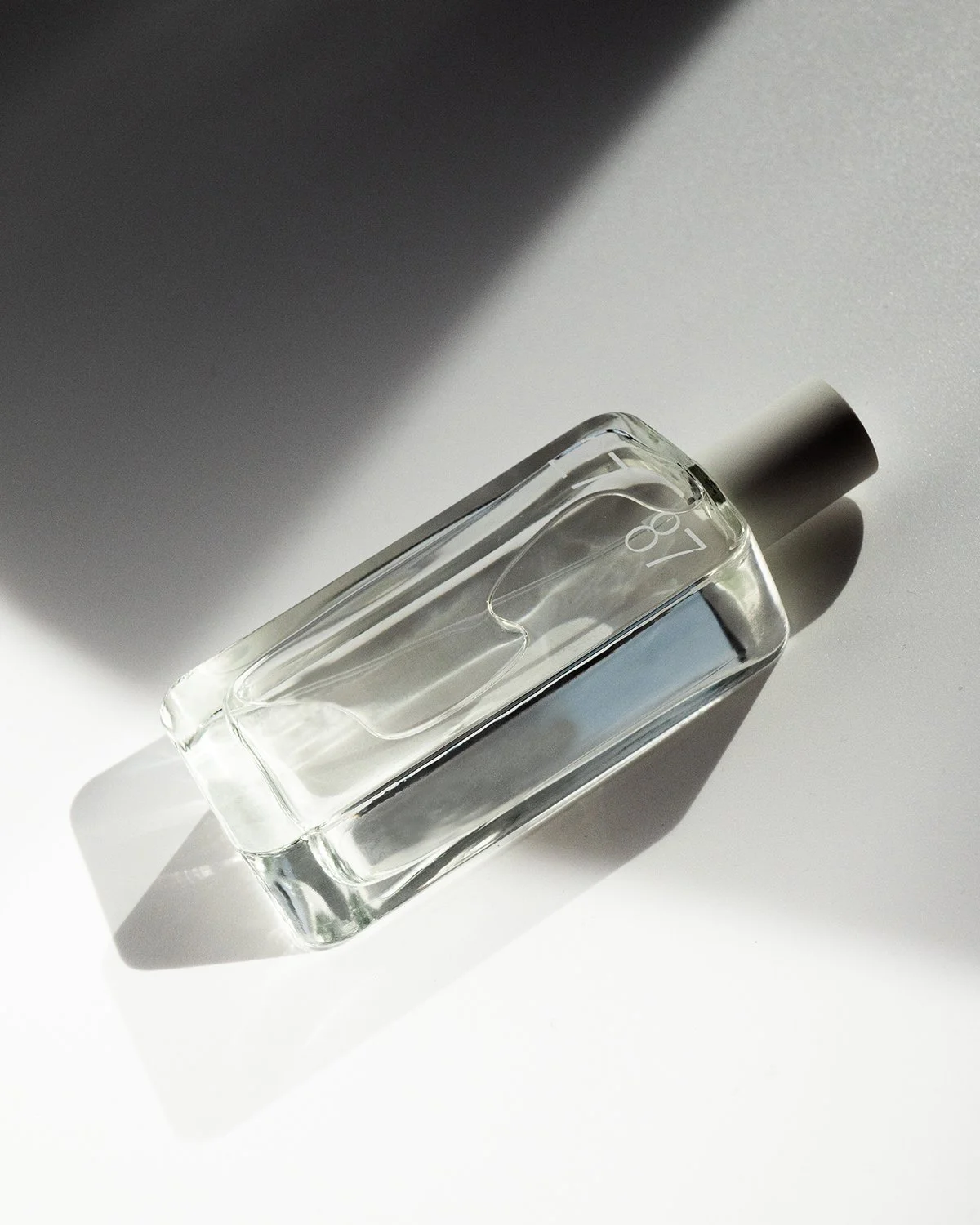
Romy’s concept of ‘chemistry as artistic expression’ fully comes to life through collaborations with renowned perfumers such as Shyamala Maisondieu, Jordi Fernández, and Gael Montero. These partnerships have resulted in distinctive, one-of-a-kind scents, blending technology with olfactory art. “I view perfumery as an art form. Before starting my own brand, I often wondered what the stories behind other perfumes had to do with mine. With 27 87, I wanted to create fragrances inspired by the present and daily life, with concepts anyone can relate to.” Art is a form of expression that always draws inspiration from different aspects of life. What makes art so unique is that it's often shaped by the present moment, reflecting the society and environment it was created in. The brand’s fragrances serve as blank canvases that enhance and enrich the wearer’s experience of the present moment, rather than dictating what they should feel or remember. This is why the bottles and packaging are white: “The bottle absorbs the experiences of the wearer, rather than dictating how the scent should be associated,” summarises Romy. The beauty of art lies in how each person sees and interprets it. From the viewer's perspective, art is experienced in a personal and individual way. It’s not tied to strict definitions or categories but is free from judgments and can be understood however the viewer chooses. Every person can find their own meaning in it, making it a truly open and ever-evolving form of expression.
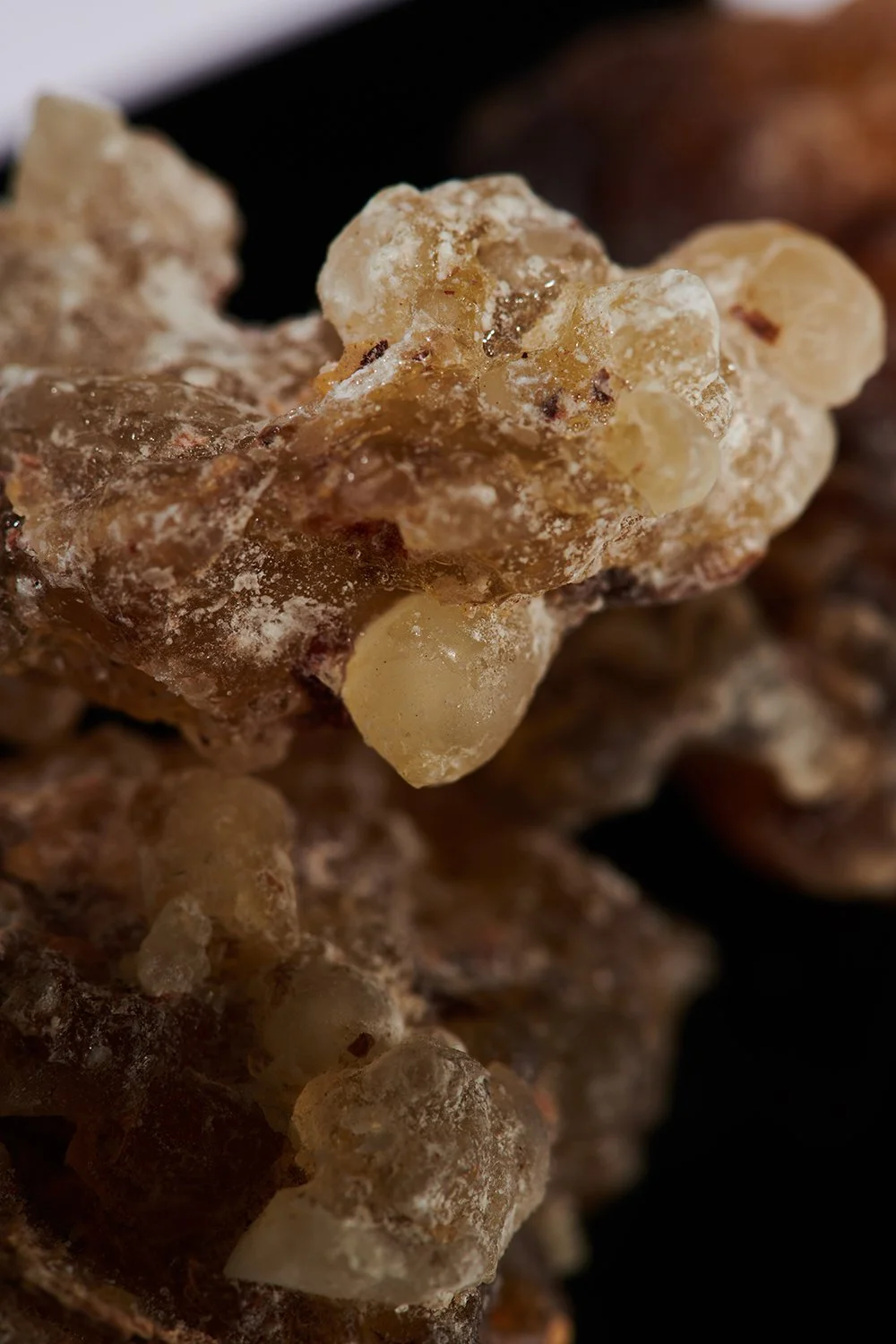
With her practice, Romy invites us to embark on our own journey through the creation of new and unexpected perfumes from rare and uncommon ingredients. Her ‘scent of the present’ involves developing fragrances such as akigalawood, which is made out of in genetic bliss; the unusual nana-mint from Morocco in wandervogel, and the one that is in the oven now, inspired by the Asian fruit Durian: “I’m currently experimenting with this fruit which smells very different to us as Euopeans” she reveals, with a planned launch in May 2025.
By embracing the present, 27 87 is redefining the art of fragrance in the modern era. It’s a continuous co-creation between the scent and the individual, positioning 27 87 as a bold and innovative leader in contemporary perfumery.
Christophe Mathieu
PIOLA
INTERVIEW To christophe mathieu FOR MARSET IN COLLAbORATION WITH FOLCH
How does one design a light that translates the playfulness of an endlessly spiraling ribbon? The Piola collection is about imitating this fluidity of infinite movement, in search of a balance between the diffusion of light and the creation of shadows.
A central metal column holds more than 5 meters of spiraling, laminated band, enveloping, protecting, and sifting the light for beauty and comfort. Several different types of light coexist here: direct downward light, indirect reflected light, and a light that sneaks between the edges of the spiral, illuminating the fixture itself with a warm, homey glow.
Brand Series, Creative Direction in Production, Strategy and Design Thinking. Marset. 2018
PIOLA
Christophe Mathieu , 2017
Christophe Mathieu
PIOLA
¿Cómo conseguir que una lámpara transmita la ligereza de una cinta que gira en espiral sin fin? La colección Piola trata justamente de imitar esta fluidez de movimiento infinito, que flota alrededor de la luz, en busca de un equilibrio entre la difusión de luz y la creación de sombras.
Un eje central formado por un tubo de metal sujeta más de 5 metros de cinta laminada en espiral que envuelve la luz, la protege y la tamiza para conseguir ambientes de confort y bienestar. Y es que en la Piola conviven varios tipos de luz: luz directa hacia abajo, indirecta por reflexión, y la que se cuela entre la cinta que ilumina el objeto en sí.
Brand Series, Creative Direction in Production, Strategy and Design Thinking. Marset. 2018
PIOLA
Christophe Mathieu , 2017

JAUME RAMÍREZ
COPÉRNICA
Con tan solo las yemas de los dedos, uno puede tener la sensación de ingravidez al mover la lámpara Copérnica. Como si levitara, apenas se nota su peso, se desplaza por el espacio de forma precisa sin fricción ni resistencia.
Círculos, semicírculos, tubos y barras de diferentes diámetros y grosores, materiales y pesos distintos… Con todos estos elementos primarios, la colección Copérnica construye esculturas geométricas de luz, que establecen una relación íntima con el espacio y combinan funcionalidad con la belleza de las líneas puras.
Brand Series, Creative Direction in Production, Strategy and Design Thinking. Marset. 2018
COPÉRNICA
Ramírez i Carrillo , 2017
JAUME RAMÍREZ
COPÉRNICA
INTERVIEW to jaume ramírez FOR MARSET IN COLLABORATION WITH FOLCH
With no more than fingertips, one can achieve a feeling of weightlessness with the Copérnica lamp. As if levitating, it moves through space effortlessly, without friction or resistance.
Circles, semicircles, tubes, and bars of different diameters, materials, and weights…with the combination of these primary elements the Copérnica collection constructs geometric sculptures of light, establishing an intimate relationship with space and combining functionality with the beauty of pure lines.
Brand Series, Creative Direction in Production, Strategy and Design Thinking. Marset. 2018
COPÉRNICA
Ramírez i Carrillo , 2017
JOAN GASPAR
JAIMA
JAIMA
Joan Gaspar , 2017
interview for marset in COlLABORAtioN with FOLCH.
Through the language of textiles, Joan Gaspar has designed a light of flexible, ductile materials that sifts the light as readily as it moves with the wind. In the Jaima collection, the light is the shade and weaver of emotions.
This collection takes its name from the bedouin tents of North Africa, and is inspired by their varied fabrics and forms. The textilene shade is available in three sizes and four different colors, with a blank interior to optimize the quality of the downward light.
Brand Series, Creative Direction in Production, Strategy and Design Thinking. Marset. 2018.
JOAN GASPAR
JAIMA
Dressing the light
JAIMA
Joan Gaspar , 2017
entrevista a joan gaspar para marset en colaboración con FOLCH.
Con el textil como lenguaje, Joan Gaspar ya no trata solo de diseñar sino también de confeccionar y para ello utiliza un material dúctil, flexible, que tamiza la luz, que se mece con el viento pero se mantiene firme. En la colección Jaima la luz es la pantalla y el tejido la emoción.
Esta colección toma el nombre de Jaima, esa tienda propia de los beduinos del norte de África, inspirándose en sus telas y sus formas. La pantalla de textilene está disponible en tres tamaños y cuatro colores distintos pero con el interior siempre en blanco para optimizar la calidad de la luz que es directa y hacia abajo. Una vez definido el difusor, se añade una estructura versátil con cambios de altura y rotación que permite lanzar la luz, moverla y hacerla más o menos extensible.
Brand Series, Creative Direction in Production, Strategy and Design Thinking. Marset. 2018
GUISE by STEFAN DÍEZ
TOTAL INTERNAL REFLECTION
TOTAL INTERNAL
REFLECTION
When I was little, I was scared of the dark. Dusky shadows awoke feelings of unease. I remember waking up in my room while my parents were in the lounge, watching TV or having a drink. It is odd how switching on the little bedside lamp made me feel snug and protected, as if in a safe haven.
-
Advertorial story about Guise lamp by Stefan DíeZ for Vibia.
-
-
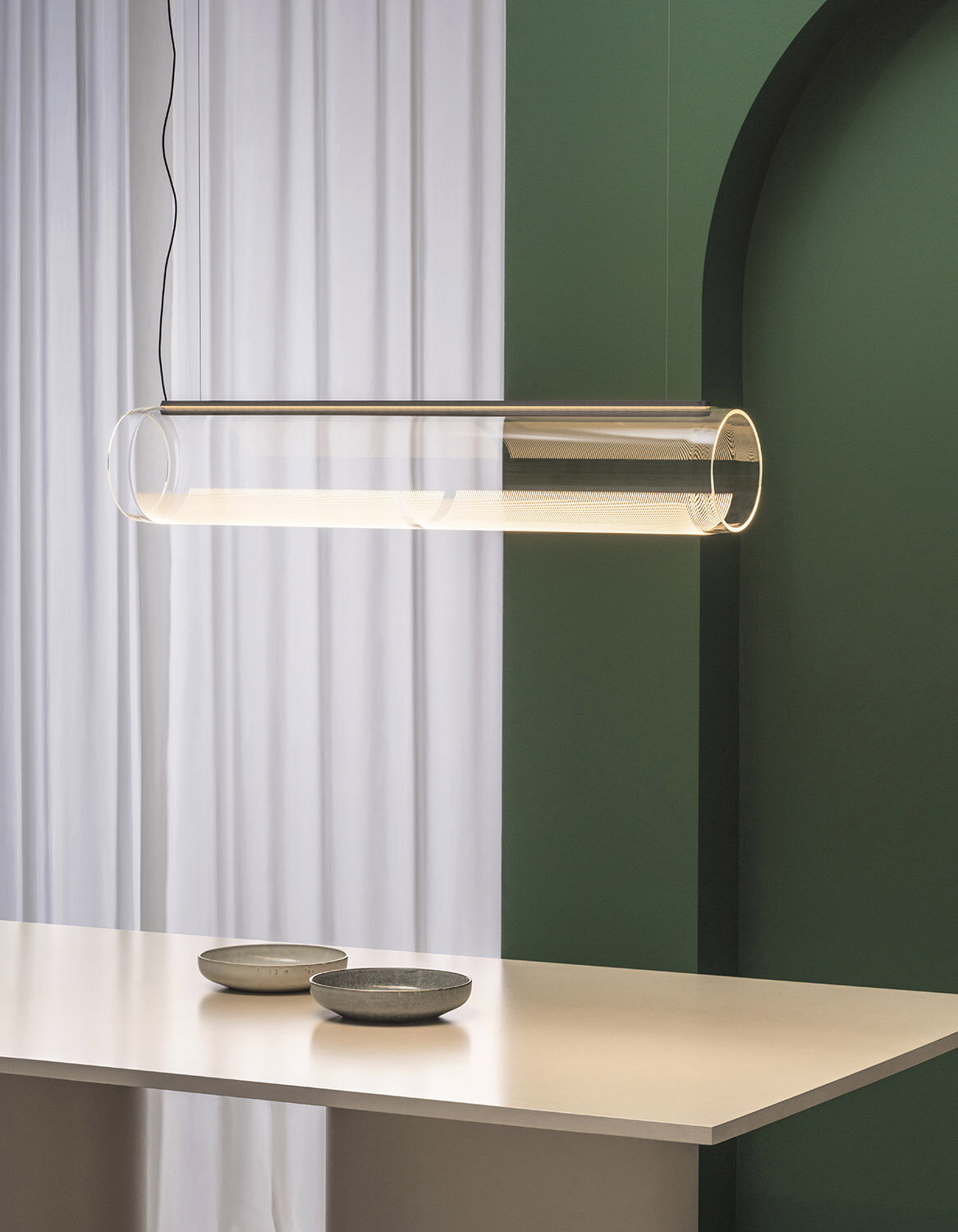
Light is a beam that we can only embrace, accompany and magnify. The design of the form used to radiate it determines the strength and projection of its rays. For Stefan Díez, the starting point for the creation of the Guise lighting collection was to explore the link between luminosity and transparency. In his work, he tends to seek integral design systems, in this case aspiring to achieve total internal reflection.
“The mystery of light, its origin, form and perception have all been studied and analysed in the field of philosophy for centuries. Depending on the form it takes, this then determines our thinking and our world. ”
Based on the idea that light is invisible until it reaches an edge, he chose glass as the material to moderate this relationship. It is no easy task to try and shape light through transparency, but Vibia and the designer both enjoy setting themselves a challenge as a way of coming up with innovative solutions. The initial item that was designed for the collection is a disc-shaped luminaire fixed to a wall that acts as a reflector, transforming the disc into a celestial body that floats in space, radiating a perimeter halo of light. In the case of the tubular luminaire, the beam of light travels through the cylinder, only becoming visible when it reaches the pattern engraved in the glass, the reflective material in this sinuous version.
The mystery of light, its origin, form and perception have all been studied and analysed in the field of philosophy for centuries. Depending on the form it takes, this then determines our thinking and our world. Vibia designs products and generates languages that are conceived to interpret light. If Platon’s allegory of the cave teaches us that shadows distort our perceptions and suffocate our capacity to think, it is only through clarity that the world and its complexity can be understood. I am no longer scared of the dark, but light continues to be my refuge. Vibia sums it up like this: life is all the more beautiful when light forms part of it.
GUISE by STEFAN DÍEZ
REFLEXIÓN INTERNA TOTAL
REFLEXIÓN INTERNA
TOTAL
Cuando era pequeña tenía miedo a la oscuridad. Las sombras generadas por la escasez de luz me inquietaban. Recuerdo despertarme en mi habitación mientras mis padres estaban en el salón, viendo la televisión o tomando una copa. Es curioso cómo encendiendo la pequeña lámpara a mi lado, me sentía protegida y en un lugar seguro en el que refugiarme.
-
Publireportaje sobre la lámpara Guise diseñada por Stefan DíeZ para Vibia.
-
-
La luz es un haz que únicamente podemos abrazar, acompañar y aupar. Por eso, el diseño de aquella forma que la dibuja, decide su proyección y potencia. Para Stefan Díez, la idea de explorar la relación entre luminosidad y transparencia fue el punto de partida para crear la colección de lámparas Guise. Su fórmula de trabajo surge habitualmente de la búsqueda de un método integral. En este caso, el creador ambicionaba la reflexión interna total.
“El misterio de la luz, de su origen, forma y percepción ha sido estudiado y analizado por la filosofía desde hace siglos. Según sea ésta, así será nuestro mundo y así se ordenará nuestro pensamiento.”
Partiendo del principio de que la luz permanece invisible hasta que llega a un borde, dio con el vidrio como el material adecuado para moderar dicha relación. Tratar de darle forma mediante el uso de la transparencia es un reto difícil de asumir, pero tanto a Vibia como al diseñador, les gusta la idea de establecer una meta sobre la que construir soluciones innovadoras. El disco fue el punto de partida de la colección. En ella, la pared sostiene la luminaria y actúa como reflector, lo que permite percibir la lámpara como un cuerpo radiante que flota en el espacio desprendiendo un halo perimetral. En su versión tubular, el haz viaja a través del cilindro y se hace visible cuando alcanza los patrones grabados en el vidrio, el material reflector de esta sinuosa versión.
El misterio de la luz, de su origen, forma y percepción ha sido estudiado y analizado por la filosofía desde hace siglos. Según sea ésta, así será nuestro mundo y así se ordenará nuestro pensamiento. Vibia diseña piezas y genera lenguajes para su interpretación. Si el mito de la caverna de Platón nos enseñó que las sombras deforman nuestra percepción y ahogan nuestro pensamiento, es sólo a través de la claridad cuando el mundo puede entenderse en su complejidad. Yo ya no tengo miedo a la oscuridad, pero la luz sigue siendo mi refugio. Vibia lo resume así: la vida es más bella cuando la luz forma parte de ella.