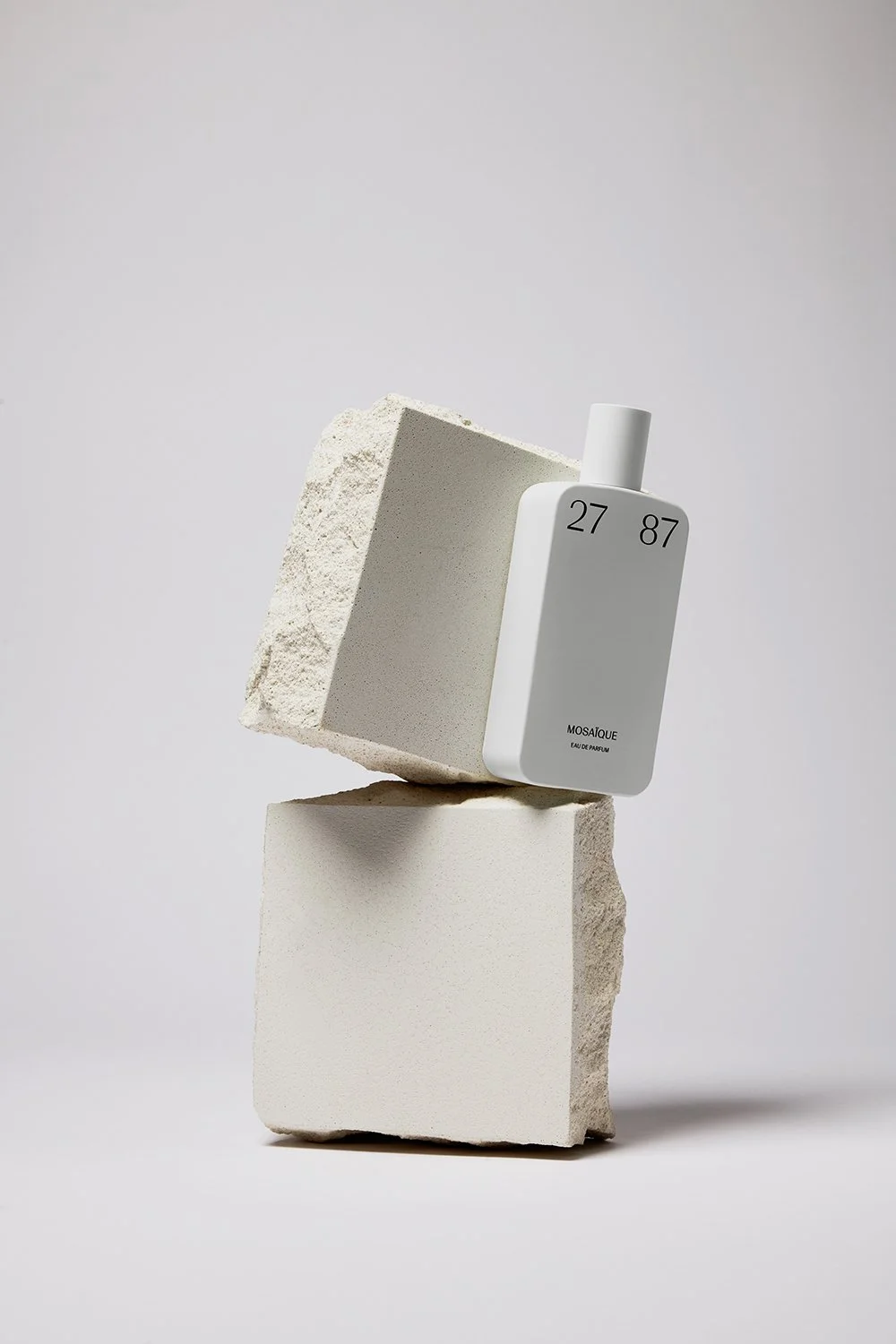
WHAT DOES NOW SMELL LIKE?
THE SCENT OF THE PRESENT
THE SCENT OF THE PRESENT
In a world deeply rooted in tradition, 27 87 introduces a fresh, personal, and dynamic approach to the art of perfumery. Guided by the powerful principle that “No scent like the present,” the brand founded by Romy Kowalewski in 2016 aims to create fragrances that not only evoke memories but also enhance the experience of the present moment.
For centuries, fragrance creation has followed a well-trodden path, relying on time-honoured ingredients and techniques. These traditions have crafted a rich tapestry of scents, each tied to past memories, stories, and emotions. While 27 87 respects this heritage, its focus is firmly on capturing the vitality of the present.
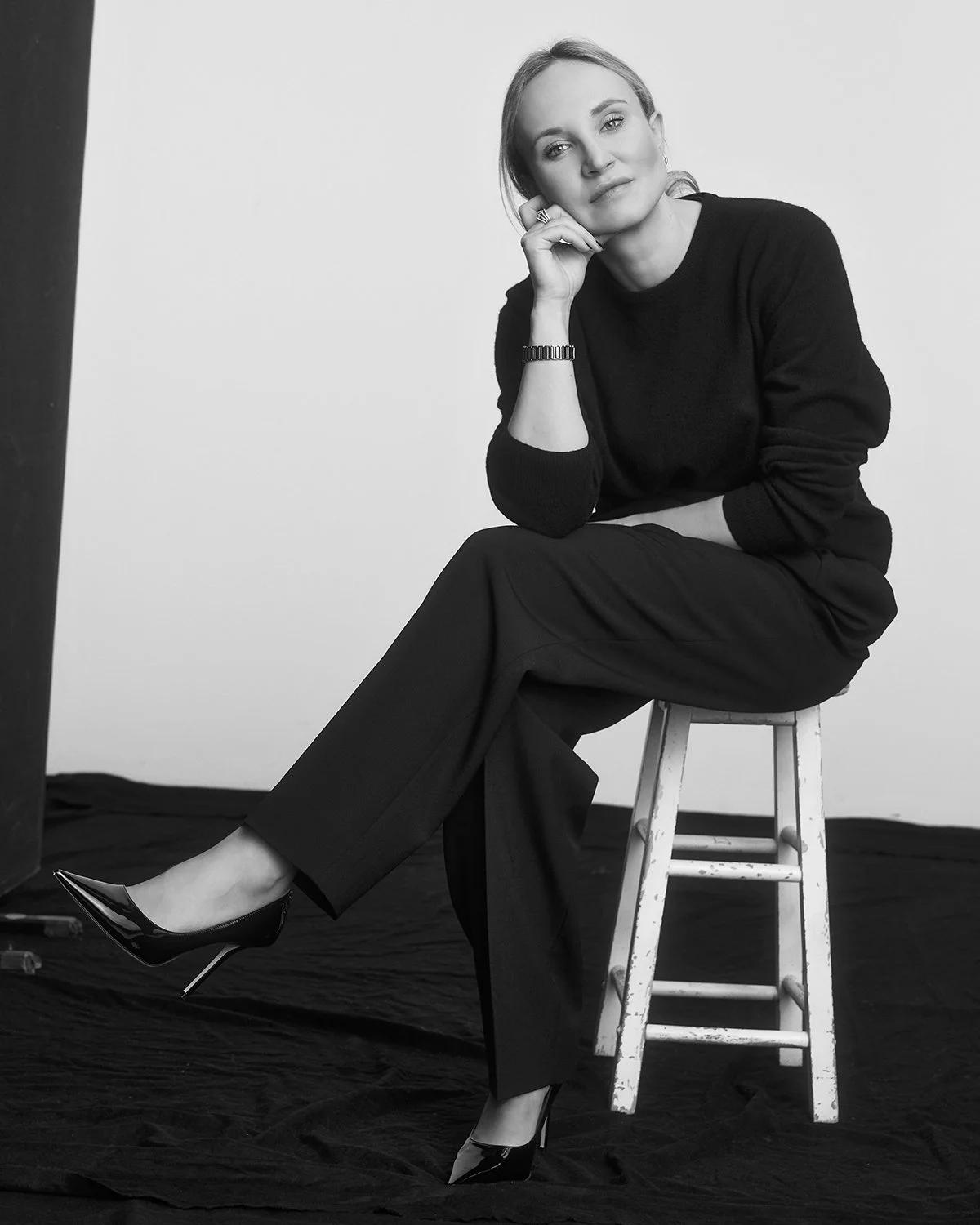
Romy Kowalewski’s vision has been shaped by her lifelong passion for scent. Her journey began during her school years when her mother gifted her a handmade perfume: “Everyone at school recognized me by my scent. What I found most appealing was that this aroma was uniquely mine and couldn’t be associated with anyone else.” This early experience was the foundation for 27 87, where Romy realised that a fragrance is more than just a scent—it’s an experience. “The art of perfumery can’t simply be mastered with dedication and patience alone, as many of us have a dulled sense of smell,” she reflects.
27 87 creates fragrances not for mass appeal but for self discovery. This meticulous approach is evident in every aspect of their process. The brand uses maceration—a slow ageing method that enhances depth and longevity—to ensure each scent reaches its full potential. “Once you have the perfume formula and mix the various oils, it must be macerated. If it’s a fresh perfume with bright notes, it will macerate for less time than a dense floral, which requires more time to develop its intricate facets. It’s an art with no strict rules.”
Before launching Per sē, the scent logo of 27 87, Romy had been creating them for other brands such as FC Barcelona, UNGER and Brooke Gregson. So it just felt natural to her to give a perfume brand its own olfactive logo. “The most enjoyable part of creating a perfume brand was capturing a concept in a smell. However, it is not until the fragrance is launched that the creative process is complete”. In the competitive world of perfumery, Romy emphasises that talent alone isn’t enough: “To stand out in the perfume industry, you need the right team.” The production, marketing, and distribution of 27 87’s scents have been crucial to the brand’s growth, which now spans over forty countries. Barcelona, the company’s headquarters, plays a vital role in its success. “Although we’re a global company, we conduct everything here, where the industry is well-developed thanks to companies like Puig. The only thing not from Barcelona at 27 87 is me,” Romy laughs, noting her German origins. “There’s so much potential here that I want to explore.”
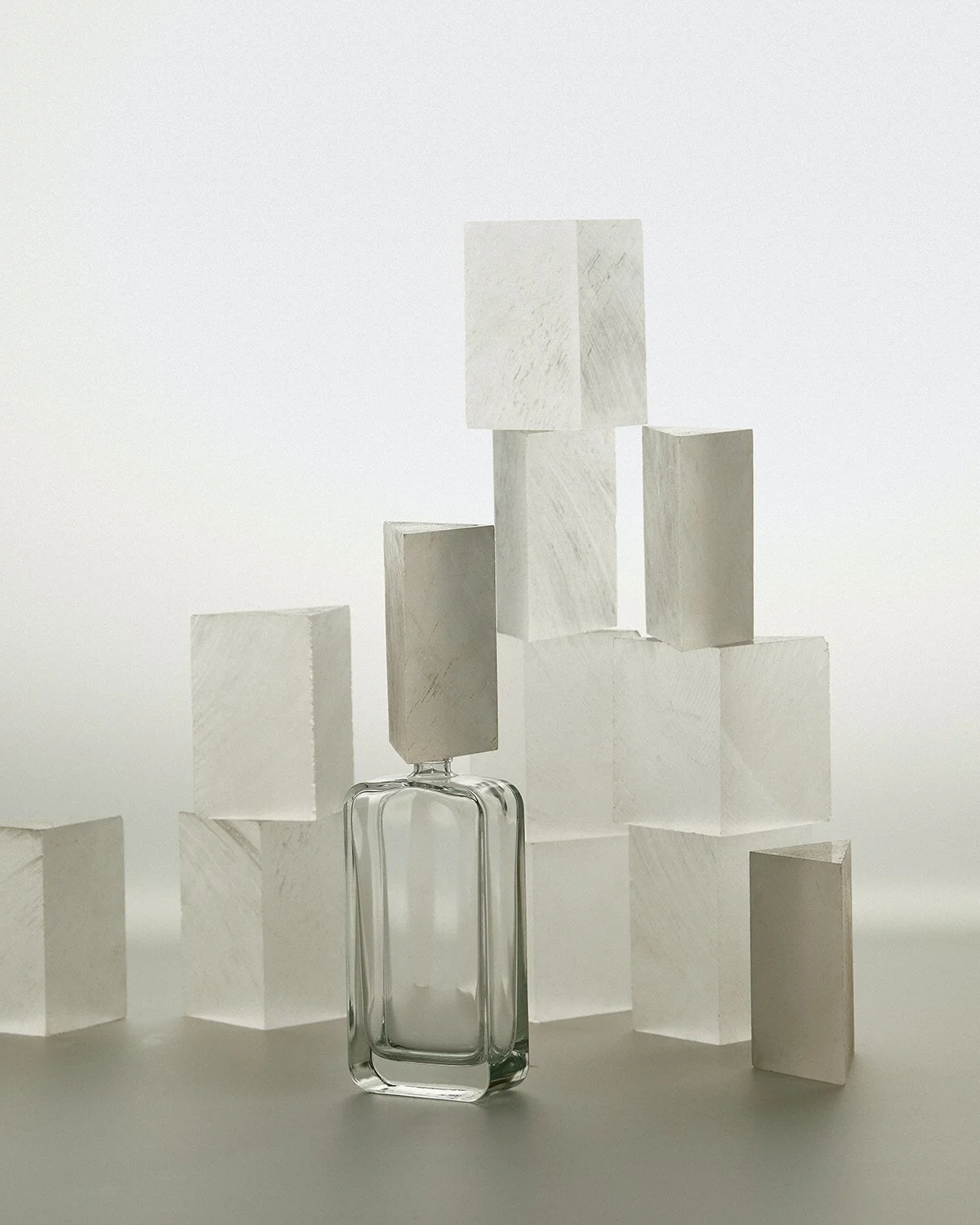
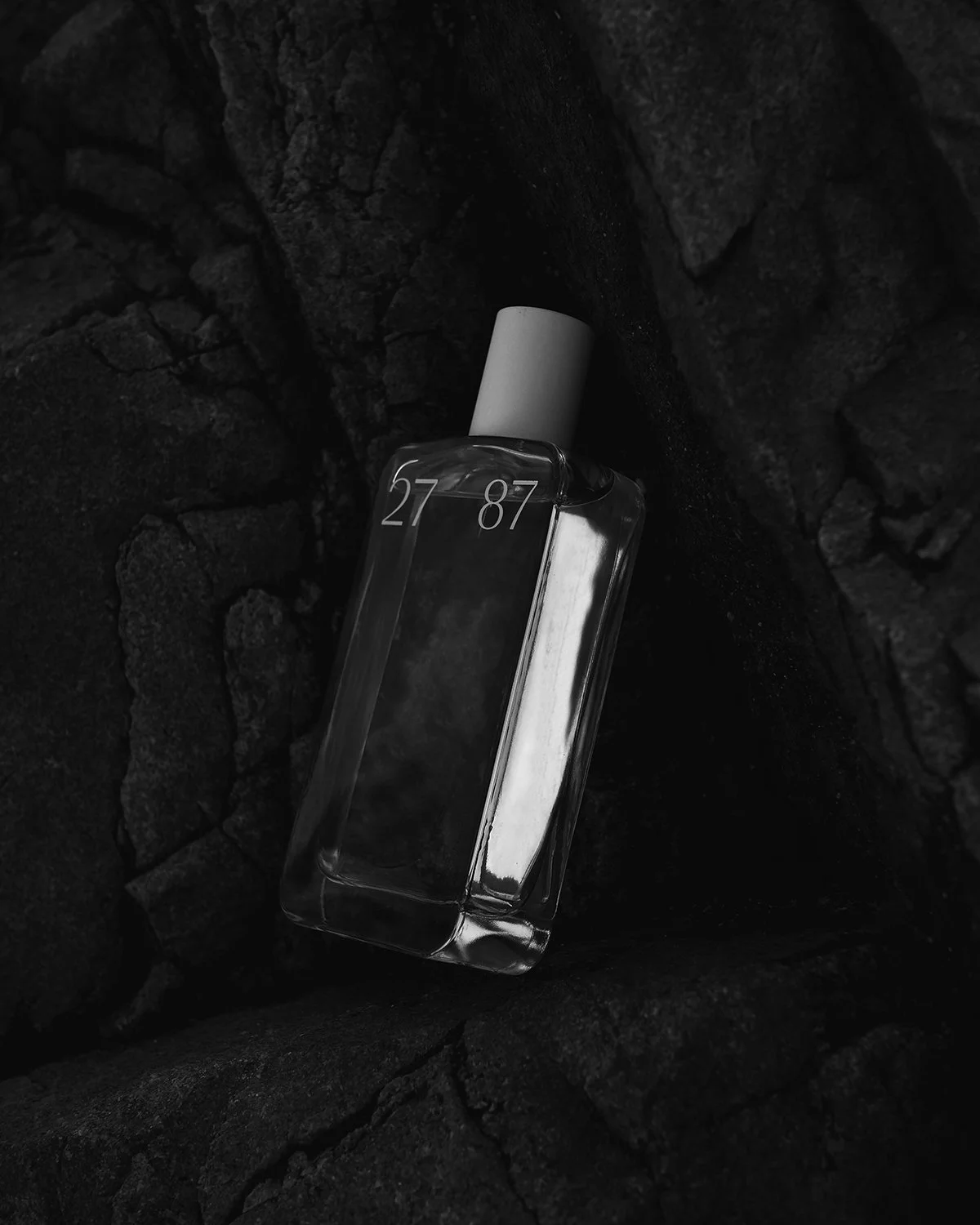
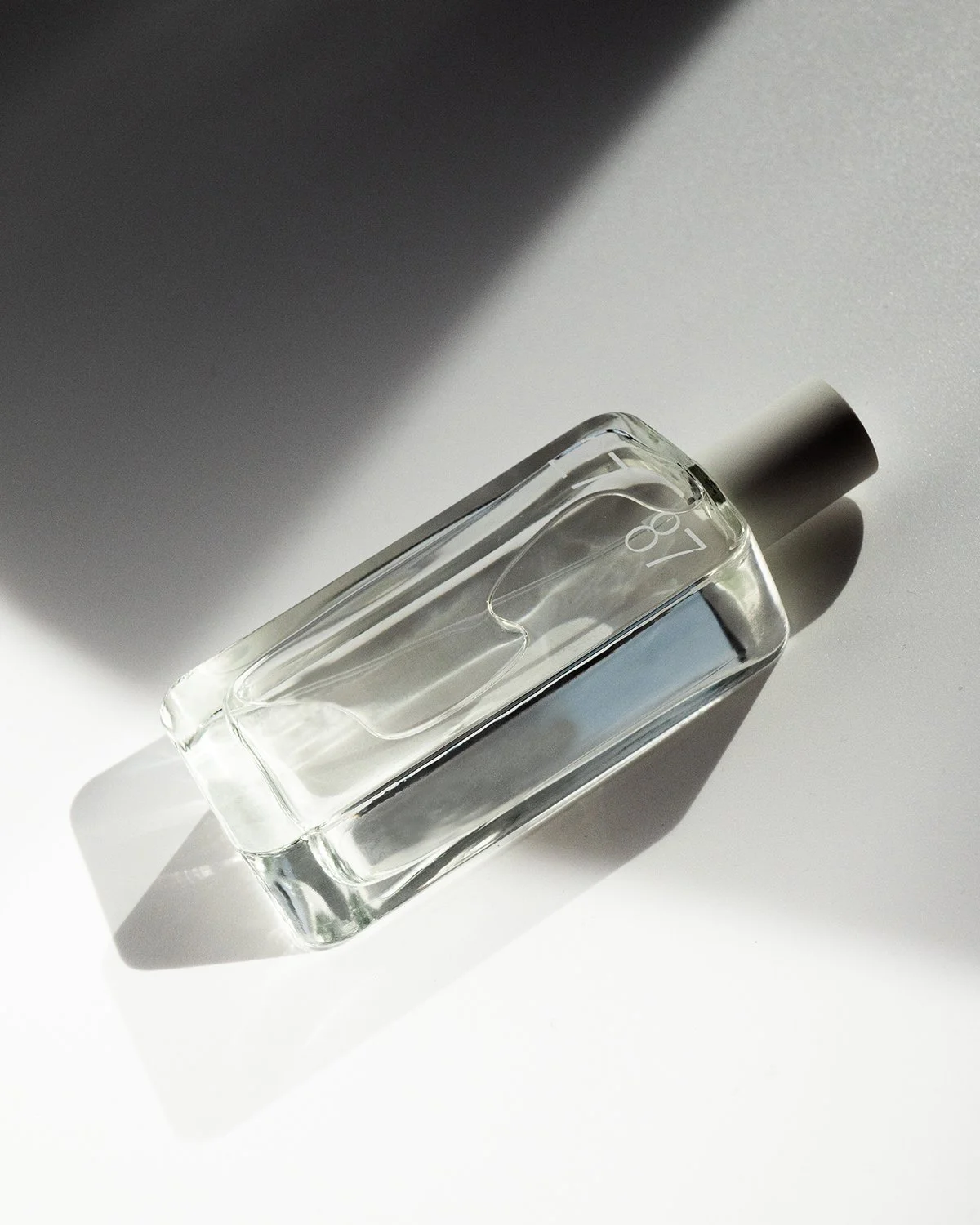
Romy’s concept of ‘chemistry as artistic expression’ fully comes to life through collaborations with renowned perfumers such as Shyamala Maisondieu, Jordi Fernández, and Gael Montero. These partnerships have resulted in distinctive, one-of-a-kind scents, blending technology with olfactory art. “I view perfumery as an art form. Before starting my own brand, I often wondered what the stories behind other perfumes had to do with mine. With 27 87, I wanted to create fragrances inspired by the present and daily life, with concepts anyone can relate to.” Art is a form of expression that always draws inspiration from different aspects of life. What makes art so unique is that it's often shaped by the present moment, reflecting the society and environment it was created in. The brand’s fragrances serve as blank canvases that enhance and enrich the wearer’s experience of the present moment, rather than dictating what they should feel or remember. This is why the bottles and packaging are white: “The bottle absorbs the experiences of the wearer, rather than dictating how the scent should be associated,” summarises Romy. The beauty of art lies in how each person sees and interprets it. From the viewer's perspective, art is experienced in a personal and individual way. It’s not tied to strict definitions or categories but is free from judgments and can be understood however the viewer chooses. Every person can find their own meaning in it, making it a truly open and ever-evolving form of expression.
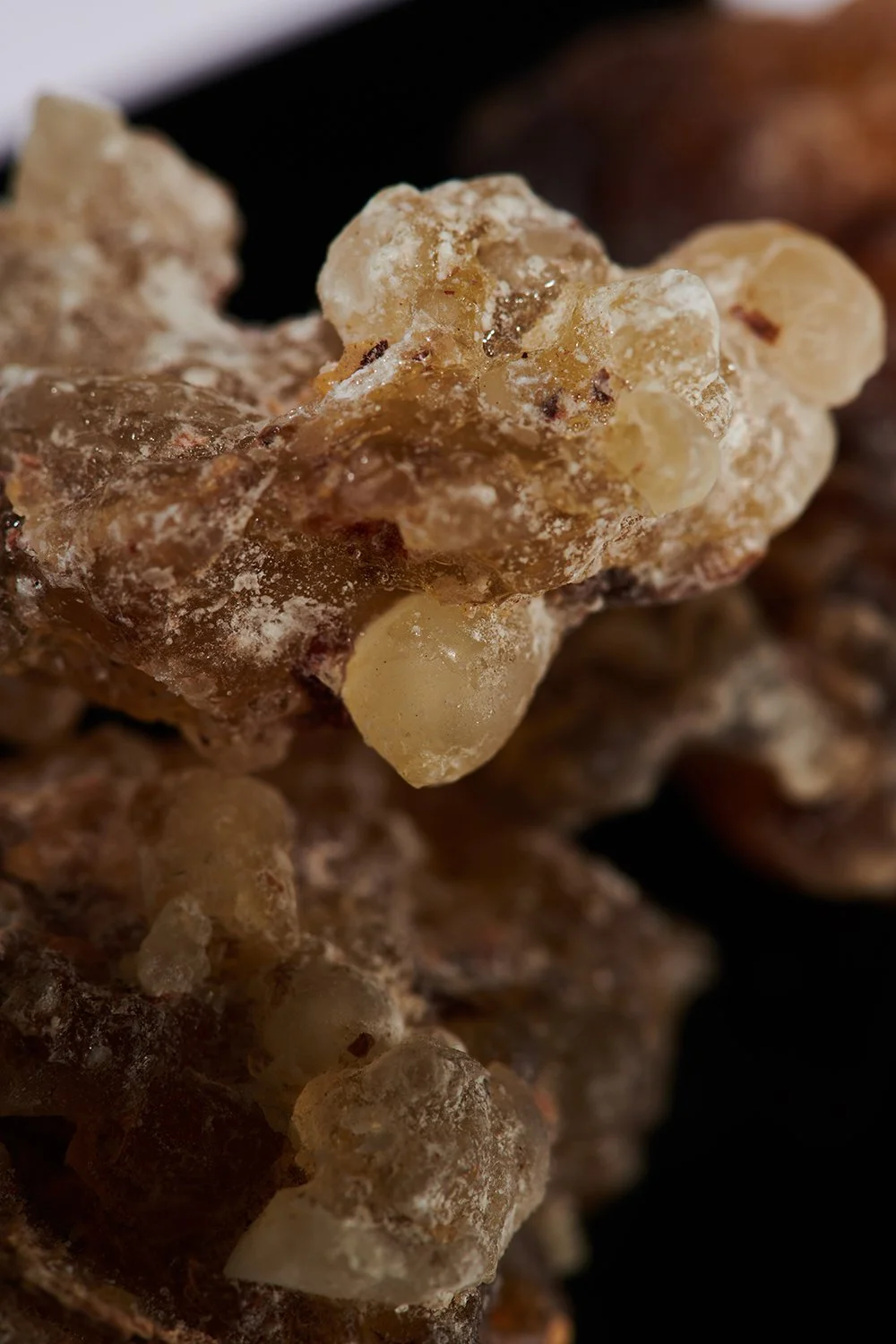
With her practice, Romy invites us to embark on our own journey through the creation of new and unexpected perfumes from rare and uncommon ingredients. Her ‘scent of the present’ involves developing fragrances such as akigalawood, which is made out of in genetic bliss; the unusual nana-mint from Morocco in wandervogel, and the one that is in the oven now, inspired by the Asian fruit Durian: “I’m currently experimenting with this fruit which smells very different to us as Euopeans” she reveals, with a planned launch in May 2025.
By embracing the present, 27 87 is redefining the art of fragrance in the modern era. It’s a continuous co-creation between the scent and the individual, positioning 27 87 as a bold and innovative leader in contemporary perfumery.
TURA BY ANDREU CARULLA
THE SUBTLE SILENCE OF GOOD DESIGN
THE SUBTLE SILENCE OF GOOD
-
-
Pictures by Salva López
Words by Inma Buendía -
For several months now, the concept of quiet luxury has been the subject of a plethora of articles in the press as one of this season’s trends. A lifestyle for which a company’s product is not as important as the quality that an article conveys. These items speak for themselves and express themselves. They mirror a work well made with the best raw materials; a new form of consumption that cuts across all styles and goes beyond a specific aesthetic.


The admiration for José Antonio Coderch, Josep Lluís Sert, Ricardo Bofill or Enric Miralles is a trait in common between Roca and Carulla, and the Tura collection, the combined realization of this fascination.“I love Coderch’s idea of citizen-centered architecture and design. It is like the work our studio does – more discreet, I’d even venture to say silent,” summarizes the designer. Thus, the setting chosen to introduce the collection is the house that Coderch designed and lived in with his family in Sant Feliu de Codines, Barcelona.
As Carulla himself states, “design is not a luxury when it helps people to live better.” The collection draws inspiration from elements as subtle as the shadows that the pergolas and shutters cast on spaces. A creation of volumes and geometric shapes that acquire interesting dimensions, stripping away the superfluous and letting emptiness reveal itself as an abstract and limitless resource.
The quiet luxury of a simple lifestyle which finds in the Mediterranean sea the ideal scenario to create functional, aesthetic and timeless solutions. It is no coincidence that the name of the Tura collection stems from the Spanish words for architecture and culture – arquitectura and cultura.
As a designer but also as an individual, Andreu Carulla seeks to distance himself from everything that does not convey certain values: “I’ve always wanted to work with Roca because they make amazing, high-quality products. Moreover, the use of ceramics and the geographical proximity made it a perfect match. Then I discovered that we speak the same language.”
Despite its elevated appearance, even the smallest decorative gesture of Tura aims to fulfill the desired functionality. This is one of the principles of Roca’s ethos and one which Carulla embraces at his design studio. The pieces should not only be useful but intuitive and easy. They must speak for themselves.
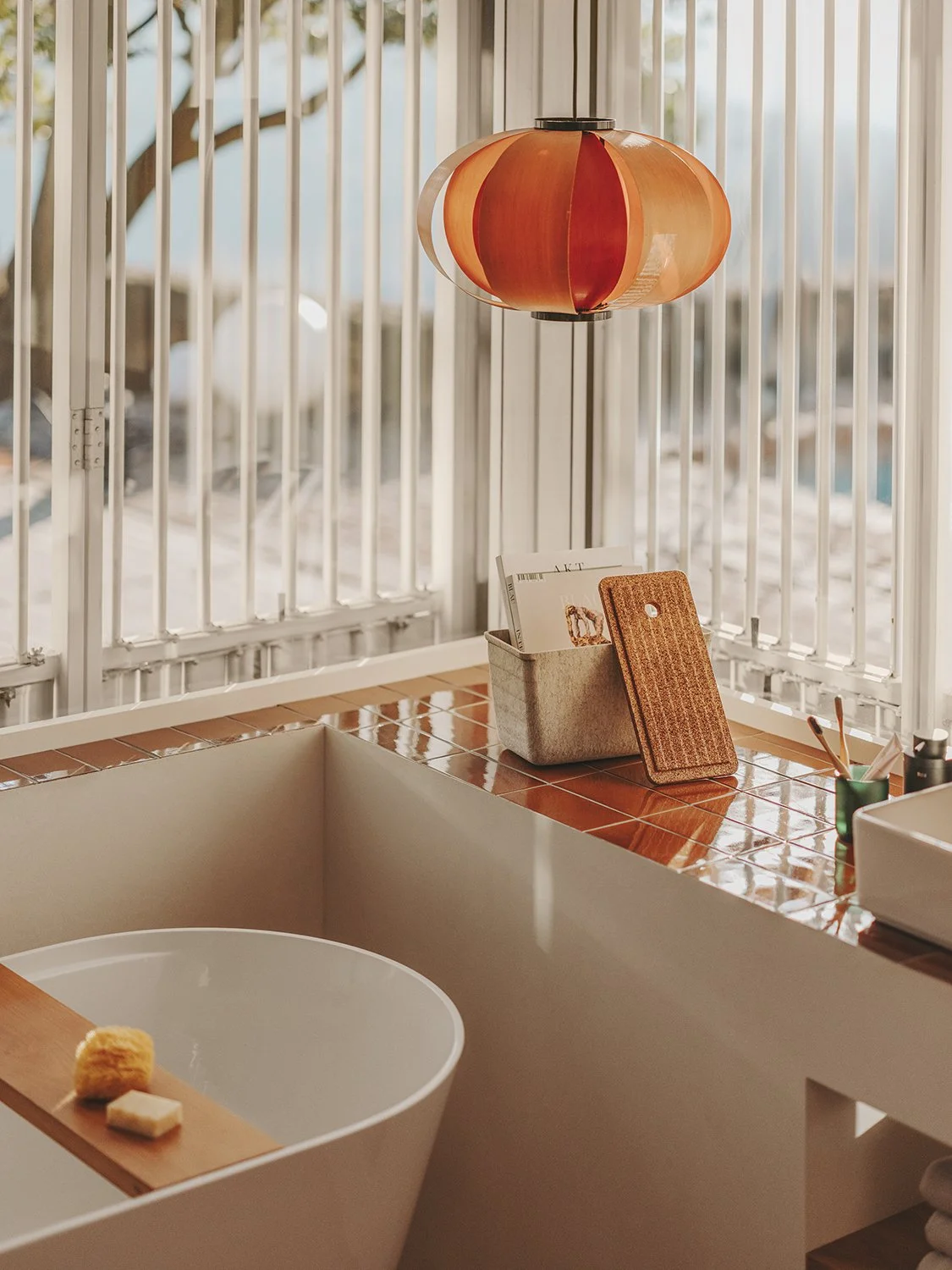
The Tura collection, which Roca will release in 2024, includes a series dedicated to toilets, six ideas for washbasin units, a free-standing bathtub and a range of storage ideas and accessories, such as headrests, designed for pampering. With both comfort and sustainability in mind, Roca’s products are made using the latest technologies and materials. This includes Roca’s Rimless system, which optimizes water flow and flushing efficiency, and the Supraglaze© surface treatment for maximum hygiene. One of the main innovations of the collection is the concealed drain of the washbasins. All of these sanitary wares come in white in gloss or matt finishes. The furniture is available in a range of colors (off-white, terracotta and grey) that harmonize with the durable materials used, resulting in modern natural finishes.
Founded in 1917, Roca has manufactured many of this country’s classics, combining tradition and knowledge with a passion for innovation and respect for the environment. Beliefs that this prestigious brand – dedicated to designing, manufacturing and retailing bathroom products for architectural projects – conveys via its 76 production plants and the 170 countries in which it operates.
Thanks to the work of renowned professionals such as Inma Bermúdez, David Chipperfield and Carulla himself, Roca is committed to contributing and enhancing the well-being of society and leaving a worthy legacy for future generations. The real luxury is to see how the firm nurtures its goal via the creation of designs as simple, bold and exciting as the Tura collection.
THE SPACE BETWEEN THE HANDS
CHILLIDA COLLECTION
Hands, such ancestral beauty they hold. With them we communicate, we create, we build, we feed, we give warmth, we touch, but they also hold us on to something; with them, we fight and struggle. It’s so peculiar the outstanding adaptability of the hands.
-
Openhouse magazine Nº21
-
CHILLIDA COLLECTION
Hands, such ancestral beauty they hold. With them we communicate, we create, we build, we feed, we give warmth, we touch, but they also hold us on to something; with them, we fight and struggle. It’s so peculiar the outstanding adaptability of the hands. They mirror our inherent situation almost before any other part of the body does. Pianist's hands, longshoreman's hands, cook's hands, caregiver's hands, artist's hands... each one of them paints a somewhat clear picture in the collective imagination.
Eduardo Chillida (San Sebastian, January 10th, 1924-August 19th, 2002) captured his own hands throughout his life. He never stopped doing it. Those same hands led him to forge an extensive body of work in steel and concrete, but also to pour his reflections into his writing and graphic work- from drawings to gravitations. It is precisely in this latter practice that nanimarquina found its inspiration for the new collection, which pays homage to the sculptor on the 100th anniversary of his birth. These gravitations were not simply overlapping sheets, but sculptural reliefs. The artist himself spoke of the discovery and development of this new form of sculptural relief made with paper: “I never liked using glue. Sticking paper together never struck me as the ideal solution. I suddenly thought: 'Instead of pasting these two pieces of paper together, why don’t I connect them some other way, sewing them with string or with another material?' I started to think about it, to experiment and the solution revealed itself. The place where the glue used to be was now occupied by space. How could you even compare glue with space? The gain is colossal”.

The dramatic tension in which the paper fragments are superimposed or alternated was nanimarquina's focus when transforming each chosen artwork into a carpet. “Playing with traditional techniques such as hand-knotted, soumak, or hand-tufted rugs; with the fibers- wool, and silk; and with the different heights; allowed the collection to capture that suspension that Chillida sought after in his gravitations.”
The result is four new pieces that complete the Chillida Collection, started a decade ago. Three rugs and a tapestry that, to be produced, required a retrospective of the Basque artist's pictorial works- from Gravitación (1997), Gravitación Tinta (1996), and Preguntas (1994) to the tapestry inspired by Gravitación Tinta (1991).
As fond of materials as Chillida, Nani Marquina has paid significant attention to the composition of her carpets and the manufacturing processes since the beginning of her brand in 1987.
“I never liked using glue. Sticking paper together never struck me as the ideal solution. I suddenly thought: ‘Instead of pasting these two pieces of paper together, why don’t I connect them some other way, sewing them with string or with another material?’ I started to think about it, to experiment and the solution revealed itself. The place where the glue used to be was now occupied by space. How could you even compare glue with space? The gain is colossal.”
Six years later, she embarked on her boldest business venture: moving production to northern India. This shift meant the inclusion of craftsmanship and tradition as the foundations of the company's designs: the hands, again, a feature of the production process that's so characteristic of the brand today.
On the 36th anniversary of the company, Nani Marquina keeps on leading the creative department in a very personal way: “My passion for art and my admiration for nature define the essence of my work, where art and design merge in an intuitive way,” explains the creator, who continues: “For this reason, I wanted to pay tribute to Chillida, an artist of my time and from my country whose way of understanding space influenced me immensely.

STUDIO FENICE
DÍAS
DE
VERANO
-
Develop the idea and content behind of Días de Verano, the first retreat by Studio Fenice for some of the designers represented by them and other interesting profiles suggested by Openhouse Studio.
Together with Azamit, we created the script and the ideas in which the two panels would relay, and we both moderated the talks.
Finally, I wrote the chronicle for Openhouse magazine. -
Photos by Victor Stonem.
victorstonem.comStudio Fenice
studiofenice.net -
Openhouse magazine website.
Openhouse studio and Studio Fenice social networks.
When the Studio Fenice and Openhouse team decided on the two core themes for Días de Verano, the first event to be held by the online design platform created by Christian Maroselli, we were unaware of how much of a presence they would have in everything that would take place between 18 and 21 June in Todos Santos, Baja California Sur, Mexico.
In today’s hyper connected and globalised world, in the overwhelming system in which we live, with the unbearable speed at which we move from one thing to the next and the exasperating sensation of being late for everything, it was such a privilege to suspend time for three days in which to coexist, become acquainted with thirty people in the field of art, design and architecture, and reflect together with them.
Christian Maroselli, founder of Studio Fenice, had a clear idea of what he wanted right from the beginning. He did not want the event he was organising to be perceived as corporate. He knew that by having the right resources at his disposal, the gathering would be a success.
The different activities in the Días de Verano programme were structured around two main themes: Travel and Personality. Both were present throughout the three days, from the welcome dinner at DUM, to the boat trip across the Gulf of California, and even in the group conversations where we reflected on these two ideas from the perspective of creators, architects, designers, curators and photographers.
The first of these gatherings for joint reflection revolved around travel as a powerful weapon for personal and professional growth. Inspired by the written work by Giulia Bruno Atlas of Emotion: Journeys in Art, Architecture, and Film, the keyword with which we started the dialogue was emotion, given its shared root with motion. Emotion is not a customised personal psychological space, but a way of understanding the movement of passions and desires. It is a journey that very often serves as a turning point to the creation of one’s own path, a change of direction.


Movement is thought of as two parallel layers: what moves in thought must move in bodies. Imaginary journeys are another part of this extension of travelling from the geographical to the mind, through disciplines such as design or architecture. The journey changes us, whether we want it to or not. That path somehow chooses us, and at the same time we dare to follow our instinct, to discover where it leads us.
In the second gathering of the event, we wanted to take it further, to delve not only into the journey, but into the path that leads us to define our identity as individuals and as designers. The personality that is consciously and unconsciously stamped on a work of art not only originates in the mind of the designer but also from their relationship with the society in which they live, as well as their relationship with tradition, the development of a craft and the artisans who are experts in handling the material.
It is the result of recognising ourselves as the interconnected multidimensional organism that we are. Now that we have access to resources all over the world, we focus our efforts on what identifies us, on that which tells a story. Getting to know the person behind the hands that make the pieces, the tradition that lies behind each technique, as well as passing this knowledge on from generation to generation are key aspects that turn each piece into something of significance.
Studio Fenice was founded in 2021 as a new way of thinking, of searching and of celebrating boldness in design. A virtual space that promotes the work of participating designers who express a unique personality in their craft. Artists who question and transform our perception by going beyond the principles of design.
Through said path, which configures Studio Fenice’s particular atlas of emotion, this space is imbued with a character of its own. In the words of the notionalist Frantz Fanon, “In the World through which I travel, I am endlessly creating myself”.

LAPALA by MANEL MOLINA
WITH THE WIND IN YOUR SAILS
WITH THE WIND
IN YOUR SAILS
-
Advertorial about Lapala by Manel Molina for Expormim.
-
-
“The sea can be choppy or calm, it can carry you safely home or sweep you straight into the eye of a hurricane.”
The sea can be choppy or calm, it can carry you safely home or sweep you straight into the eye of a hurricane. When the wind is in your sails, everything seems possible and, with the helm in your hands, you believe that you steer your destiny.
Lapala was one of the first chairs to be designed by Manel Molina. The main challenge in its creation was to combine ergonomics with a chair made of wickerwork. Back then, this raw material was only used in combinations of straight wickerwork panels, with little room for further potential. However, design is all about finding solutions, and Manel Molina was so successful in overcoming this problem that Lapala’s ergonomic design served as a reference point for several subsequent models by Lievore Altherr Molina, the studio founded by Manel and his colleagues, Alberto Lievore and Jeannette Altherr, in 1991.
In real life, your destiny is not always yours to steer. A raging sea can sweep away everything in its path, casting you adrift. Lapala ran aground in just such a way. It might have remained beached there and gradually fallen into oblivion, but Lievore Altherr Molina was loath to let this happen. The design studio saw its salvation in Expormim. Such was the expertise and creative potential of this company, originally known as La Exportadora de Mimbre, that it was the only one capable of breathing new life into the collection and improving on all its features and different models: its barstool, dining chair, low armchair and footstool.
Expormim’s team played a key role in sourcing just the right material for its curved structure: nautical rope able to lend its delicate discrete elegant design an added sense of resistance, while also reinforcing its robust painted stainless steel structure. The end result is a lightweight design of eye-catching Mediterranean beauty, uniting simplicity and functionality with sobriety and versatility.
Jaime Hayon
A REBELLIOUS SPIRIT
Jaime has never felt identified with any particular label. Philippe Starck’s daring, courage and strength were a huge source of inspiration when he started out at design school: “that rebellious spirit that dares to break the rules”.
-
Interview to Jaime Hayon in regards of his collaboration with Expormim.
-
-
Photos by Mari Luz Vidal
mariluzvidal.comExoprmim
expormim.com -
A REBELLIOUS SPIRIT
Chic, inviting, lightweight and dynamic... Defining the Frames collection by Expormim is tantamount to describing the personality of its designer, Jaime Hayon. This professional dreamer—who designs, draws and, above all, creates—transforms the seemingly impossible into a reality.
His indomitable imagination is fuelled by the incessant new challenges that he sets himself, paying no heed to dogmas or limitations. Drawing is as vital to him as the oxygen he breathes and so he can be found doing it at any time of day: at breakfast time with the kids, while out shopping at his favourite market, Mercado Central in Valencia, where he lives, or over a beer or two with friends.
Jaime has never felt identified with any particular label. Philippe Starck’s daring, courage and strength were a huge source of inspiration when he started out at design school: “that rebellious spirit that dares to break the rules”. As a designer, Hayon’s ideas have an intrinsic strong artistic facet. “Art interests me as a powerful highly expressive platform for creative freedom.”
“Art interests me as a powerful highly expressive platform for creative freedom.”
Thanks to Hayon’s distinctive way of combining disciplines, at Fábrica–the prestigious testing ground for creative experimentation in Treviso, Italy, where he went after completing his studies at the Instituto Europeo di Design–he developed a style all of his own. For this tireless globetrotter, travel is an opportunity to discover new ways of doing things and new challenges. “Travel is invigorating. It’s an opportunity to learn. Everywhere I go, I find new sources of inspiration.”
Colour, shape and composition are the starting points for each and every one of his creations. His over two hundred sketchbooks bear witness to all his ideas. They reflect the inner world of this Madrid designer with a Mediterranean soul, from the most oneiric to the most technical of images, in addition to his ideas for future projects.
Expormim’s honesty and dedication were all important factors in his collaborative relationship with the company. “I love the effort they make to revive traditional crafts. I think they do it with extreme elegance and savoir-faire.”
Jaime decided to work with rattan in unconventional fashion, “highlighting its superiority as a material and the art that goes into working with it”. Understandably, one of the stages in the creative process that he most enjoys is working alongside craftsmen: “They bring a high degree of skill and humanity to the process. There are few crafts- men or women still active today in Spain and the sector needs supporting.”
The Frames collection–made up of panels that play a combined structural and ergonomic role–was a hit success from the moment that it was launched in 2014. Two years later, it would receive the 2016 German Design Award and, this year, it has been singled out to receive the 2019 If Design Award.
A collection that is all set to become a contemporary classic, Frames encapsulates the past, present and future of Expormim. Through the collection’s rustic charm and sober distinction, combined with simple yet sophisticated aesthetics, this Valencia firm with a business history of over 60 years has taken yet another step forward in acknowledging not just a craft but a material–rattan, that combination of tradition and contemporary appeal.
Christophe Mathieu
PIOLA
INTERVIEW To christophe mathieu FOR MARSET IN COLLAbORATION WITH FOLCH
How does one design a light that translates the playfulness of an endlessly spiraling ribbon? The Piola collection is about imitating this fluidity of infinite movement, in search of a balance between the diffusion of light and the creation of shadows.
A central metal column holds more than 5 meters of spiraling, laminated band, enveloping, protecting, and sifting the light for beauty and comfort. Several different types of light coexist here: direct downward light, indirect reflected light, and a light that sneaks between the edges of the spiral, illuminating the fixture itself with a warm, homey glow.
Brand Series, Creative Direction in Production, Strategy and Design Thinking. Marset. 2018
PIOLA
Christophe Mathieu , 2017

JAUME RAMÍREZ
COPÉRNICA
INTERVIEW to jaume ramírez FOR MARSET IN COLLABORATION WITH FOLCH
With no more than fingertips, one can achieve a feeling of weightlessness with the Copérnica lamp. As if levitating, it moves through space effortlessly, without friction or resistance.
Circles, semicircles, tubes, and bars of different diameters, materials, and weights…with the combination of these primary elements the Copérnica collection constructs geometric sculptures of light, establishing an intimate relationship with space and combining functionality with the beauty of pure lines.
Brand Series, Creative Direction in Production, Strategy and Design Thinking. Marset. 2018
COPÉRNICA
Ramírez i Carrillo , 2017
JOAN GASPAR
JAIMA
JAIMA
Joan Gaspar , 2017
interview for marset in COlLABORAtioN with FOLCH.
Through the language of textiles, Joan Gaspar has designed a light of flexible, ductile materials that sifts the light as readily as it moves with the wind. In the Jaima collection, the light is the shade and weaver of emotions.
This collection takes its name from the bedouin tents of North Africa, and is inspired by their varied fabrics and forms. The textilene shade is available in three sizes and four different colors, with a blank interior to optimize the quality of the downward light.
Brand Series, Creative Direction in Production, Strategy and Design Thinking. Marset. 2018.
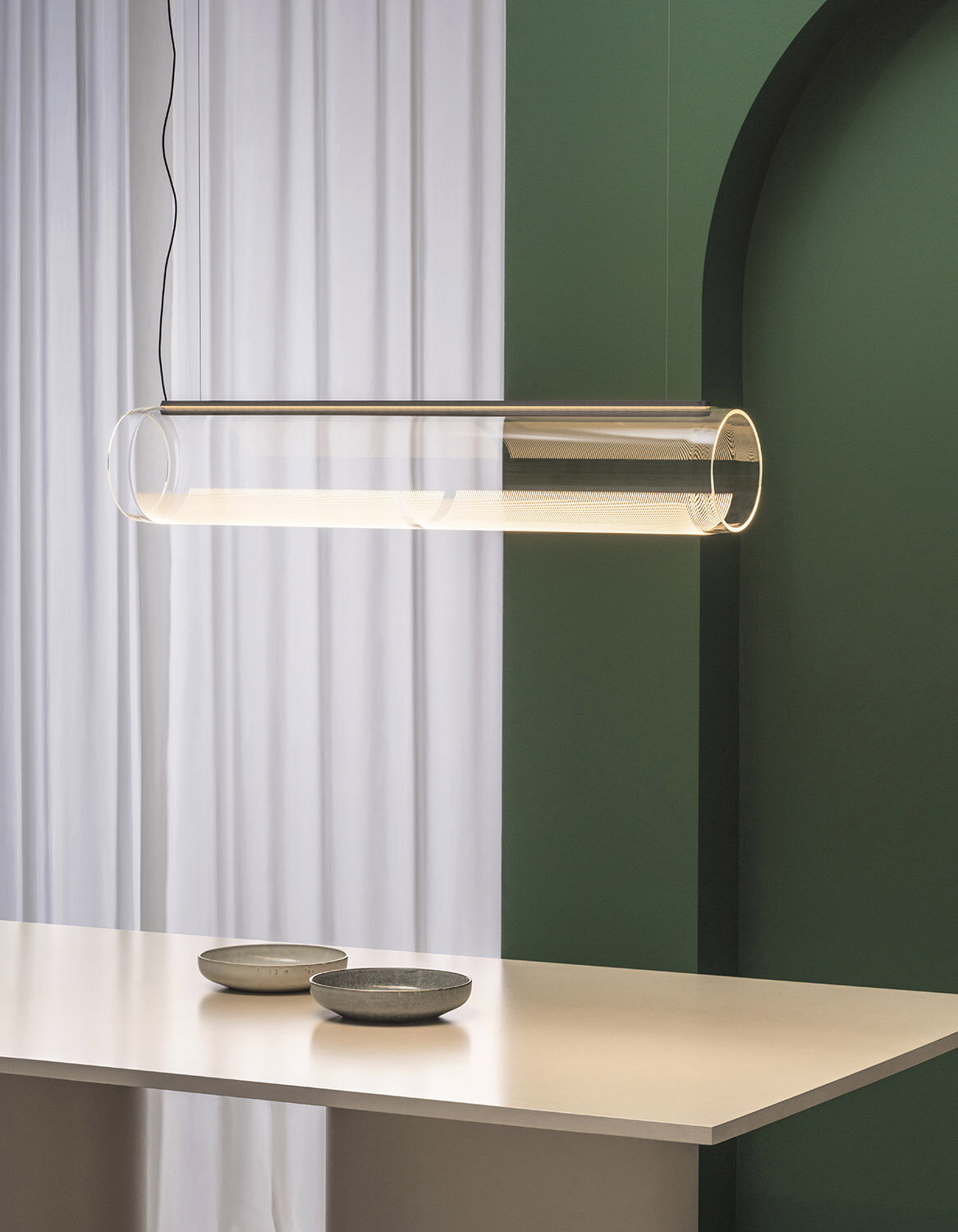
GUISE by STEFAN DÍEZ
TOTAL INTERNAL REFLECTION
TOTAL INTERNAL
REFLECTION
When I was little, I was scared of the dark. Dusky shadows awoke feelings of unease. I remember waking up in my room while my parents were in the lounge, watching TV or having a drink. It is odd how switching on the little bedside lamp made me feel snug and protected, as if in a safe haven.
-
Advertorial story about Guise lamp by Stefan DíeZ for Vibia.
-
-
Light is a beam that we can only embrace, accompany and magnify. The design of the form used to radiate it determines the strength and projection of its rays. For Stefan Díez, the starting point for the creation of the Guise lighting collection was to explore the link between luminosity and transparency. In his work, he tends to seek integral design systems, in this case aspiring to achieve total internal reflection.
“The mystery of light, its origin, form and perception have all been studied and analysed in the field of philosophy for centuries. Depending on the form it takes, this then determines our thinking and our world. ”
Based on the idea that light is invisible until it reaches an edge, he chose glass as the material to moderate this relationship. It is no easy task to try and shape light through transparency, but Vibia and the designer both enjoy setting themselves a challenge as a way of coming up with innovative solutions. The initial item that was designed for the collection is a disc-shaped luminaire fixed to a wall that acts as a reflector, transforming the disc into a celestial body that floats in space, radiating a perimeter halo of light. In the case of the tubular luminaire, the beam of light travels through the cylinder, only becoming visible when it reaches the pattern engraved in the glass, the reflective material in this sinuous version.
The mystery of light, its origin, form and perception have all been studied and analysed in the field of philosophy for centuries. Depending on the form it takes, this then determines our thinking and our world. Vibia designs products and generates languages that are conceived to interpret light. If Platon’s allegory of the cave teaches us that shadows distort our perceptions and suffocate our capacity to think, it is only through clarity that the world and its complexity can be understood. I am no longer scared of the dark, but light continues to be my refuge. Vibia sums it up like this: life is all the more beautiful when light forms part of it.