EDITOR'S LETTER OF ISSUE No.25
OBSESSIONS: A SELF PORTRAIT
Obsession is a double-edged sword. A line upon which certain people choose to walk, tightrope-walker-style: measuring their weight, taking three steps forward and one back, arms outstretched towards what is yet to come.
OBSESSIONS: A SELF PORTRAIT
There is a moment, difficult to pinpoint, when the things we love can begin to consume us. This is not always a bad sign. Sometimes it is simply an indication that something truly matters to us. This is how we live today. We are in the age of the “-holic”: the workaholic, the shopaholic, and whatever comes next. A mode of existence that begins as something deeply personal and that technology has turned into something communal. Social networks did not invent the phenomenon, but they have sharpened it with an algorithm that, the moment it detects our attraction to something, returns it to us multiplied, amplified, almost hyperbolic; until it becomes difficult to distinguish where genuine interest ends and where vertigo begins, as though obsession were the only valid measure of desire.
“It becomes difficult to distinguish where genuine interest ends and where vertigo begins, as though obsession were the only valid measure of desire.”
At Openhouse, we are fascinated by people who are obsessed with something and, in this issue, we introduce some of them. There is Luis Sendino, whose devotion to post-war Japanese design has led him to build a collection that speaks for itself across our pages. More eclectic, intimate, personal and contemporary is the one Andrés Carretero has been quietly gathering over the years, with no greater ambition than the pleasure of surrounding himself with pieces that stir something in him.
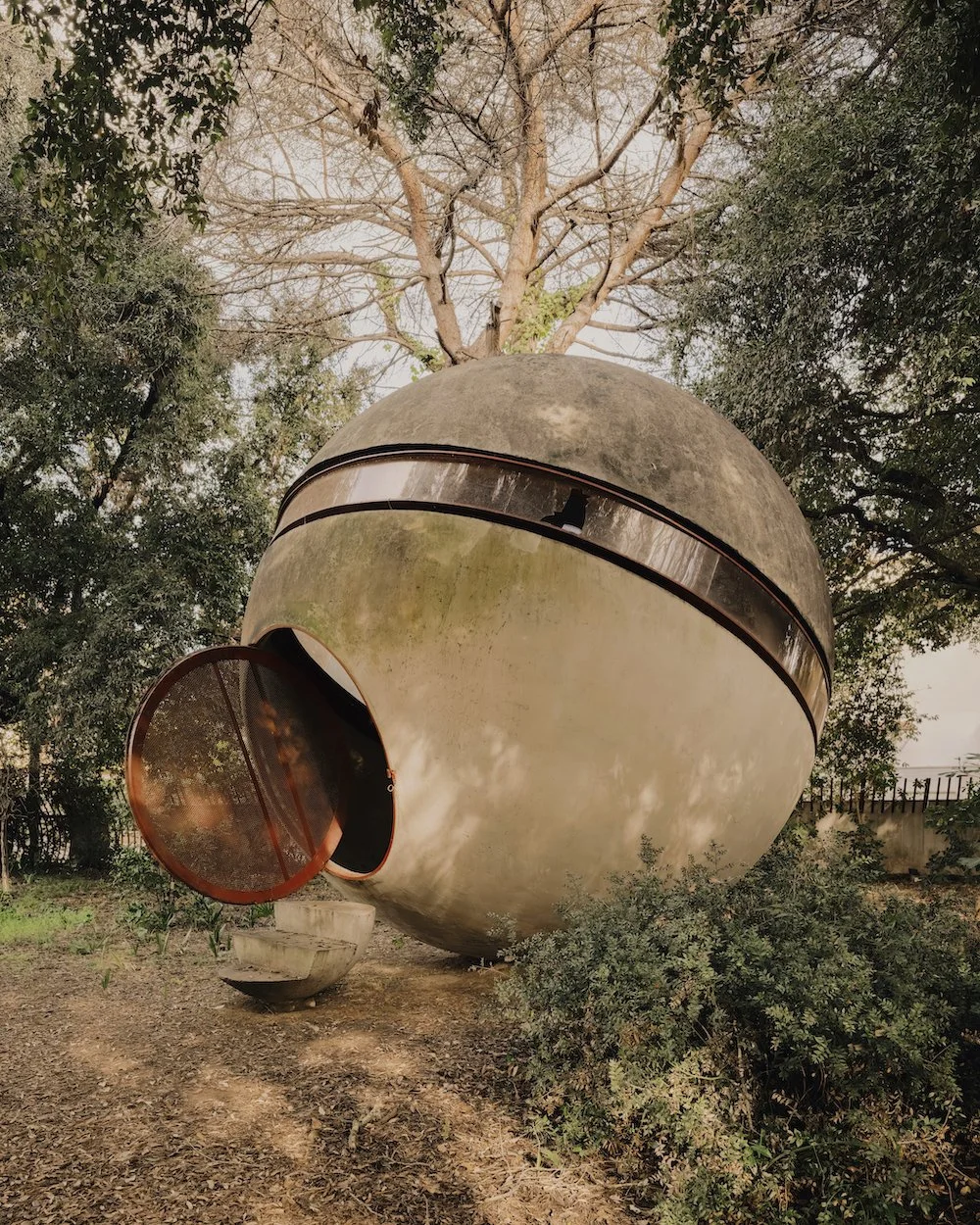
For some, it is not the object but the process that takes hold. Those who live in that eternal tension between honouring the passage of time and intervening in it. Casa Albero exists in that limbo: an architectural gem that bears its cracks without shame, that coexists with nature and merges into it. That begins in the past yet carries the scars of everything it has lived through, worn close to the surface.
“Obsession is a double-edged sword. A line upon which certain people choose to walk, tightrope-walker-style: measuring their weight, taking three steps forward and one back, arms outstretched towards what is yet to come.”
Obsession is a double-edged sword. A line upon which certain people choose to walk, tightrope-walker-style: measuring their weight, taking three steps forward and one back, arms outstretched towards what is yet to come. That is how I like to see our protagonists. From the Enrich family to Studio KO, whose understanding of architecture as a sinuous intervention in place has led them to create a gallery with Nathalie Guihaumé, called L’Œil de KO. All of them have made their passion a way of inhabiting the world. Because all these obsessions make life a far more interesting place to be. Even if, at times, they make those who carry them suffer. Like a wound one returns to every so often, just to check it is still there, still alive, still with something to say. Perhaps that is the most honest thing a human being can do: stop pretending it no longer hurts.
EDITOR'S LETTER OF ISSUE No.25
OBSESIONES: EL RETRATO DEL ALMA
La obsesión es un arma de doble filo. Una línea sobre la que hay personas que, como funambulistas, eligen caminar: calibrando el peso, dando tres pasos adelante y uno atrás, con los brazos bien extendidos ante lo que está por llegar.
OBSESIONES: RETRATO DEL ALMA
Existe un momento difícil de precisar en el que aquello que amamos puede empezar a consumirnos. No siempre es un mal síntoma. A veces es simplemente la señal de que algo nos importa de verdad. Así se vive hoy. Estamos en la era de los -holics (workaholic, shopaholic y los que están por llegar). Una forma de ser individual que la tecnología ha convertido en comunal. Las redes no han inventado el fenómeno, pero sí lo han agudizado con un algoritmo que, en cuanto detecta nuestra atracción hacia algo, lo devuelve multiplicado, amplificado, hiperbólico; hasta que resulta difícil distinguir dónde termina el interés genuino y dónde empieza el vértigo, como si la obsesión fuera el único baremo válido del deseo.
“Resulta difícil distinguir dónde termina el interés genuino y dónde empieza el vértigo, como si la obsesión fuera el único baremo válido del deseo.”
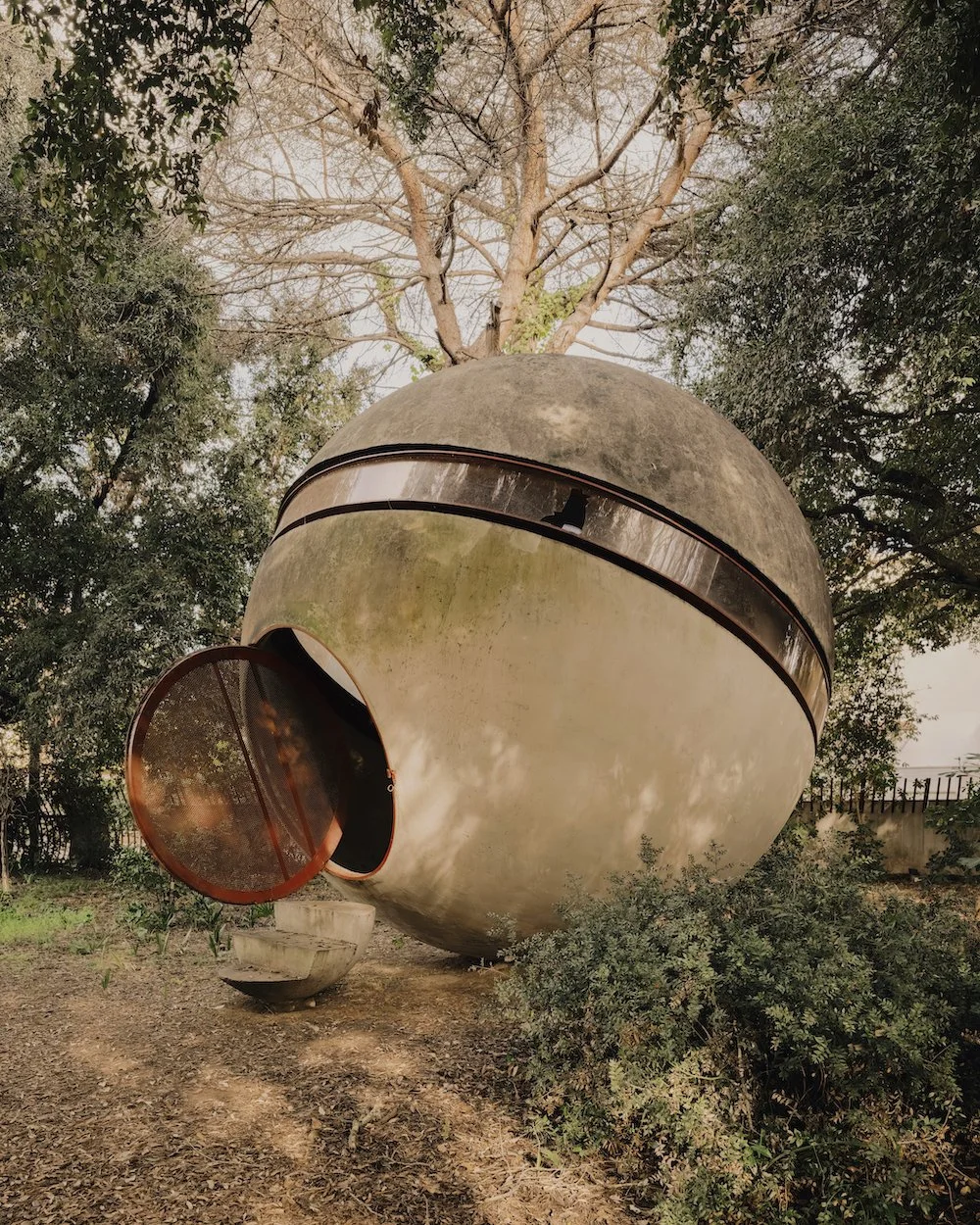
En Openhouse nos obsesionan las personas que se obsesionan, y en este número mostramos algunas de ellas. Como Luis Sendino, cuya devoción por el diseño del Japón de la posguerra le ha llevado a construir una colección que habla por sí misma en las páginas de la editorial. Más ecléctica, íntima, personal y contemporánea es la que Andrés Carretero ha ido atesorando sin más pretensión que el goce de verse rodeado de aquello que le estremece. Una colección que, como él mismo, va cambiando y evolucionando con el paso del tiempo.Hay a quienes no es el objeto sino el proceso lo que les engancha. Que viven en esa eterna diatriba entre respetar el paso del tiempo o intervenir en él. Casa Albero vive en ese limbo: una joya arquitectónica que muestra sus grietas sin pudor, que convive con la naturaleza y se confunde con ella. Que parte de un pasado pero lleva las cicatrices de lo vivido a flor de piel.
“La obsesión es un arma de doble filo. Una línea sobre la que hay personas que, como funambulistas, eligen caminar: calibrando el peso, dando tres pasos adelante y uno atrás, con los brazos bien extendidos ante lo que está por llegar”
La obsesión es un arma de doble filo. Una línea sobre la que hay personas que, como funambulistas, eligen caminar: calibrando el peso, dando tres pasos adelante y uno atrás, con los brazos bien extendidos ante lo que está por llegar. Así me gusta ver a nuestros protagonistas. Desde la familia Enrich hasta Studio KO —cuya forma de entender la arquitectura como intervención sinuosa en el territorio les ha llevado a crear, junto a Nathalie Guihaumé, su propia galería, L’Oiel de KO— todos ellos han hecho de su pasión una forma de habitar el mundo.
Todas estas obsesiones convierten la vida en un lugar más interesante. Aunque, a veces, también hagan sufrir a quienes las sostienen. Como una herida a la que uno regresa de vez en cuando para comprobar que sigue ahí, que late, que aún tiene algo que decir. Quizá eso sea lo más honesto que puede hacer un ser humano: no fingir que ya no duele.
REFUGIOS DE VERANO
FINCA LA CASETA
FINCA LA CASETA
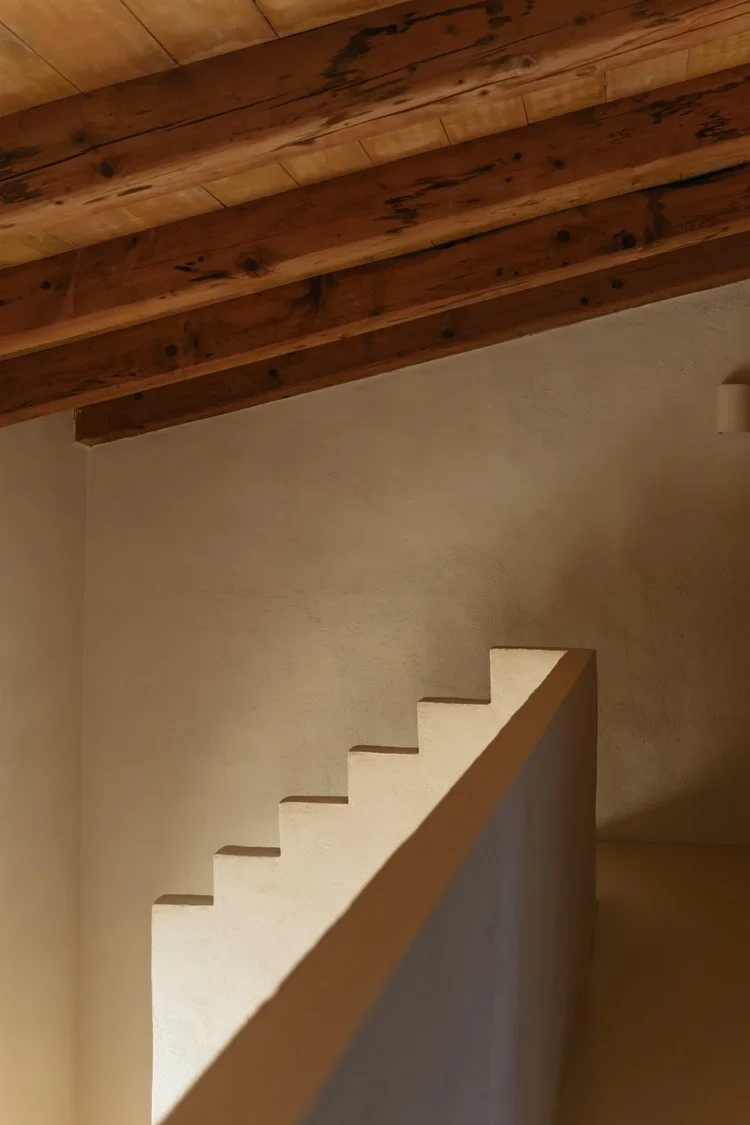
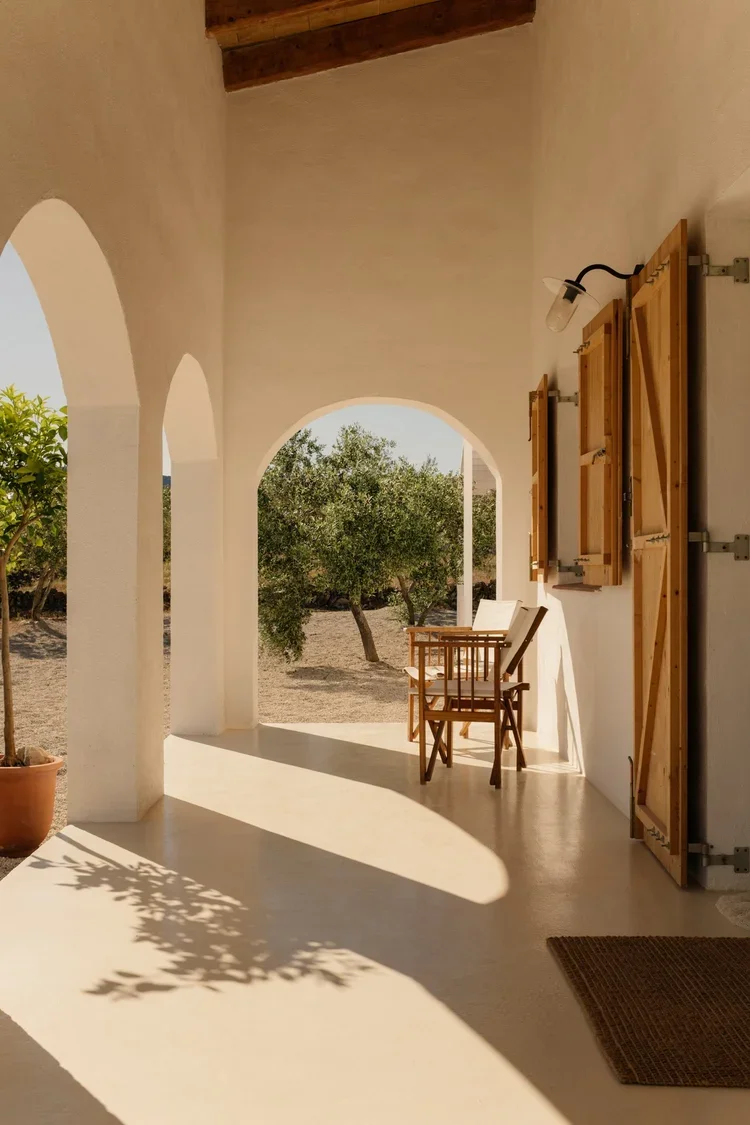
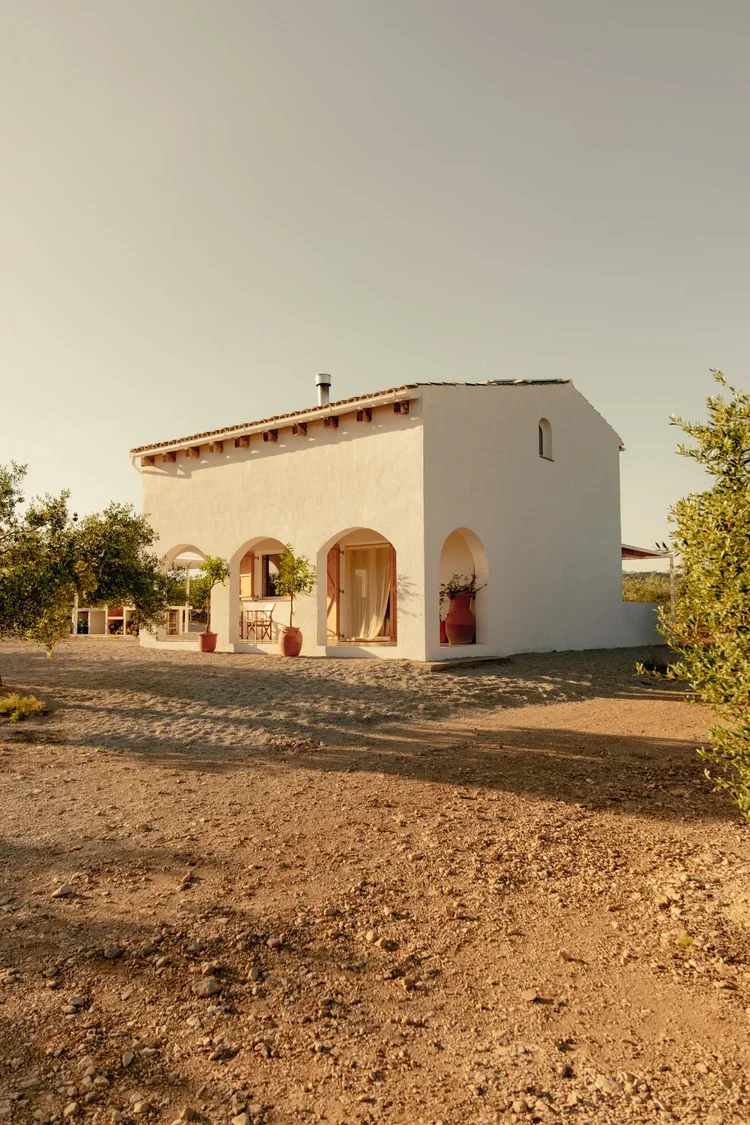
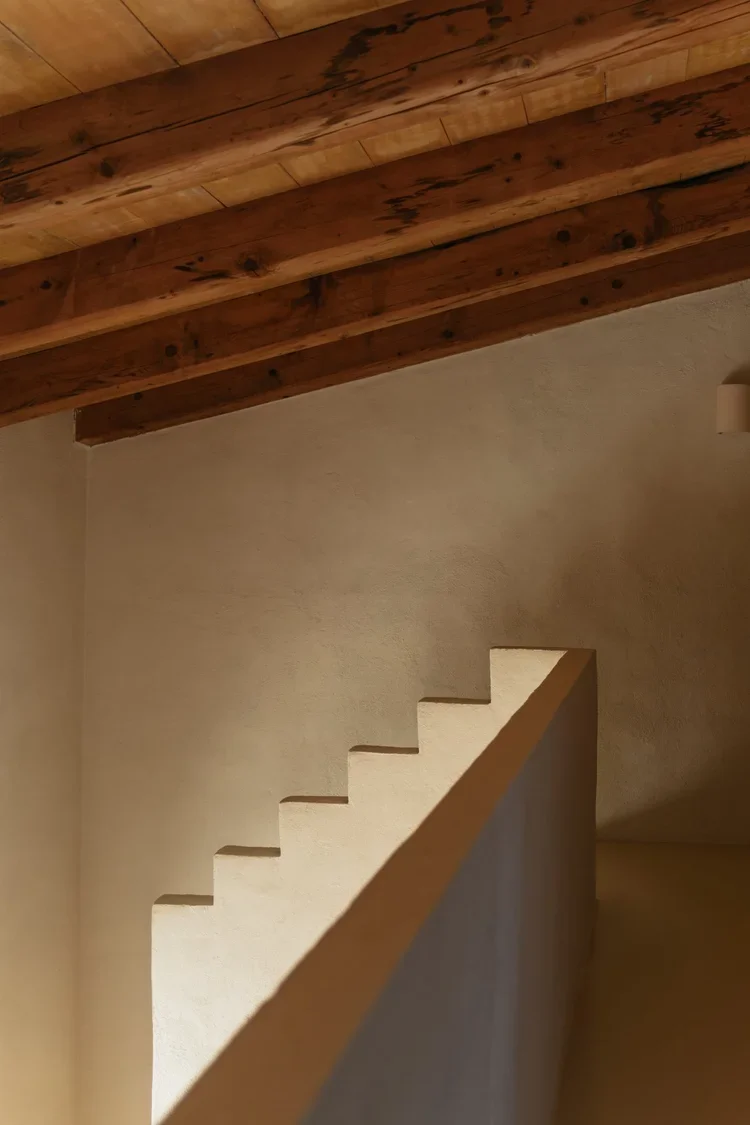
Hay enclaves que, sin anunciarse, se convierten en refugio. En el Baix Ebre, al sur de Cataluña, entre el rumor de olivos centenarios y la presencia discreta del mar, Borja Mas Rodríguez ha encontrado esa mezcla exacta de arraigo y revelación. Un lugar que habla en voz baja pero clara y que habita de forma íntima: lejos del ruido, cerca del tiempo.
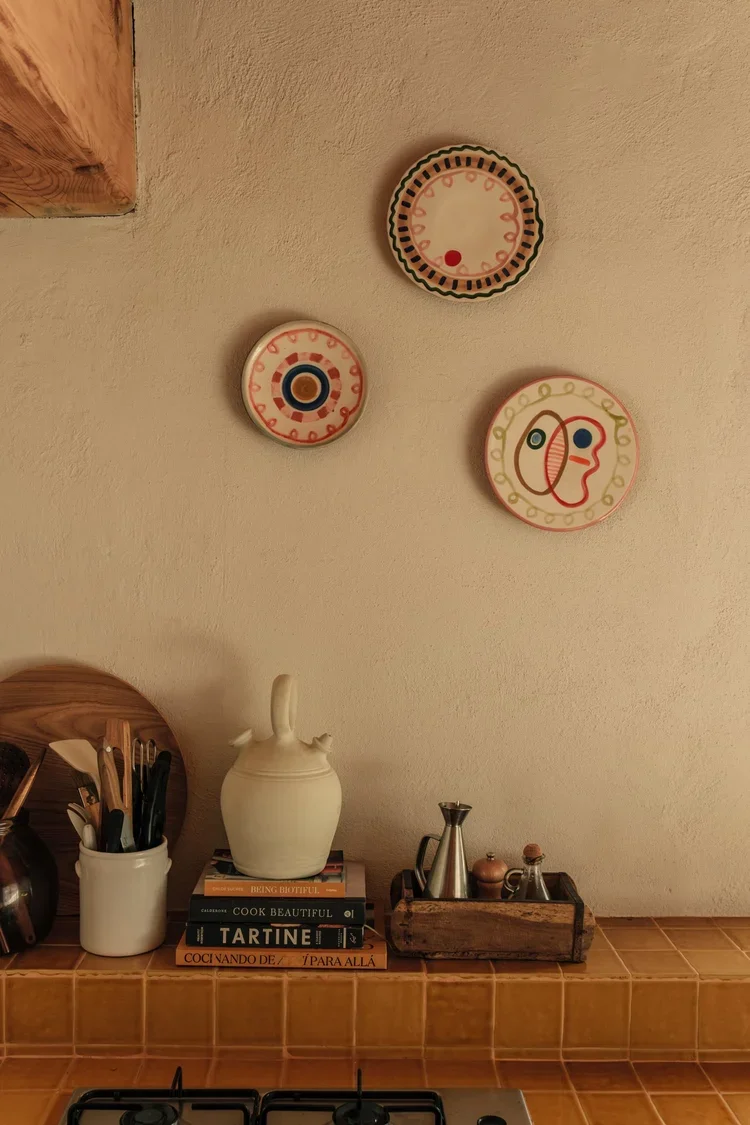
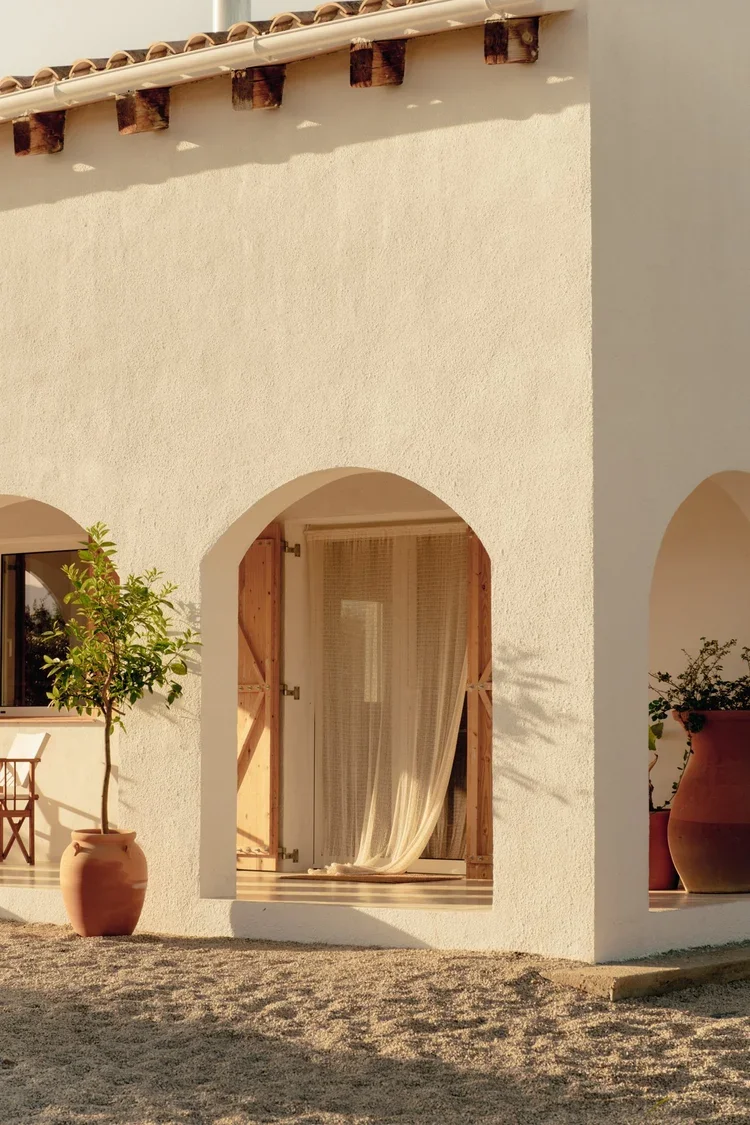
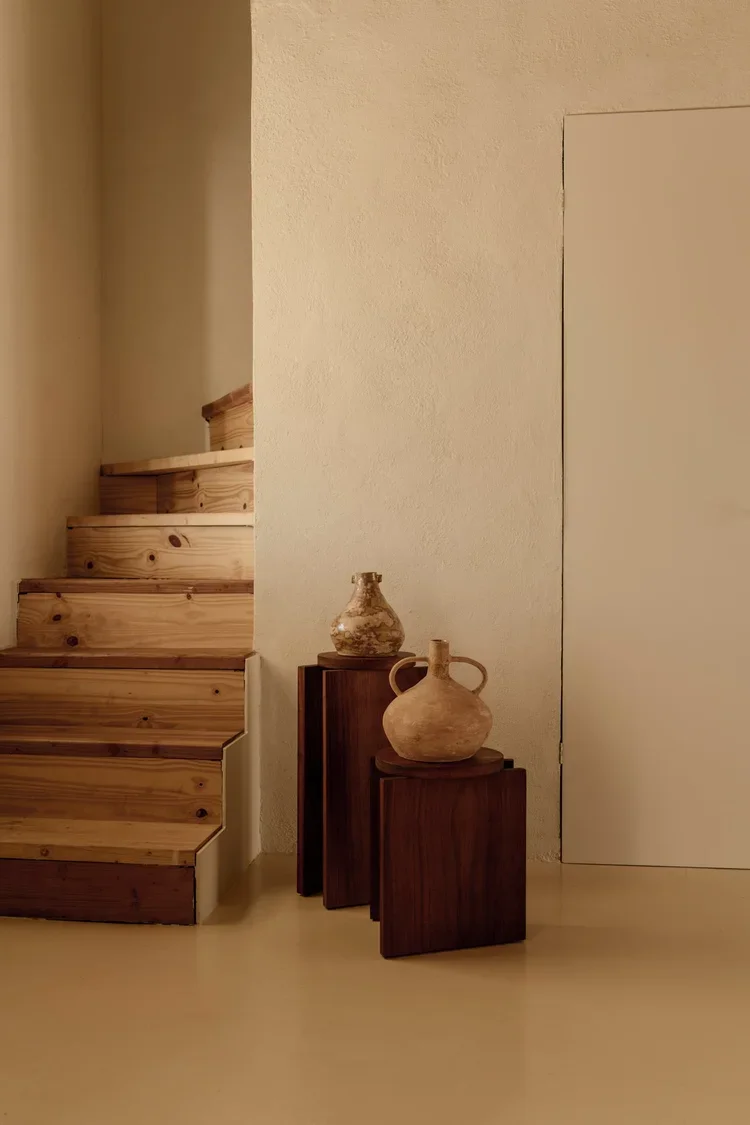
“NOS GUSTABA LA IDEA DE TENER UN ‘TROS’ DONDE DESCONECTAR Y, AL MISMO TIEMPO, CONECTAR”
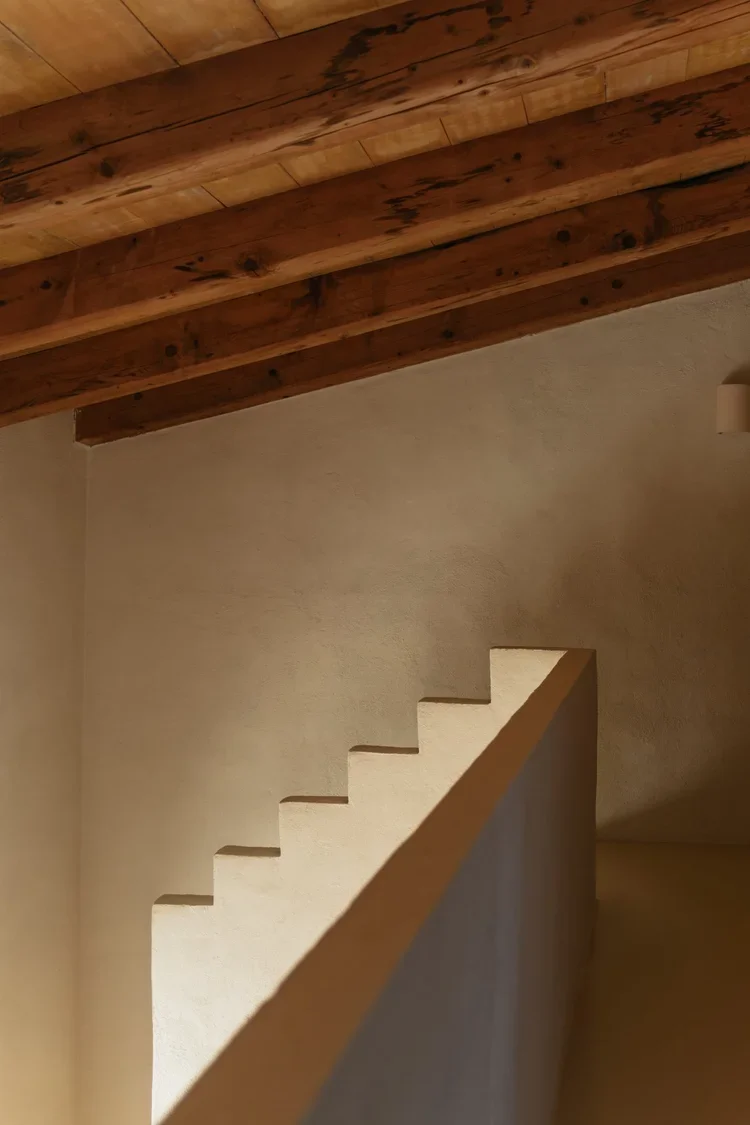
En ocasiones, el arraigo llega de forma sutil, como una herencia emocional. Rosa, pareja del arquitecto Borja Mas Rodríguez, pasó los veranos de su infancia en L’Ametlla de Mar, un pueblo de pescadores donde su familia ha vivido durante décadas. Su vivencia les hizo conectar con el entorno: “Nos gustaba la idea de tener un ‘tros’ —como se llaman este tipo de fincas por aquí— donde desconectar y, al mismo tiempo, conectar.” Sostenible y abierta al paisaje, la casa es un espacio de encuentro y creación. “Es exactamente lo que buscábamos: un rincón para disfrutar los fines de semana y compartir con gente afín.” Conscientes del valor intrínseco del territorio, su compromiso es cuidar de su legado: “La clave está en que quienes venimos, lo hagamos entendiendo el contexto.” Porque habitar también es un acto de respeto.
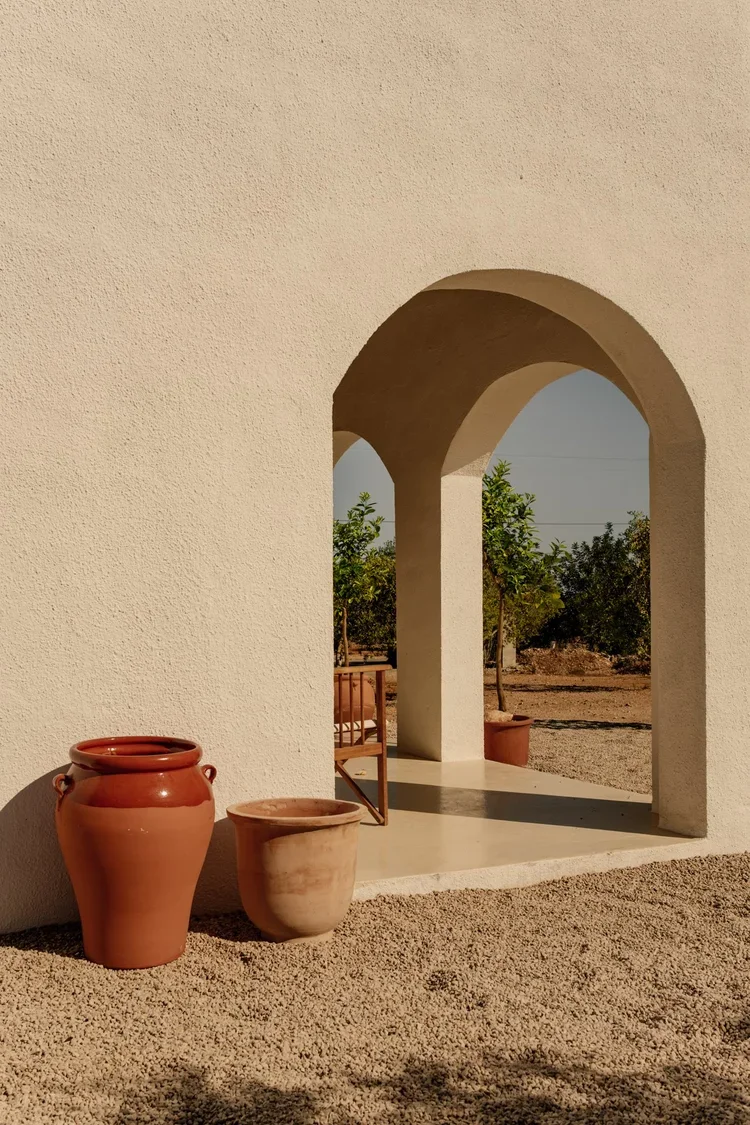
-
-
Summer 2025
Download PDF -
REFUGIOS DE VERANO
FINCA LA CASETA
FINCA LA CASETA
Hay enclaves que, sin anunciarse, se convierten en refugio. En el Baix Ebre, al sur de Cataluña, entre el rumor de olivos centenarios y la presencia discreta del mar, Borja Mas Rodríguez ha encontrado esa mezcla exacta de arraigo y revelación. Un lugar que habla en voz baja pero clara y que habita de forma íntima: lejos del ruido, cerca del tiempo.
“NOS GUSTABA LA IDEA DE TENER UN ‘TROS’ DONDE DESCONECTAR Y, AL MISMO TIEMPO, CONECTAR”
En ocasiones, el arraigo llega de forma sutil, como una herencia emocional. Rosa, pareja del arquitecto Borja Mas Rodríguez, pasó los veranos de su infancia en L’Ametlla de Mar, un pueblo de pescadores donde su familia ha vivido durante décadas. Su vivencia les hizo conectar con el entorno: “Nos gustaba la idea de tener un ‘tros’ —como se llaman este tipo de fincas por aquí— donde desconectar y, al mismo tiempo, conectar.” Sostenible y abierta al paisaje, la casa es un espacio de encuentro y creación. “Es exactamente lo que buscábamos: un rincón para disfrutar los fines de semana y compartir con gente afín.” Conscientes del valor intrínseco del territorio, su compromiso es cuidar de su legado: “La clave está en que quienes venimos, lo hagamos entendiendo el contexto.” Porque habitar también es un acto de respeto.
-
-
Summer 2025
Download PDF -
MATERIA VIVA
BERTA-BLANCA T. IVANOW
BERTA-BLANCA T. IVANOW
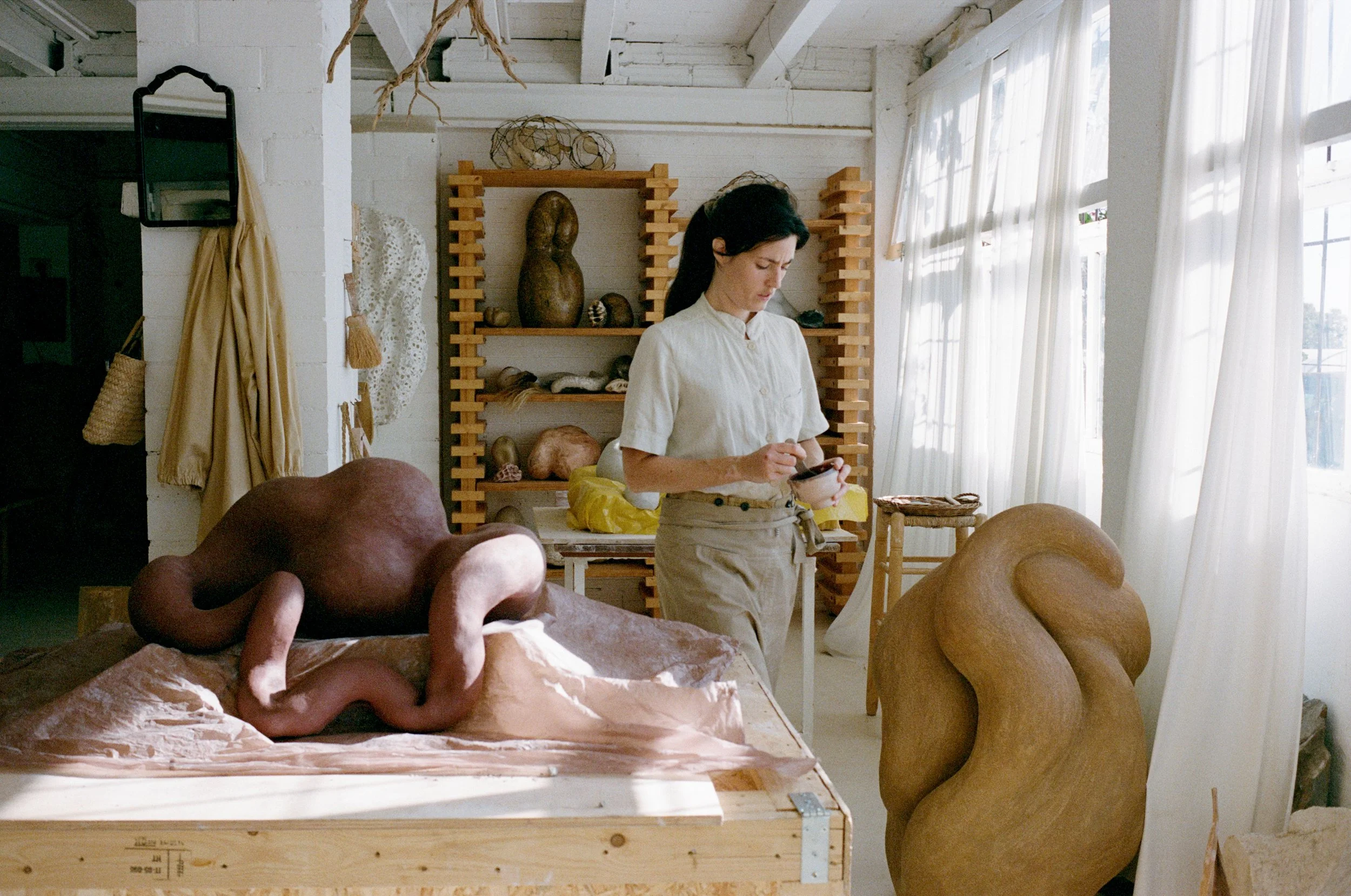
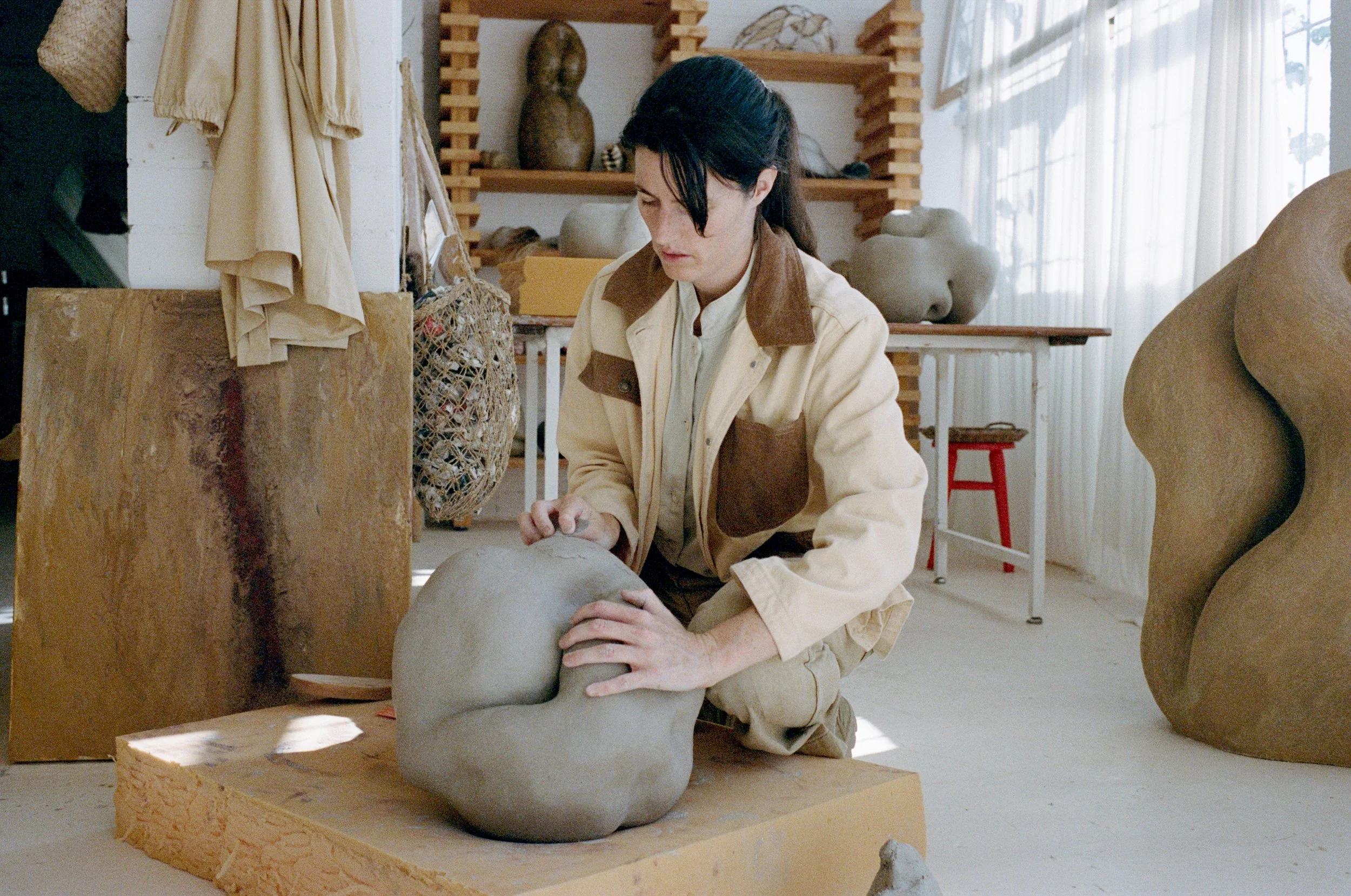
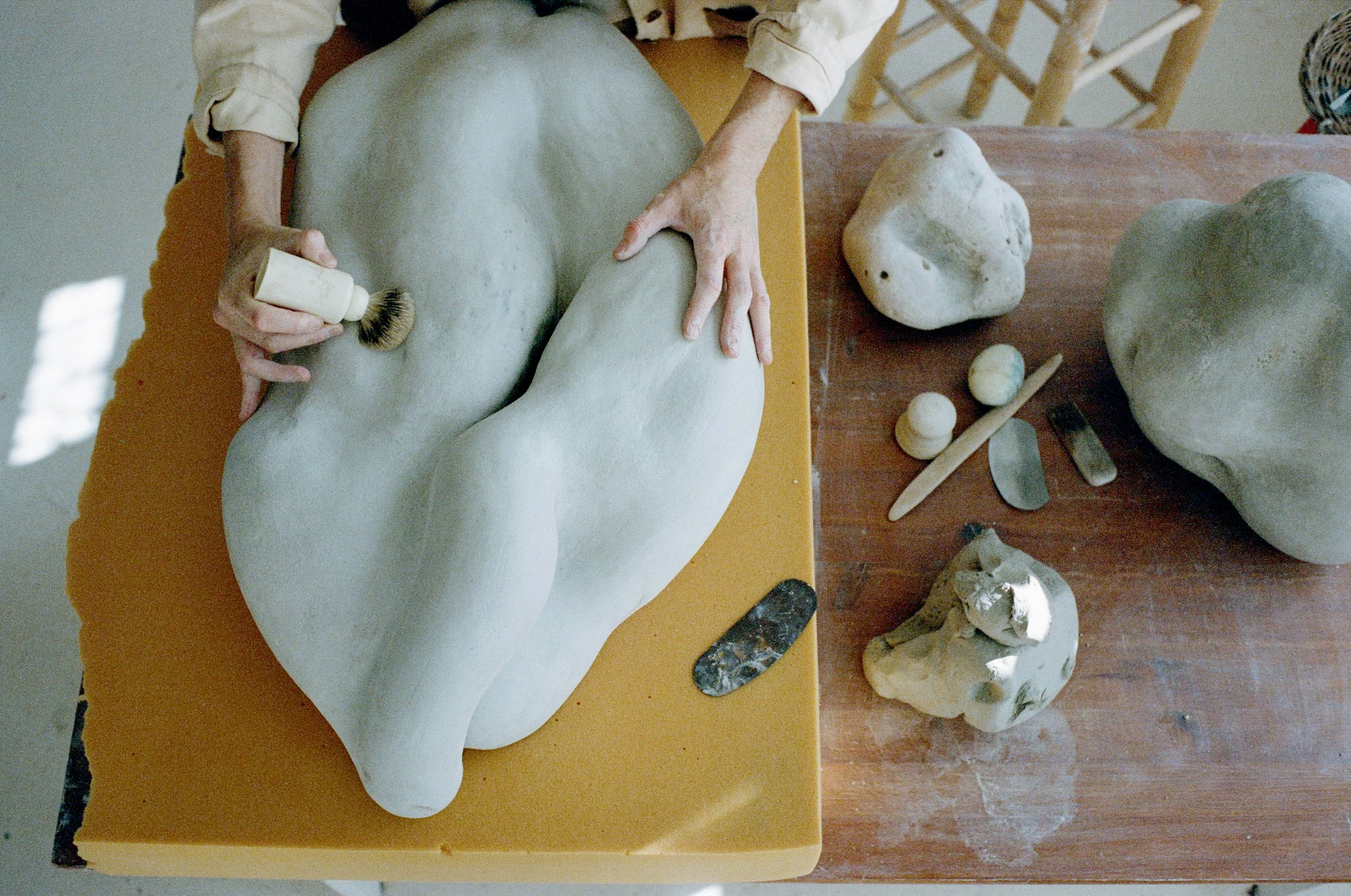
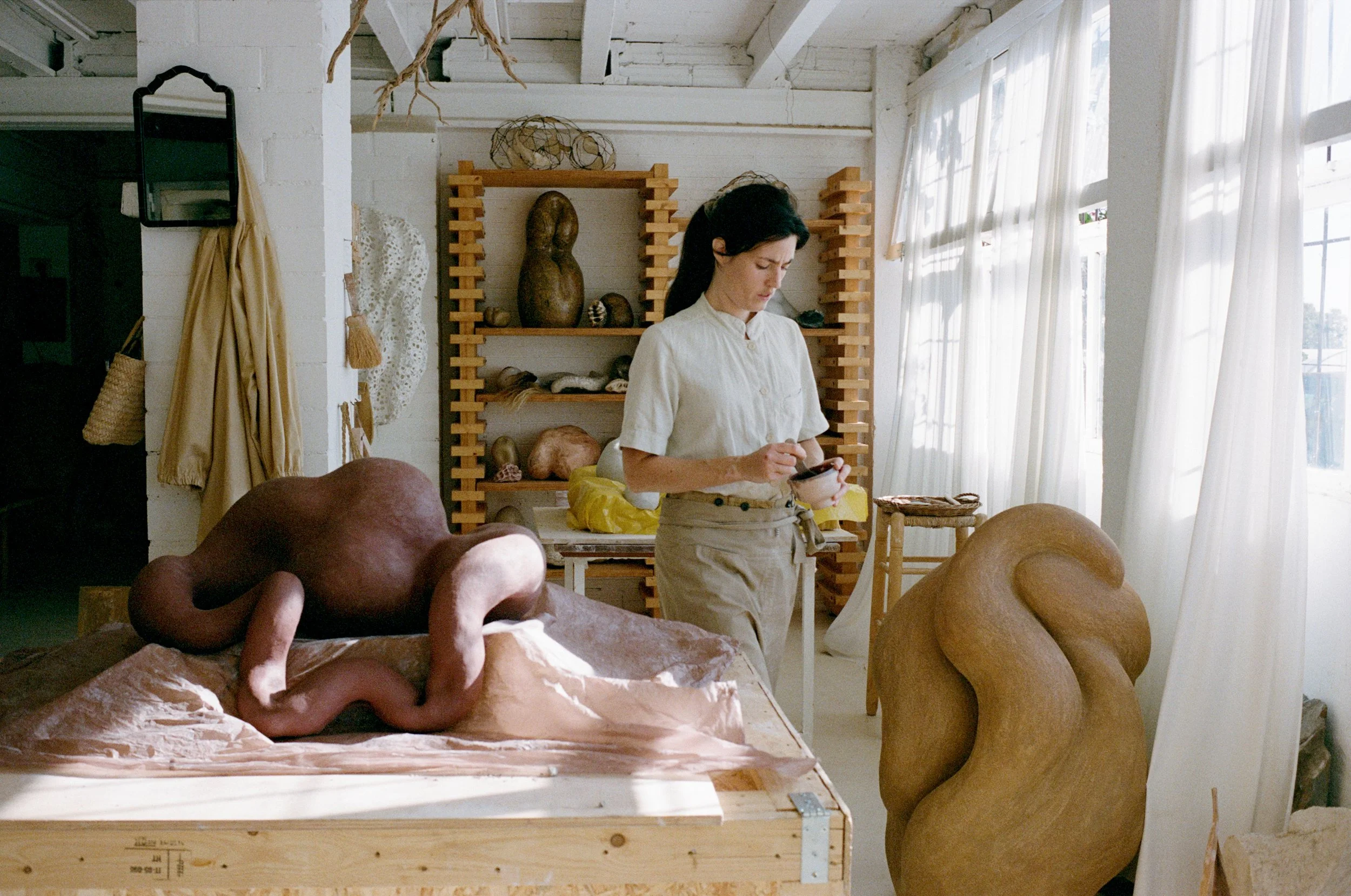
En su atelier en una antigua área industrial de Teià, Barcelona, con vistas al Mediterráneo, Berta-Blanca T. Ivanow desarrolla una práctica escultórica ligada a la materia, el proceso y el ensayo. Cerámica, performance y vida se entrelazan en una obra que se activa en el encuentro con el otro, convirtiendo cada pieza en experiencia sensorial y diálogo creativo.
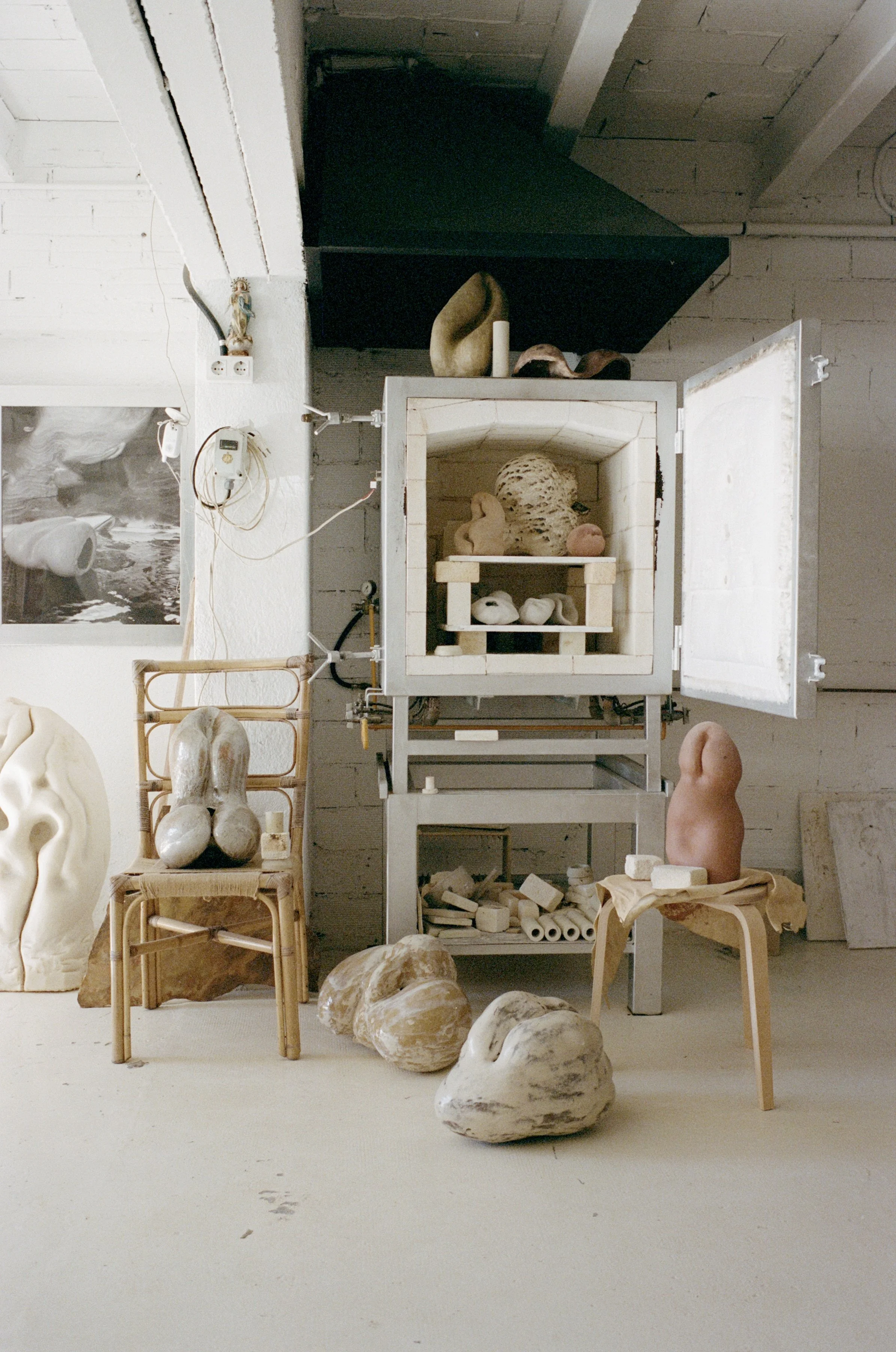
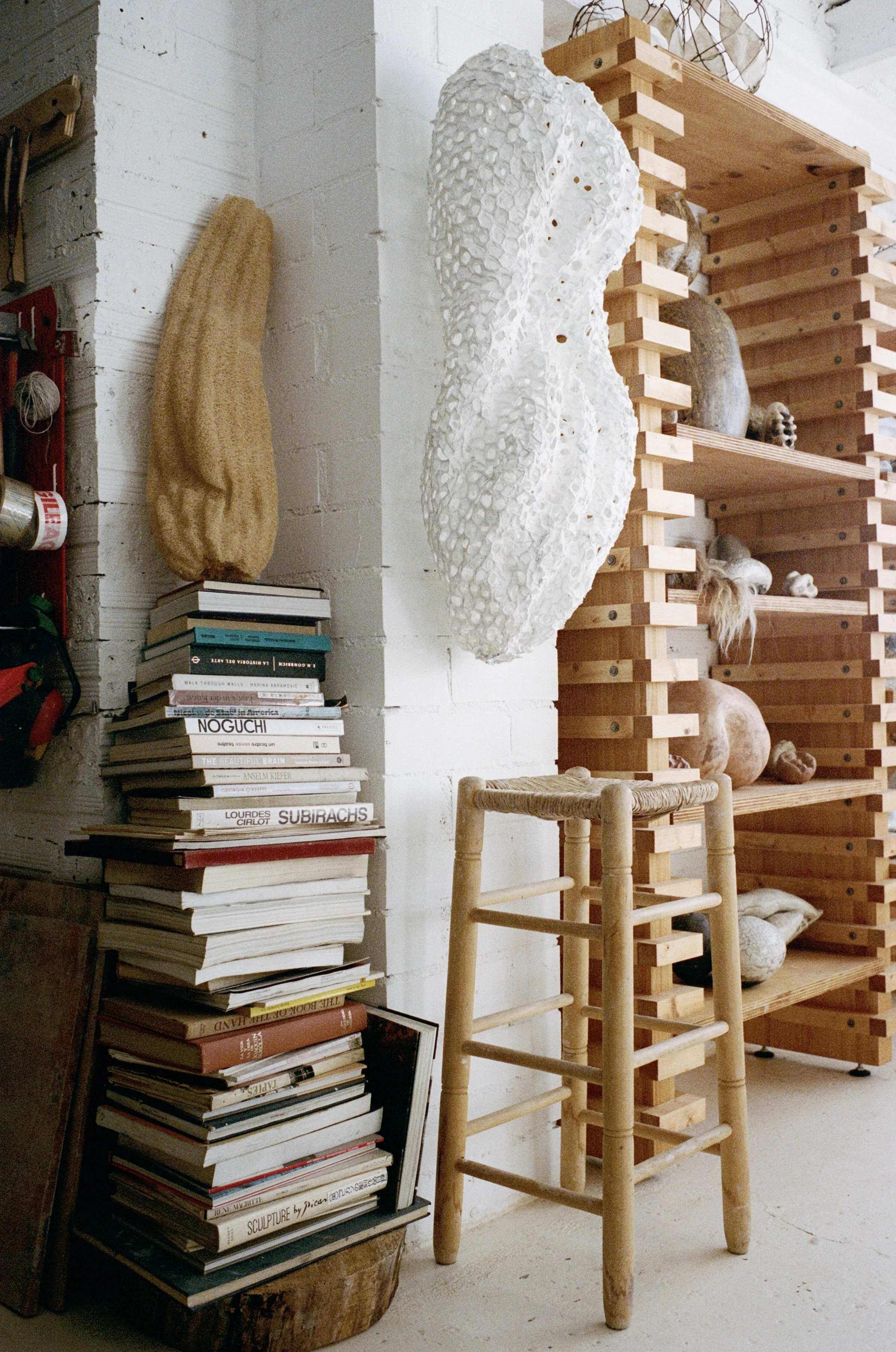
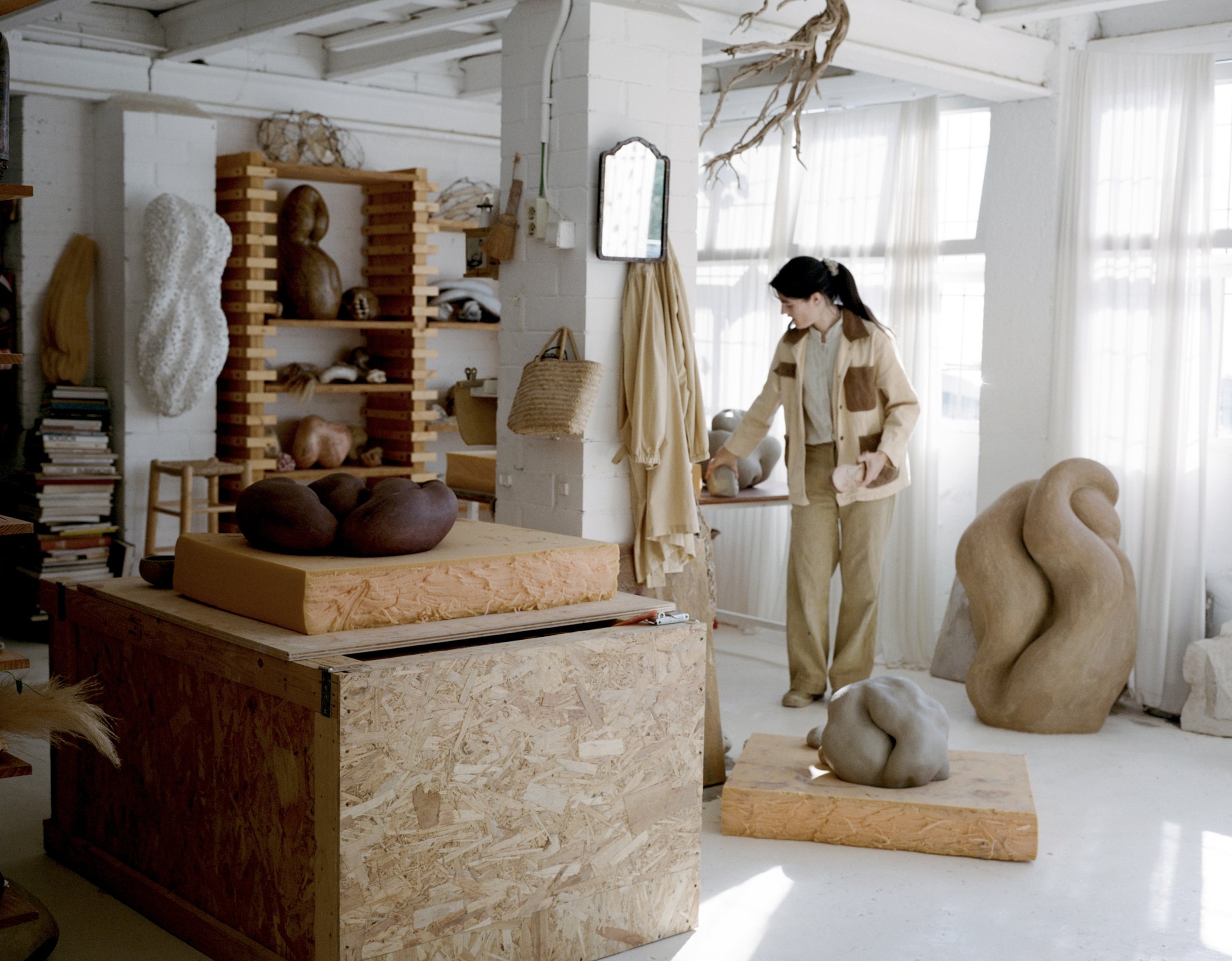
“Estar cerca del mar me da mucha paz”, dice Berta-Blanca T. Ivanow (Barcelona, 1992) mirando a través de las ventanas de su taller. “Más que en mi obra, inf luye en mi ser”. Movida por la búsqueda de un entorno conectado con la naturaleza, la artista encontró este espacio situado en Teià, una pequeña población de la comarca del Maresme a media hora de Barcelona, en 2021. Lo que antes era un taller de metal de una zona industrial hoy está habitado por una suerte de retrospectiva de su carrera junto a un archivo de documentos y piezas en proceso. “Aquí tengo la maqueta de lo que voy a llevar a la Ceramic Brussels”, la feria que se celebra del 21 al 25 de enero de 2026 en Bélgica, a la que acude de la mano de Tramuntana Gallery de Vulpellac, Girona, en un dúo show junto a Claudi Casanovas; fórmula que repetirá en mayo en la Saint Anne Gallery de París con la escultora Rosa Nguyen, mientras espera confirmación de fechas de una muestra colectiva de mujeres artistas en Vasto Gallery de Barcelona.
EXPERIMENTACIÓN .:.:.:. Su nombre se vincula a la cerámica, una disciplina que aprendió en La Bisbal d’Empordà, Girona, pero Berta-Blanca es una artista multidisciplinar. Estudió arte y diseño en Central Saint Martins de Londres, donde se especializó en diseño de moda, y continuó en The Art Students League, Nueva York: “Por allí habían pasado Ai Weiwei, Rothko...” Su regreso fue el final de un periplde ocho años dando forma a una mirada propia que hoy centra en dotar de vida a cada obra a través de la performance. Atraída por la búsqueda de respuestas a reflexiones vitales, muchas de sus piezas no se consideran acabadas hasta que se experimentan. Como sucede con los artefactos sonoros de cerámica en los que está trabajando. “Cada uno tiene una sonoridad. La idea es integrarlos en esculturas mayores. Incluso llevarlos al mar. Meterme en él y hacerlos sonar”.
“SIEMPRE DEJO ESPACIO A LA SORPRESA”
“LA LLAMA, LA CENIZA Y EL LUGAR DE CADA PIEZA EN EL HORNO TAMBIÉN INTRODUCEN MISTERIO”
EFECTO SORPRESA.:.:.:. En el taller, Berta-Blanca dispone de dos hornos para el trabajo cotidiano. “Para las piezas de 150 kilos subalquilo uno enorme que es como una habitación”. Sus últimos hallazgos están ligados a la imprevisibilidad del horno de leña. “Domino el proceso, pero siempre dejo espacio a la sorpresa: la llama, la ceniza que sobrevuela y el lugar que ocupa cada pieza en el horno también introducen un misterio que forma parte de lo que más me atrae”. La artista está viviendo un momento de expansión y las costuras de su actual espacio empiezan a hacerle “roces”.
“Estoy buscando una casa-taller en el Maresme. Me gustaría tener un área para la pieza cruda y poder construir mi horno de leña”. En este laboratorio lleno de maquetas, pruebas y elementos que extrae de la naturaleza, Berta-Blanca transforma cada objeto en un ente vivo. Un diálogo entre la artista, la materia y quien se acerca a ella.
-
-
January 2026
-
MATERIA VIVA
BERTA-BLANCA T. IVANOW
BERTA-BLANCA T. IVANOW
En su atelier en una antigua área industrial de Teià, Barcelona, con vistas al Mediterráneo, Berta-Blanca T. Ivanow desarrolla una práctica escultórica ligada a la materia, el proceso y el ensayo. Cerámica, performance y vida se entrelazan en una obra que se activa en el encuentro con el otro, convirtiendo cada pieza en experiencia sensorial y diálogo creativo.
“Estar cerca del mar me da mucha paz”, dice Berta-Blanca T. Ivanow (Barcelona, 1992) mirando a través de las ventanas de su taller. “Más que en mi obra, inf luye en mi ser”. Movida por la búsqueda de un entorno conectado con la naturaleza, la artista encontró este espacio situado en Teià, una pequeña población de la comarca del Maresme a media hora de Barcelona, en 2021. Lo que antes era un taller de metal de una zona industrial hoy está habitado por una suerte de retrospectiva de su carrera junto a un archivo de documentos y piezas en proceso. “Aquí tengo la maqueta de lo que voy a llevar a la Ceramic Brussels”, la feria que se celebra del 21 al 25 de enero de 2026 en Bélgica, a la que acude de la mano de Tramuntana Gallery de Vulpellac, Girona, en un dúo show junto a Claudi Casanovas; fórmula que repetirá en mayo en la Saint Anne Gallery de París con la escultora Rosa Nguyen, mientras espera confirmación de fechas de una muestra colectiva de mujeres artistas en Vasto Gallery de Barcelona.
EXPERIMENTACIÓN .:.:.:. Su nombre se vincula a la cerámica, una disciplina que aprendió en La Bisbal d’Empordà, Girona, pero Berta-Blanca es una artista multidisciplinar. Estudió arte y diseño en Central Saint Martins de Londres, donde se especializó en diseño de moda, y continuó en The Art Students League, Nueva York: “Por allí habían pasado Ai Weiwei, Rothko...” Su regreso fue el final de un periplde ocho años dando forma a una mirada propia que hoy centra en dotar de vida a cada obra a través de la performance. Atraída por la búsqueda de respuestas a reflexiones vitales, muchas de sus piezas no se consideran acabadas hasta que se experimentan. Como sucede con los artefactos sonoros de cerámica en los que está trabajando. “Cada uno tiene una sonoridad. La idea es integrarlos en esculturas mayores. Incluso llevarlos al mar. Meterme en él y hacerlos sonar”.
“SIEMPRE DEJO ESPACIO A LA SORPRESA”
“LA LLAMA, LA CENIZA Y EL LUGAR DE CADA PIEZA EN EL HORNO TAMBIÉN INTRODUCEN MISTERIO”
EFECTO SORPRESA.:.:.:. En el taller, Berta-Blanca dispone de dos hornos para el trabajo cotidiano. “Para las piezas de 150 kilos subalquilo uno enorme que es como una habitación”. Sus últimos hallazgos están ligados a la imprevisibilidad del horno de leña. “Domino el proceso, pero siempre dejo espacio a la sorpresa: la llama, la ceniza que sobrevuela y el lugar que ocupa cada pieza en el horno también introducen un misterio que forma parte de lo que más me atrae”. La artista está viviendo un momento de expansión y las costuras de su actual espacio empiezan a hacerle “roces”.
“Estoy buscando una casa-taller en el Maresme. Me gustaría tener un área para la pieza cruda y poder construir mi horno de leña”. En este laboratorio lleno de maquetas, pruebas y elementos que extrae de la naturaleza, Berta-Blanca transforma cada objeto en un ente vivo. Un diálogo entre la artista, la materia y quien se acerca a ella.
-
-
Enero 2026
A workshop for encounters, art and design.
CHIDY WAYNE & ISERN SERRA
CHIDY WAYNE & ISERN SERRA
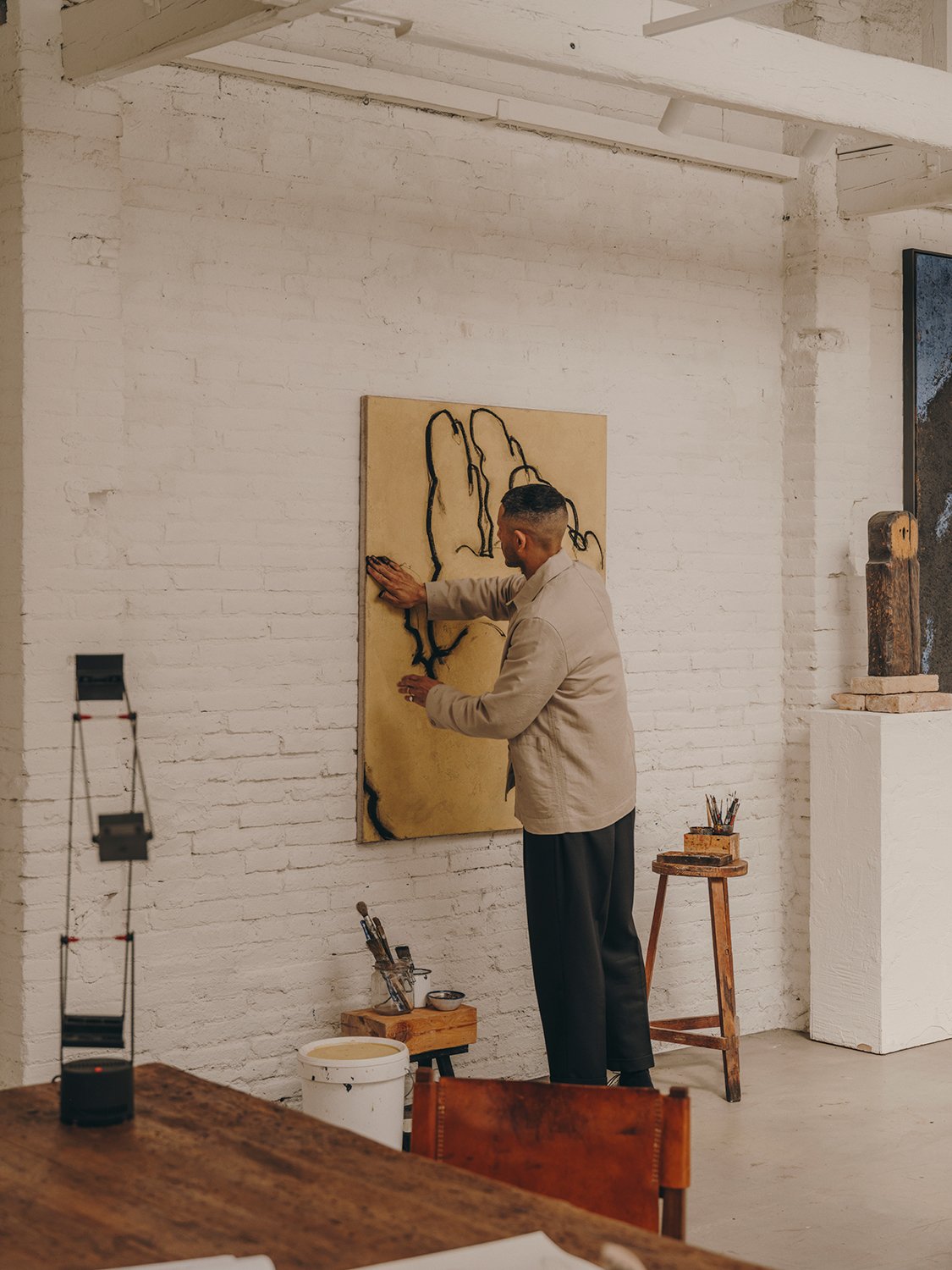
Located in a beautiful cobbled passageway in Barcelona’s Poblenou neighbourhood, Chidy Wayne’s studio workshop is a place of stillness: there’s barely a sound. Sunlight seeps into the central area of this industrial building, casting shadows and climatic shelters in functional areas, such as the office on the mezzanine level, the kitchen under the staircase and the bathroom. Isern Serra, the designer of this space, takes a step forward in his approach to creating workplaces that feel like home – or better. The result is a workshop that is as versatile, unconventional and full of charm as the art that comes to life within its walls.
Whether by fate or chance, just a few minutes before the photo shoot where he met Isern, Chidy came across the industrial building in Poblenou that would become his studio workshop. “We were waiting for Isern when I suddenly got a notification from Idealista [property website].” The rest, as they say, is history; a story infused with design, art and architecture whose narrative speaks of friendship, admiration and respect. This is how Chidy tells it: “The first thing Isern told me was that it was a joint project. I had a clear idea that I wanted a storage area, because I knew that I needed order to allow me to create and also to receive people. See these hidden drawers?” he asks as he points to the wall to the left: “They let me clear and put everything away, and create a clean space in just a few minutes. And when required, I put on my overalls and turn it into a war zone.” Isern explains: “It’s a workshop for an artist I admire and with whom there’s been a very strong connection. That was the challenge: to what extent should the design be an outstanding feature or an accompanying feature? I think we’ve found the right balance by letting the art and the artist make an impact.”
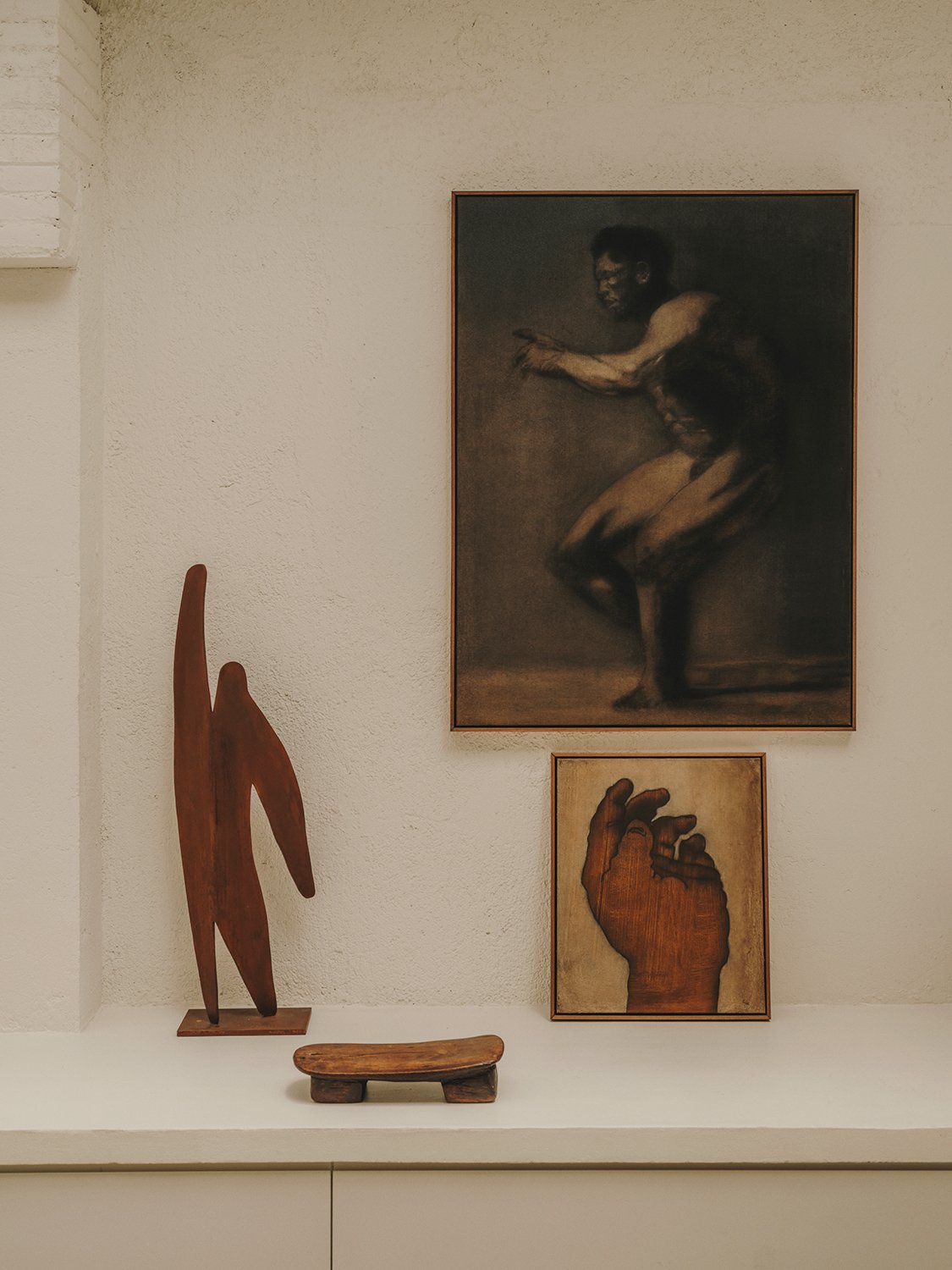
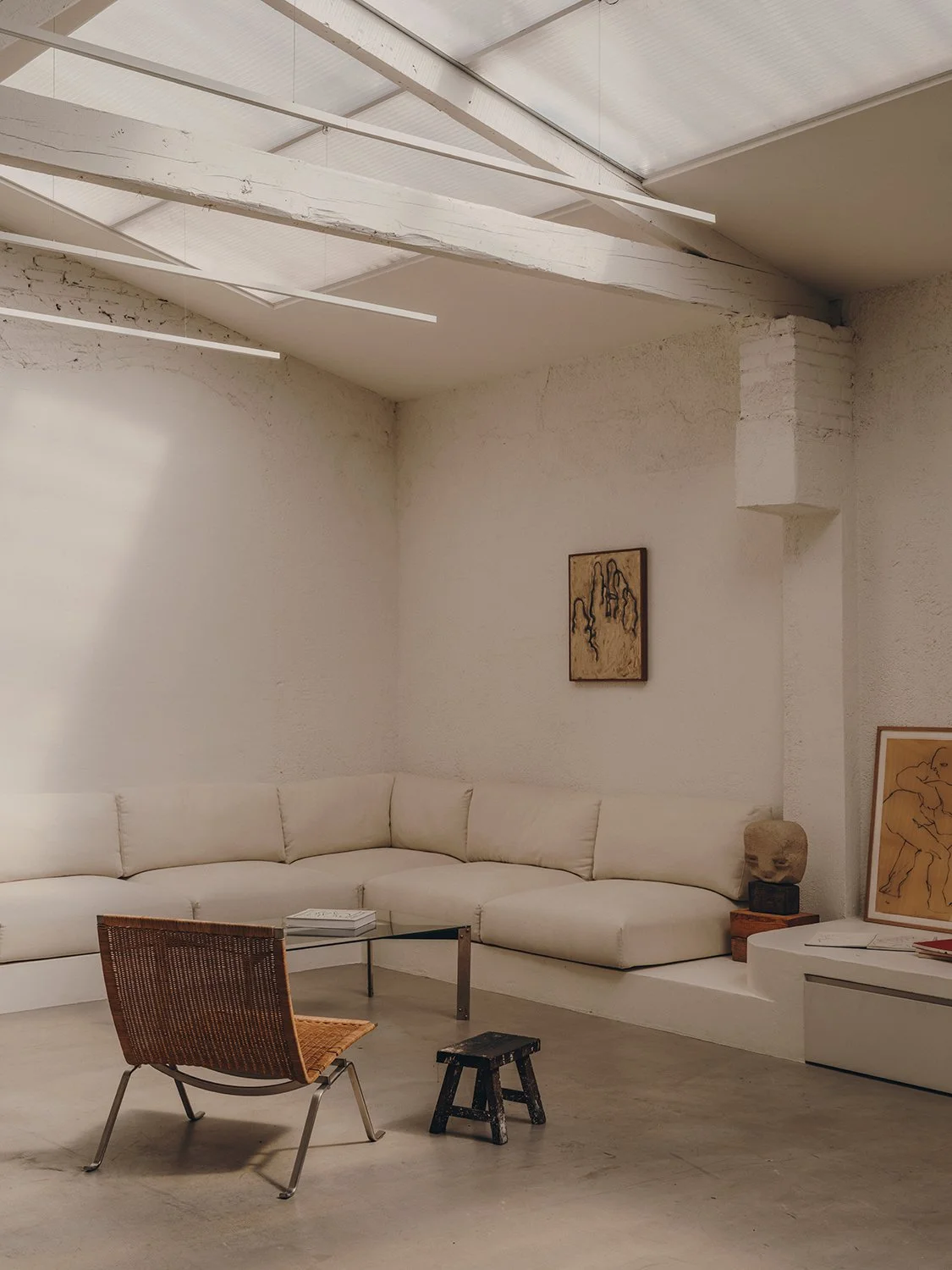
The imposing worktable where we are sitting is a clear reflection of this balance between past and future, between design and craft. “It was in my last studio, but it used to be a workbench that I’ve turned into a desk. I liked the symbolism of bringing something with me from there,” says Chidy. “I didn’t want it all to be new, because that would clash with the spirit of an artist’s studio, a space that gets messy. And it’s an important piece for me.”
“I really liked that this was part of the brief, that it was to be a place of creation for him and his work, but it was also to be a place where lots of things could happen”
After several years of being involved in exhibitions and commissions away from Barcelona, this new workshop has given Chidy the opportunity to intensify his work and connect in another way. “One of my goals was to be able to share my space in a different way. It’s something I am very proud of. Hosting dinners around a central table for between sixteen and twenty people is a very different way of sharing art. If I compare it to an exhibition, where I spend a minute or two with each person, it’s evident that I can speak at length here. I allow everyone to ask me all the questions they want and then let them investigate and gossip amongst themselves. That’s really nice.” Isern was enthusiastic about the idea: “I really liked that this was part of the brief, that it was to be a place of creation for him and his work, but it was also to be a place where lots of things could happen.”
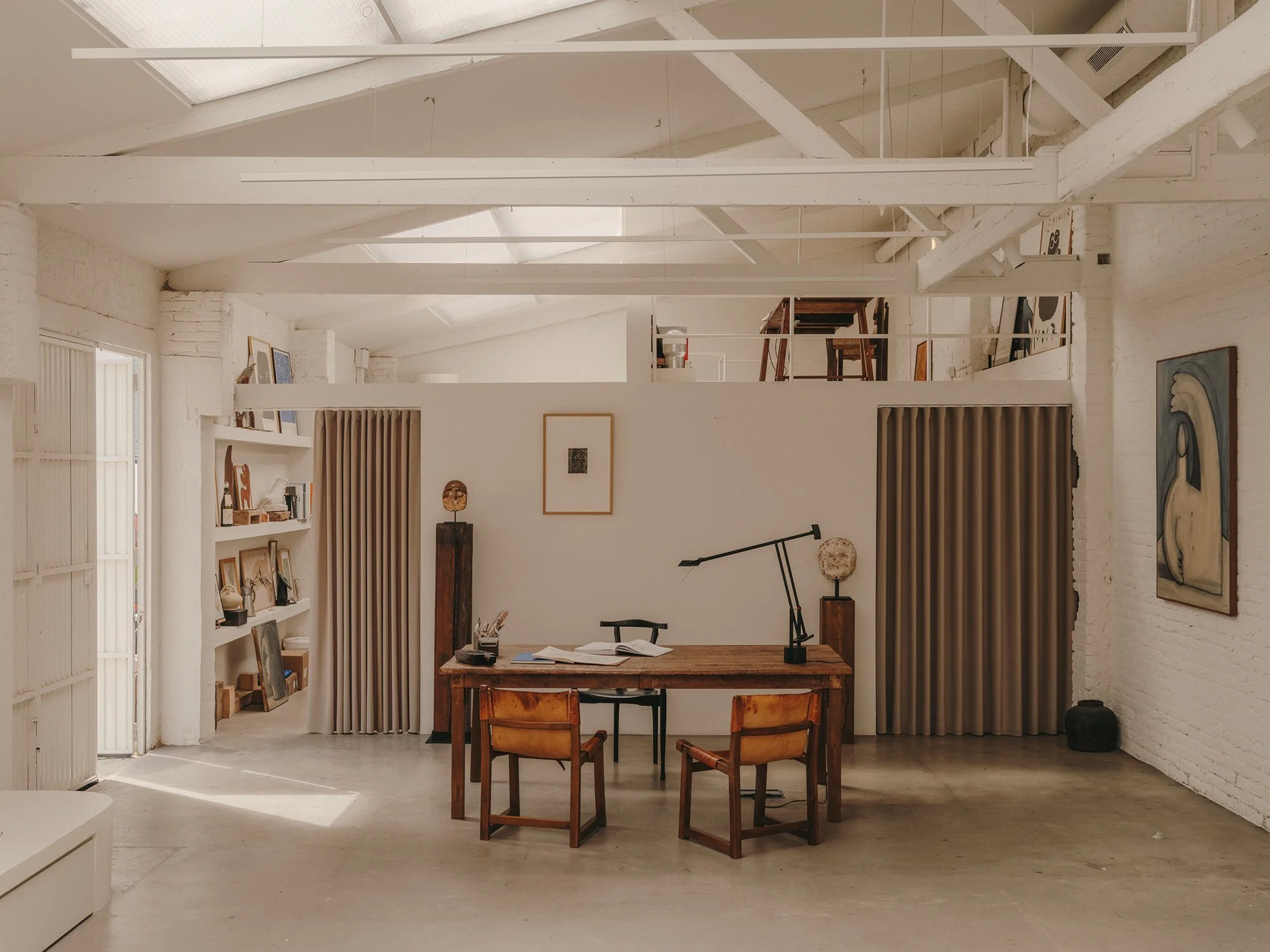
This space has transformed not only Chidy’s relationship with the public but also with his own artistic practice. “It has enabled me to take on larger formats, and it’s allowed me to start working with steel and to use the radial saw because I don’t bother anyone here. It’s like a blank canvas – there’s no better word for it – but much bigger. If something occurs to me, I can make it. And I don’t just have this space: there’s also the courtyard,” he explains.
For the artist, this workshop is like having a new partner to work with, one that makes him feel more focused. Light is the music they both dance to — and only it marks the passing of time. “I used to have a view over the street. I don’t know but do I have plenty of light. This is like a space without time, or where it stands still, where you are aware of time but you don’t hear any sirens. You’re at peace.”
Peter Zumthor once said that the atmosphere of a space is everything. In the case of this studio workshop, this energy was created by the complicity between the designer and the person who inhabits it.
-
-
Issue Nº24
October 2025
UN TALLER PARA EL ENCUENTRO, EL ARTE Y EL DISEÑO
CHIDY WAYNE & ISERN SERRA
CHIDY WAYNE E ISERN SERRA
Situado en un precioso pasaje adoquinado del barrio de Poblenou, en Barcelona, en el taller-estudio de Chidy Wayne apenas hay ruido. El sol se cuela en la zona central de esta nave industrial formando sombras y refugios climáticos en áreas funcionales como la oficina del altillo, la cocina bajo la escalera y el baño. Obra de Isern Serra, el diseñador da un paso más en su trazo como autor de lugares de trabajo donde sentirse como en casa —o mejor—. El resultado es un taller tan versátil, poco convencional y lleno de encanto como el arte que nace entre sus paredes.
Quizá fuera cosa del destino o quizá del azar. Pero apenas unos minutos antes de la sesión de fotos donde conoció a Isern, Chidy encontró la nave industrial de Poblenou en la que hoy tiene su taller-estudio. “Estábamos esperando a Isern y de repente me llega una notificación de Idealista”. El resto, como se suele decir, es historia: una historia con toques de diseño, arte y arquitectura cuya línea argumental habla de amistad, admiración y respeto. Así lo cuenta Chidy: “Lo primero que me dijo Isern es que se trataba de un proyecto de los dos. Yo tenía claro que quería una zona de almacenaje, porque sabía que necesitaba orden para poder crear y, además, recibir a gente. ¿Ves estos cajones ocultos?”, señala la pared a mi izquierda. “Me permiten poder liberarlo todo, guardarlo y crear un espacio limpio en pocos minutos. Y cuando hace falta, ponerse el mono de trabajo y que esto sea zona de guerra”. Isern se sincera: “Es un taller para un artista que admiro y con el que ha habido una conexión muy fuerte. Ese fue el reto: ¿hasta qué punto hacer que se note la marca del diseño o que sea algo que lo acompañe? Creo que hemos encontrado el equilibrio justo, donde la obra y el artista se lucen”.
La imponente mesa de trabajo donde nos hallamos sentados da buena cuenta de ese balance entre pasado y futuro, entre diseño y oficio. “Estaba en el otro estudio pero era un banco de trabajo que he convertido en escritorio. Me gustaba la idea simbólica de traerme algo de allí”, dice Chidy. “No quería que fuese todo nuevo, porque entonces rechinaba con el espíritu del taller de un artista que ensucia”. Y es una pieza importante para mí.
“Me gustaba mucho que esto fuera parte del briefing. Que fuese un lugar de creación para él y su obra, pero que también pasasen muchas cosas.”
Después de varios años involucrado en exposiciones y trabajos fuera de Barcelona, este nuevo taller le ha dado a Chidy la oportunidad de profundizar en su obra y conectar de otra manera. “Uno de los propósitos era poder compartir mi espacio de otra forma. Es algo de lo que estoy muy orgulloso. Hacer cenas en una mesa central y reunir entre dieciséis y veinte personas es una manera muy distinta de compartir el arte. Si lo comparo con una exposición, donde estoy un minuto o dos con cada persona, veo que aquí me explayo. Permito que me pregunten todo lo que quieran y dejo que investiguen, que vayan cotilleando. Eso es muy chulo”. A Isern le entusiasmaba la idea: “Me gustaba mucho que esto fuera parte del briefing. Que fuese un lugar de creación para él y su obra, pero que también pasasen muchas cosas”.
Este espacio ha transformado no solo la relación de Chidy con el público sino también con su propia práctica artística. “Me ha permitido hacer formatos más grandes y he podido empezar a trabajar el acero y usar la radial porque aquí no molesto a nadie. Es como un lienzo en blanco —nunca mejor dicho— pero mucho más grande. Si algo se me ocurre, puedo hacerlo. Y no solo tengo este espacio: también está el patio”, resume.
Para el artista, este taller es como un nuevo compañero de trabajo donde se siente más enfocado. La luz es la música que ambos bailan y solo ella señala el paso de las horas: “Antes tenía vistas a la calle. Ahora no, pero tengo mucha luz. Es como un espacio atemporal, un poco suspendido, en el que eres consciente del tiempo pero no escuchas sirenas. Estás en paz”.
Peter Zumthor dijo que la atmósfera de un espacio lo es todo. En el caso de este taller-estudio, esa energía nace de la complicidad de quien lo diseña y quien lo habita.
-
-
issue Nº24
Octubre 2025
OPENHOUSE ISSUE NO. 24 EDITOR’S LETTER
THE MATTER OF THE ETERNAL
THE MATTER OF THE ETERNAL
We are all matter. And matter, by its very nature, does not disappear; it transforms and reshapes itself, taking on new forms that are sometimes barely perceptible. This is something we sense as we walk along a cobbled street in Rome. The stones beneath our feet harbour more than just the present; they carry centuries of human history, dust and desire, wars and art. Each stone has a hidden story, yet we tread on them casually, almost without thinking. Perhaps it is because deep down, we know that they were there before us, and they will remain long after we are gone.
In English, "matter" can refer to both physical substance as well as to what is truly significant. At the heart of this dual meaning lies something essential: matter not only shapes us as individuals, but also as a community. For centuries we have tried to transcend matter by searching for the invisible through religion, through astrology and thought. Yet it is within matter itself that our truest expression resides: in art, which brings us face to face with emotions such as love, fear, longing and pain. All that we cannot hold in our hands captures us from within.
The echo of the past feels louder today: Think of the Greece as seen by Carla Cascales; Luca Guadagnino's intimate take on Rome; the whispering marbles of Villa Medici; and the cornices of Villa Caffetto. These are the signs of a time when it is no longer the “new” that seduces us, but the certainty of what is well made. A quiet, steady return to the essential, to techniques that never needed to be labelled as sustainable because they stemmed from the hands of craftspeople, and have endured.
In this issue, we pay tribute to that eternal matter. Chidy Wayne welcomes us to his new workspace in Barcelona, where he has devoted himself to developing an artistic language, one that has brought him worldwide recognition, including at Frieze London (taking place as I write these words). Carla Cascales Alimbau takes us back to the beginning, to Hydra, with pieces that are rooted in dialogue. Yoyo Balagué shows us how she creates a corporeal, almost performative art at her atelier on the Costa Brava. And Oliver Gustav opens the doors to his intimate universe, sharing the matter that makes him come alive and with which he shapes his very own world.
Ultimately, that is what we are: matter that feels, remembers, changes and creates. This issue is an invitation to explore that shared matter – our common ground, and our way forward.
OPENHOUSE ISSUE No. 24 CARTA DEL EDITOR
THE MATTER OF THE ETERNAL
THE MATTER OF THE ETERNAL
We are all matter. And matter, by its very nature, does not disappear; it transforms and reshapes itself, taking on new forms that are sometimes barely perceptible. This is something we sense as we walk along a cobbled street in Rome. The stones beneath our feet harbour more than just the present; they carry centuries of human history, dust and desire, wars and art. Each stone has a hidden story, yet we tread on them casually, almost without thinking. Perhaps it is because deep down, we know that they were there before us, and they will remain long after we are gone.
In English, "matter" can refer to both physical substance as well as to what is truly significant. At the heart of this dual meaning lies something essential: matter not only shapes us as individuals, but also as a community. For centuries we have tried to transcend matter by searching for the invisible through religion, through astrology and thought. Yet it is within matter itself that our truest expression resides: in art, which brings us face to face with emotions such as love, fear, longing and pain. All that we cannot hold in our hands captures us from within.
The echo of the past feels louder today: Think of the Greece as seen by Carla Cascales; Luca Guadagnino's intimate take on Rome; the whispering marbles of Villa Medici; and the cornices of Villa Caffetto. These are the signs of a time when it is no longer the “new” that seduces us, but the certainty of what is well made. A quiet, steady return to the essential, to techniques that never needed to be labelled as sustainable because they stemmed from the hands of craftspeople, and have endured.
In this issue, we pay tribute to that eternal matter. Chidy Wayne welcomes us to his new workspace in Barcelona, where he has devoted himself to developing an artistic language, one that has brought him worldwide recognition, including at Frieze London (taking place as I write these words). Carla Cascales Alimbau takes us back to the beginning, to Hydra, with pieces that are rooted in dialogue. Yoyo Balagué shows us how she creates a corporeal, almost performative art at her atelier on the Costa Brava. And Oliver Gustav opens the doors to his intimate universe, sharing the matter that makes him come alive and with which he shapes his very own world.
Ultimately, that is what we are: matter that feels, remembers, changes and creates. This issue is an invitation to explore that shared matter – our common ground, and our way forward.