EN EL CORAZÓN DE LA FAMILIA ARTIGAS
JOAN GARDY ARTIGAS
A medida que avanza nuestra charla, me doy cuenta de que sería más sencillo enumerar quién no ha visitado este insólito rincón.
-
Reportaje sobre la Fundación Artigas de la mano de la familia Artigas.
-
Openhouse magazine Issue Nº15
-
Fotografiado por Marina Denisova
marina-denisova.comFundació Artigas
fundacio-artigas.com -
FUNDACIÓ
ARTIGAS
Un pequeño cartel que indica el ‘Camí de l'Església’ nos lleva al Racó de Gallifa, la masía situada en este pequeño pueblo del interior de Barcelona donde se han creado algunas de las piezas más reconocibles de la historia de la pintura y la cerámica del siglo pasado.
Siguiendo el sendero, entre las hojas de los árboles, se observa un cartel de madera que reza “Fundación J. Llorens Artigas”. Creada en 1989 por el escultor Joan Gardy Artigas, ésta rinde homenaje a su padre, Josep Llorens Artigas (Barcelona, 1892-1980), y reconoce su labor con la cerámica como disciplina artística al tiempo que fomenta la educación, la cultura y las artes.
En esta familia de artistas, cada nueva generación lleva más lejos la obra de su antecesor. Si uno analiza la biografía de Josep Llorens Artigas con respecto a Joan Gardy, pareciera que en lugar de un hijo, este último ejerciera de alter ego. Nacidos en junio, con 2 días y 44 años de diferencia, ambos trabajaron en la galería Maeght, ambos vivieron en París y los dos sintieron la pulsión de la cultura y tradición asiáticas. Juntos, además, colaboraron con diversidad de creadores, entre los cuales, quizá Joan Miró fuera con quien lo hicieran más intensamente y como si los tres fuesen una gran familia.
Isao Llorens forma parte de la tercera generación Artigas que se dedica al arte. Éste compagina su trabajo como director de la fundación con la creación de una obra que plasma en pinturas, tapices y esculturas. Él es quien nos recibe a las puertas del edificio proyectado por Bruce Graham donde se encuentran la galería, la biblioteca, los apartamentos para residentes y los talleres. El mural de Frederic Amat realizado con unos 700 pechos de cerámica en la fachada del primero de estos últimos, da paso a espacios de trabajo interconectados con grandes ventanales y balcones que parecen sumergirse en plena naturaleza.


Los Pits de Gallifa [pechos de Gallifa] se incorporaron a las diversas obras al aire libre que pueblan este espacio en 2002, tras ser cocidos en el horno de leña Koryu —nombre de un tipo de cerámica coreana del siglo XVII—, uno de los siete que posee la fundación. Los mismos hornos que emplearon Miró, Llorens Artigas y Joan Gardy Artigas, para crear los murales para la sede de la UNESCO en París (1955), la Universidad de Harvard (1960) y El Museo Guggenheim de Nueva York (1966) entre otros.
Este lugar es una suerte de laberinto íntimo y en calma donde los problemas del exterior parecen desvanecerse por completo. Siguiendo el camino del racó, llegamos a la masía, al lago y al loft, un micromundo de fusión entre Cataluña, Japón y el mundo donde conocemos a Joan y Mako Artigas. “¿Catalán, castellano o inglés?” pregunta Joan amable mientras nos invita a entrar. El espacio es sumamente acogedor. Joan prepara café y lo sirve en diversas tazas que coloca sobre unos platillos de madera. Isao le reprende jocoso “¡En casa de un ceramista y platos de madera!” Su nuevo hogar con vistas al lago es un loft situado en el antiguo taller en el que Josep Llorens y Joan Miró realizaron obras de grandes dimensiones.
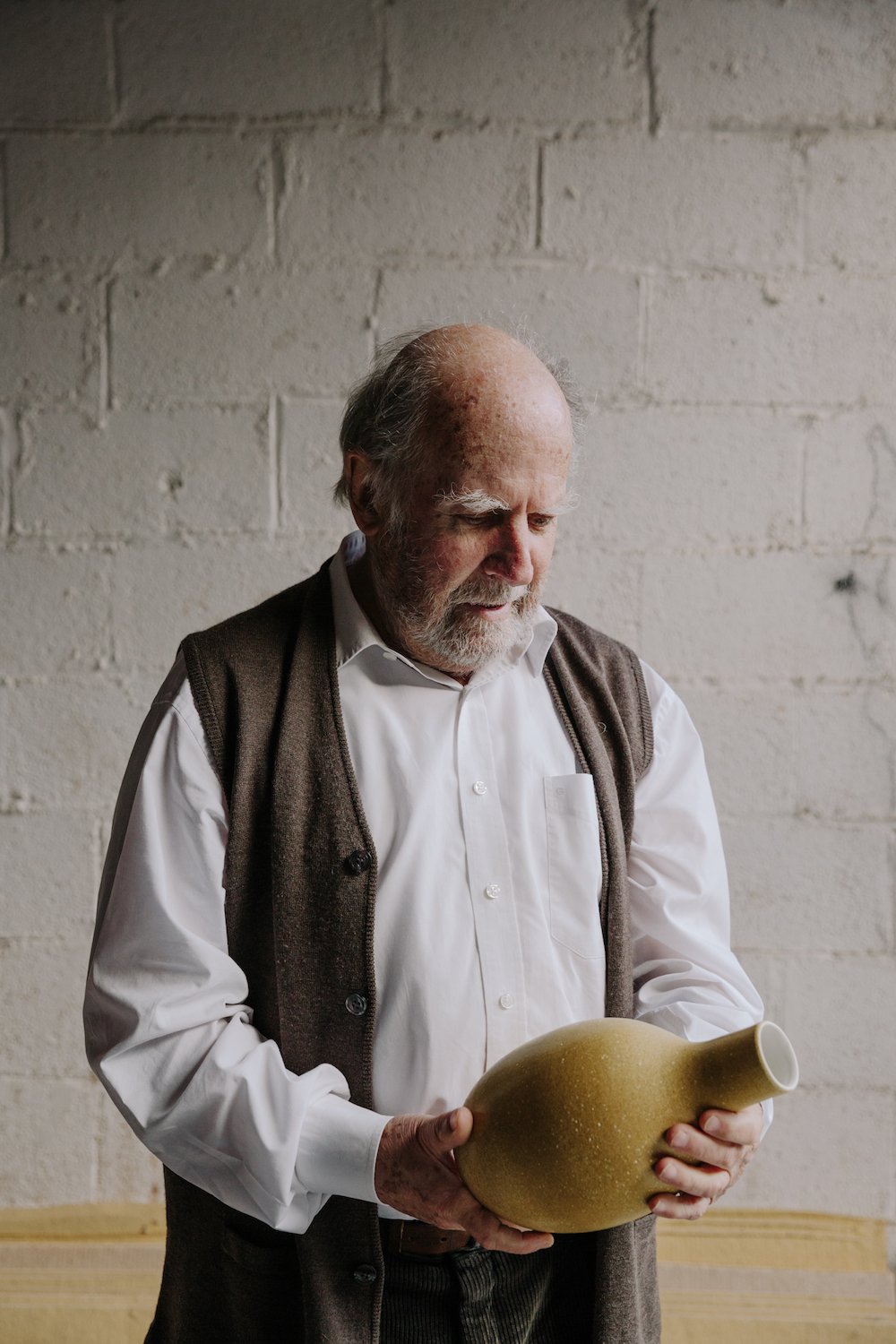
A sus 83 años de edad, Joan Gardy Artigas transmite una gran alegría de vivir pero también la satisfacción de haber vivido como ha querido. “He tenido una vida muy completa”, resume sonriente. Fue Artigas padre, profesor de Mako en la escuela Massana de Barcelona, quien presentó al matrimonio que tengo sentado frente a mi hoy. “Yo me disponía a viajar a Japón de mano de la fundación March. Ella [Mako] estaba estudiando en Barcelona”, me explica Joan. “En aquellos tiempos, ir a Japón no resultaba fácil” continúa Mako. Así que ella le ayudó y fue allí donde se casaron. La impronta japonesa de Mako se respira en cada detalle tanto de la casa como de la fundación. Las ventanas son de estilo shōji —los paneles deslizantes tan característicos del país nipón—. Ésta nos explica que, igual que varios de los muebles que visten la estancia, son originales del hogar en el que creció, de donde los rescató antes de su derribo. “Estos muebles deben de tener más de 150 años” señala riendo.
“A sus 83 años de edad, Joan Gardy Artigas transmite una gran alegría de vivir pero también la satisfacción de haber vivido como ha querido. ‘He tenido una vida muy completa’, resume sonriente”


La galería de la Fundación acoge una muestra del trabajo realizado por Mako (Tokio, 1937), que recientemente ha explorado la cerámica. Ésta vino a España a los 23 años de edad en barco, parando en diferentes puertos durante un mes. “Yo estaba en una escuela de monjas españolas y tenía muchas ganas de salir de Japón por los terremotos, tifones y demás desastres. Así que pensé que, con la ayuda de las monjas, quizá venir a España sería fácil: «voy a España y de ahí luego me voy a París». Pero apareció Joanet y me quedé”. El matrimonio, no obstante, sí acabó viviendo entre París y Barcelona, sin fallar a la visita anual a Japón entre otros lugares.
Salimos al jardín para retratar a la familia. Encantador, presumido y algo tímido, Joan sonríe y se lamenta burlón de no tener la barba más larga “que siempre da un aspecto más interesante, más profundo”. En nuestra conversación aparecen nombres como Picasso, Chagall, Braque y Giacometti, a quienes Joan conoció en París. Los tres recuerdan a Elsa Peretti —muy vinculada a la fundación y amiga de la familia cuya pérdida se produce mientras escribo estas líneas—. Una generación que en los años 60 y 70, se dio en llamar la Gauche Divine. “Todos estábamos en Bocaccio”, resume Joan. La discoteca ubicada en la calle Muntaner de Barcelona entre 1967 y 1985, fue un lugar de encuentro entre artistas e intelectuales como Oriol Maspons, Ricardo Bofill, Joan de Sagarra, Toni Miserachs, Óscar Tusquets y Colita.
Si por Bocaccio pasaron los artistas más relevantes de la escena catalana, por el racó de Gallifa lo hicieron grandes nombres de la escena internacional como Barry Flanagan, Joan Mora, Antoni Tàpies y Sam Szafran entre otros. A medida que avanza nuestra charla, me doy cuenta de que sería más sencillo enumerar quién no ha visitado este insólito rincón. Estamos casi despidiéndonos pero, como casi siempre sucede, las palabras fluyen ahora con mayor facilidad. “¿Eres de Bilbao? Frank Gehry –autor del Museo Guggenheim Bilbao– también estuvo aquí”.
IN THE CORE OF ARTIGAS FAMILY
JOAN GARDY ARTIGAS
As our conversation progresses, I realise that it would be easier to list the people who have not visited this extraordinary place.
-
Story about Artigas Fondation throughout the eyes of the Artigas Family.
-
Openhouse magazine Issue Nº15
-
Photographed by Marina Denisova
marina-denisova.comFundació Artigas
fundacio-artigas.com -
Openhouse magazine Artigas
FUNDACIÓ
ARTIGAS
A small sign with the words “Camí de l’Església” [Church Way] marks the way to El Racó [The Corner], a country house located in Gallifa, a small village in the inland area of the province of Barcelona, where some of the most recognisable pieces in the history of twentieth-century painting and ceramics were created. Following the path, you can see through the leaves of the trees a wooden sign that reads “Fundación J. Llorens Artigas”, This is, the foundation created in 1989 by the sculptor Joan Gardy Artigas as a tribute to his father —Josep Llorens Artigas (b. Barcelona, 1892–1980), to acknowledge his work with ceramics as an artistic discipline while fostering education, culture and the arts.
Each new generation of this artistic family has built on and furthered the work of their predecessors. If you compare the biography of Josep Llorens Artigas with that of his son, Joan Gardy, it would seem that the latter is more of an alter ego than a son. Both were born in June, 44 years and two days apart; both worked at the Galerie Maeght; both lived in Paris; and both were drawn to Asian cultures and traditions. They also worked together on collaborations with a number of different artists, Miró being perhaps the one with whom they had the most in-depth collaboration, as if the three were part of one large family.
Isao Llorens is part of the third generation of the family devoted to art. He combines his work as director of the foundation with the creation of a body of work that includes paintings, tapestries and sculptures. He welcomes us at the door of the building designed by Bruce Graham, where the gallery, library, apartments for residents and studios are located. The mural by Frederic Amat, made with some 700 ceramic breasts studded over the façade, leads to the interconnected work spaces with large windows and balconies that seem to blend in with their natural setting. The Pits de Gallifa [breasts of Gallifa] are but one of many open-air works that fill this space, and were fired in one of the foundation's seven wood-fired kilns used for Goryeo ceramics – a type of seventeenth-century Korean pottery. These same kilns were used by Miró, Llorens Artigas and Joan Gardy Artigas to create the murals for the UNESCO headquarters in Paris (1955), Harvard University (1960) and the Guggenheim Museum in New York (1966), among others.
“At the age of 83, Joan Gardy Artigas exudes an exuberant enjoyment of life, together with the satisfaction of having lived life as he wanted. ‘I’ve had a very full life,’ he says with a smile. ”
This place forms a private and tranquil maze where the problems of the outside world seem to vanish completely. We follow the way of El Racó and arrive at the main house, the lake and the loft—a microcosm that is a fusion of Catalonia, Japan and the world, where we meet Joan and Mako Artigas. “Catalan, Spanish or English?” Joan asks kindly as he invites us in. The space is strikingly welcoming. Joan makes coffee and serves it in several cups that he sets on wooden saucers. Isao playfully chides him, “In a potter’s house—and there are wooden plates...” Their new home overlooking the lake is a loft located in the former studio where Josep Llorens and Joan Miró created the large-scale murals.
At the age of 83, Joan Gardy Artigas exudes an exuberant enjoyment of life, together with the satisfaction of having lived life as he wanted. “I've had a very full life,” he says with a smile. It was Artigas senior, Mako’s teacher at the Escola Massana art school in Barcelona, who introduced the couple sitting in front of me today. “I was going to Japan by the hands of Fundación March. She [Mako] was studying in Barcelona,” Joan explains. “In those days, it wasn’t easy to get to Japan,” Mako continues. So, she offered to help him and that was where they got married. Mako’s Japanese imprint can be felt in every detail of both the house and the foundation. The windows are in the style of shōji screens, the sliding panels that are so emblematic of Japan. She explains to us that they came from the house in which she grew up, like some of the other pieces of the furniture in the room, which she was able to salvage before the house was torn down. “This furniture must be over 150 years old,” she laughingly points out.
The gallery at the foundation houses an exhibition of work by Mako (b. Tokyo, 1937), who has recently begun to explore ceramics. She came to Spain at the age of 23 by ship, stopping off at different ports for a month. “I was at a convent school run by Spanish nuns, and I very much wanted to leave Japan because of the earthquakes, typhoons and other disasters. So, I thought that, with help from the nuns perhaps it would be easy to come to Spain: ‘I’m going to Spain and from there I’m going to Paris.’ But Joanet appeared and I stayed.” However, the couple did end up living between Paris and Barcelona, without missing their yearly visit to Japan, among other places. We go out into the garden to take photographs of the family. Charming, self-conscious and somewhat shy, Joan smiles and jokingly regrets not having a longer beard “which always gives a more interesting and more profound look”. Our conversation brings up names such as Picasso, Chagall, Braque and Giacometti, whom Joan met in Paris. All three recall Elsa Peretti, a figure closely associated with the foundation and a friend of the family (whose death has coincided with the writing of this article). They were part of a generation known as the Gauche Divine in the '60s and '70s. “We all went to Bocaccio,” Joan explains. The night club, located on Barcelona’s Carrer Muntaner between 1967 and 1985, was a meeting place for artists and intellectuals such as Oriol Maspons, Ricardo Bofill, Joan de Sagarra, Toni Miserachs, Óscar Tusquets and Colita.
While the most important figures on the Catalan arts scene frequented Bocaccio, the greats of the international scene, such as Barry Flanagan, Joan Mora, Antoni Tàpies and Sam Szafran among others, frequented El Racó. As our conversation progresses, I realise that it would be easier to list the people who have not visited this extraordinary place. The time has almost come to say goodbye, but, as is almost always the case, our words are flowing more easily now. “Are you from Bilbao? Frank Gehry —architect of the Guggenheim Museum Bilbao, came here, too.”

A disarming voice
Benjamin’s art is not only perceived but is also thought-provoking. As the first notes emerge from the piano, I think of him as an island, wild and small, floating proudly, free and alone near a densely populated archipelago.
BENJAMIN CLEMENTINE
-
Chronicle and story about Benjamin Clementine’s performance at Villa Lena, Italy.
-
Openhouse magazine
Issue 15 -
Photos by Martino di Napoli Rampolla and Guglielmo Profeti
-
BENJAMIN
CLEMENTINE
Between renunciations, farewells and breakups, our existence takes place between moments of mourning for what we leave behind and the excitement of what is to come. Days go by as we choose some things and reject others, and yet, often, a decision can be perceived as a betrayal or a sign of weakness. Other times, however, it can be considered to be an act of optimism; the affirmation that things can not only be different but better. A gesture that brings us closer to knowing ourselves, to drawing the outline of the journey we wish to embark on in this time lapse we call life. In the case of Benjamin Clementine, renunciation appeared very early on; a direct consequence of learning that, in order to be happy, he had to forego all that was not music. This decision led him along an arduous, solitary path on which he was determined to give up everything but himself.
In early autumn, we visited Villa Lena, the art residency in Tuscany where Benjamin had been invited to perform during a period when restrictions in Europe had eased somewhat. It was a cold and sunny Saturday afternoon. As we made our way along the bumpy road leading to the house, a combination of enthusiasm and excitement was in the air.
“I learned to see the positive side of everything. Not having to pay rent allowed me to develop artistically”
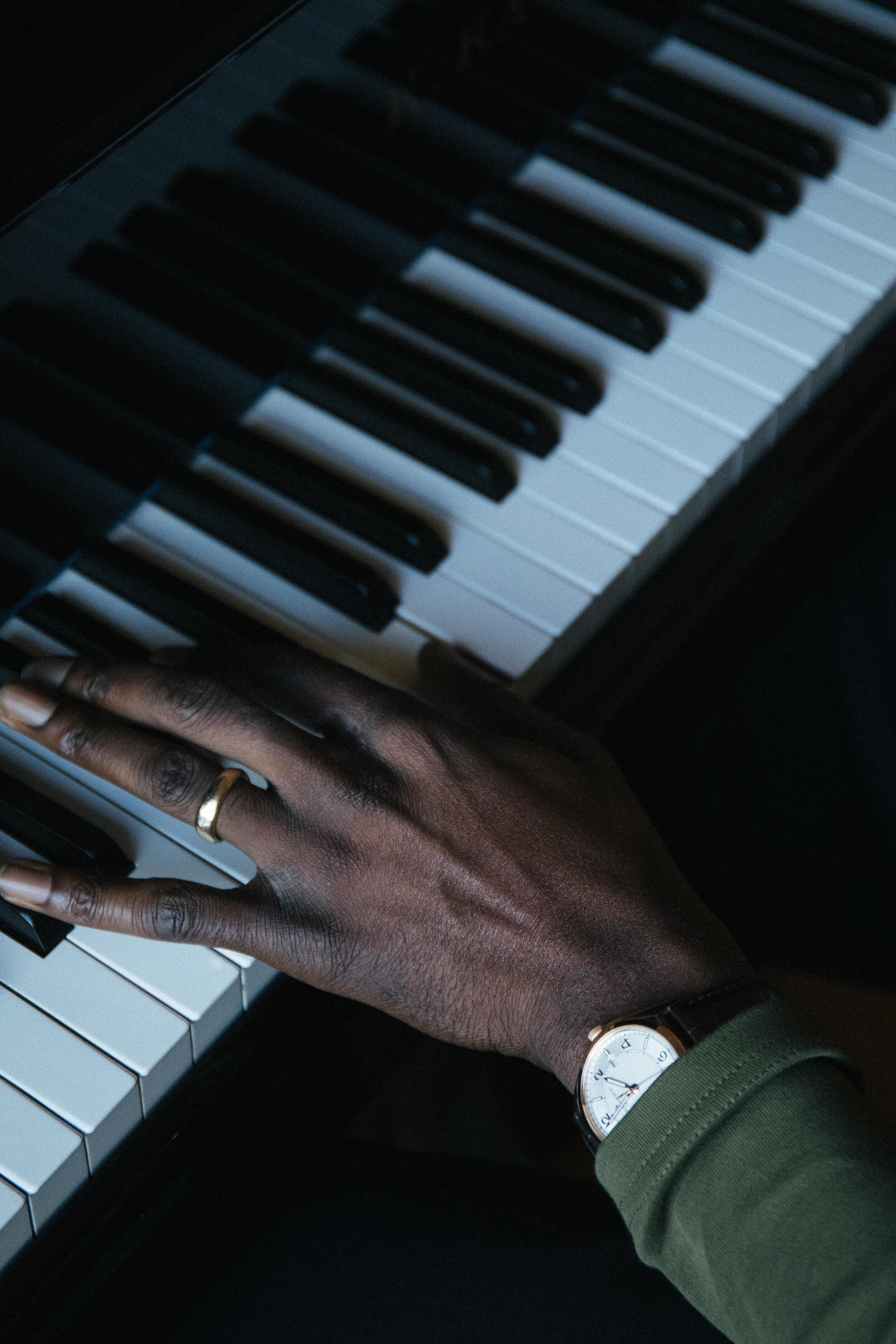
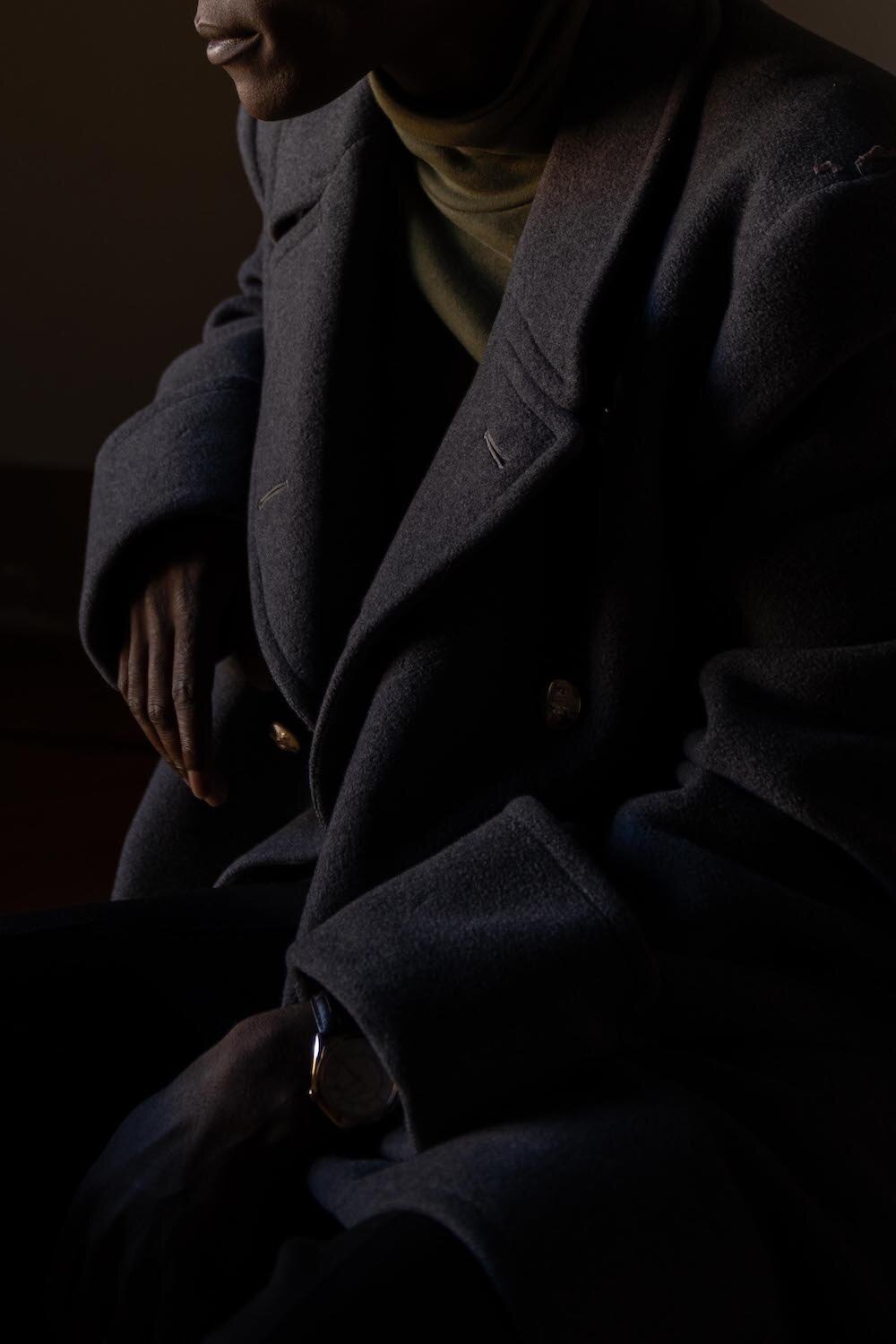
Martino di Napoli Rampolla tries to capture in images something that can only really be enjoyed in person. Benjamin appears on stage with a half-smile. He looks happy to play for the public after a six-month hiatus. His presence is magnetic and curious. He walks softly, and the audience seems to hold its breath for a few seconds. He sits, looks at us, places one foot on the stool and removes his sneakers, as if playing such an impressive instrument were a matter of connection where there is no place for barriers of any kind. He pauses and places his fingertips on the piano keys.
The youngest of five siblings, Benjamin grew up with the love and support of his grandmother but was misunderstood by his siblings, his mother and, particularly, his father. His childhood was marked by loneliness until, at the age of 11 years, he discovered the piano. “As soon as I was able to understand what a piano was, it became my best friend,” he acknowledges. “I didn’t want to be where all the other kids were. I really enjoyed being alone and this allowed me to be very patient when I practiced.

It is kind of like when you train a new skill or you learn a new chord. You have to treat your brain like a small child, give it time and guide your body gently towards that new element.” It was precisely the need to dedicate more time to his music that led him to break away from his family at 16. First on the streets of Camden, in England, and then in Paris, the idea of giving up a roof over his head and becoming homeless did not intimidate him. He almost feels privileged because of it: “I learned to see the positive side of everything. Not having to pay rent allowed me to develop artistically. I was able to practice without having to think about working from 9 to 5. It was a sort of privilege and, although I was suffering socially, my homelessness was a way to get where I am today.”
The subway, where he obtained a large following, became his main stage. His first break came from a passenger who offered him the chance to play in his bar. Benjamin was already a cult figure in the city when EMI came knocking. He released two EPs, Cornerstone and Glorious You, which made him a celebrity. His debut album At Least For Now came in 2015 and, with it, one of the music industry’s most coveted honours, the Mercury Prize. Working with a record label took him to the highest of heights, but it also came with a new renunciation; that of his creative independence. “Signing with a label is a very tough choice. Music generates money, unfortunately, so you have to be bold and look for a good lawyer.”
At the peak of his career, just when he thought he had overcome his fears, the birth of his son Julian took him back to the beginning, to his own childhood. “It made me think of my mum. She experienced depression when I was born and couldn’t take care of me.” This lack of attachment to his parents distorted Benjamin’s idea of fatherhood: “It’s almost as though I was annoyed that Julian needed us. I always thought that anyone could live alone and survive if only they believed in themselves.” Writing down these thoughts brought them out, making him aware of them. The help of his wife, the singer and songwriter Florence Morrissey, was essential. “She had to protect my son, and me also. As she is a great person, she managed to do both.”
“As soon as I was able to understand what a piano was, it became my best friend”
For Benjamin, the binary vision that divides the world in terms of good and bad, ugly and beautiful is only a matter of semantics; something he wants to transmit to Julian: “I know he is an unlucky child for having a father who might say ‘Julian, you’re ugly’ but I believe that it’s good to teach your child to accept criticism and keep going. We should appreciate things as they are.” Words can be twisted and fill up with new meanings. That is, without a doubt, one of his strong points. “I wrote all the lyrics to my first album before even touching the piano. Now I’m interested in a different approach. I think I write too much. So, for the next album I’m going to let the music take the lead.”
There is sadness and pain in Benjamin’s words, but also in his tone. When you listen to him, be it singing or speaking, his voice reveals endless emotions that can disarm, yet you would never imagine that the world could so deeply affect this self-made man, both as a songwriter and as a human being. Benjamin’s art is not only perceived but is also thought-provoking. As the first notes emerge from the piano, I think of him as an island, wild and small, floating proudly, free and alone near a densely populated archipelago. From the shore, in the warm circular room at Villa Lena, we hear the whisper of him like a breeze rustling through the leaves, roaring between the waves, and, as his voice rises it bellows and crashes onto the rocks.
UNA VOZ QUE TE DESARMA
Desde la orilla, en el cálido salón circular de Villa Lena, oímos el rumor de su brisa susurrando a las hojas, rugiendo entre las olas y cómo su voz se alza, brama y se precipita sobre las rocas.
BENJAMIN CLEMENTINE
BENJAMIN
CLEMENTINE
-
Entrevista a Benjamin Clementine previo a su concierto en Villa Lena, Italia.
Publicada oficialmente en inglés.
-
-
Fotos de Martino di Napoli Rampolla y Guglielmo Profeti.
-
Entre renuncias, despedidas y rupturas, nuestra existencia transcurre en los entretiempos del duelo por lo que dejamos atrás y la ilusión por lo que vendrá. Los días pasan mientras elegimos unas cosas y desechamos otras, y sin embargo, no en pocas ocasiones, una decisión puede ser percibida como una traición o una señal de cobardía. Otras veces, en cambio, puede considerarse un acto de optimismo; la afirmación de que las cosas no sólo pueden ser diferentes sino mejores. Un gesto que nos acerca a conocernos a nosotros mismos, y a dibujar el trayecto que queremos recorrer en este lapso temporal que llamamos vida. En la de Benjamin Clementine, la renuncia se presentó de forma muy temprana, tan pronto tomó conciencia de que, para ser feliz, debía prescindir de todo aquello que no fuera la música. Una decisión que le llevó a transitar un camino arduo y solitario con la determinación de renunciar a todo menos a sí mismo.
Recién estrenado el otoño, visitamos Villa Lena, la residencia artística situada en la Toscana donde Benjamin ha sido invitado a actuar cuando las restricciones en Europa se han relajado, al menos por un tiempo. Es una tarde de sábado soleada y fría. A medida que avanzamos por el camino lleno de baches que conduce a la casa, se respira una mezcla de entusiasmo y anticipación.
Martino di Napoli Rampolla trata de capturar en imágenes algo que en realidad sólo puede vivirse en directo. Benjamin entra en el escenario del concierto con una media sonrisa. Parece feliz de tocar para el público después de medio año de pausa. Su presencia es magnética y curiosa. Camina suavemente a través de la audiencia que parece contener la respiración durante unos segundos. Se sienta, nos mira, coloca un pie sobre el taburete y se quita las sneakers como si tocar este imponente instrumento fuera una cuestión de conexión donde no pueden existir capas intermedias. Hace una pausa y posa las yemas de los dedos sobre las teclas del piano.
“He aprendido a ver lo positivo en las cosas. El hecho de no tener que pagar un alquiler me permitió desarrollarme artísticamente.”
El menor de cinco hijos, Benjamin creció arropado por el cariño de su abuela e incomprendido por sus hermanos, su madre y, en especial, su padre. Pasó una infancia marcada por la soledad hasta que, a los 11 años, descubrió el piano. “En cuanto pude entender lo que era un piano, se convirtió en mi mejor amigo”, admite. “No quería estar donde estaban todos los demás niños. Realmente disfruté el tiempo a solas y esto me permitió ser muy paciente con mi práctica. Es un poco como cuando entrenas una nueva habilidad o aprendes un nuevo acorde. Tienes que tratar tu cerebro como un niño pequeño, darle tiempo y guiar suavemente tu cuerpo hacia este nuevo elemento”. Fue precisamente la necesidad de dedicarle más tiempo a la música lo que le llevó a romper con su familia a los 16 años de edad. Primero en las calles de Camden, en Inglaterra, después en París, la idea de renunciar a un techo y convertirse en un homeless no le amedrentó. En parte, dice, se siente un privilegiado por ello: “He aprendido a ver lo positivo en las cosas. El hecho de no tener que pagar un alquiler me permitió desarrollarme artísticamente. Pude practicar sin pensar en tener que ir a trabajar de 9:00 a 5:00. En parte fue un privilegio y, aunque socialmente también estaba sufriendo, mi falta de hogar fue una forma de llegar hasta aquí”.
El metro se convirtió en su escenario principal, donde consiguió un buen número de seguidores. Su primera oportunidad le llegó de la mano de uno de los pasajeros, quien le invitó a tocar en su bar. Benjamin era ya una figura de culto en la ciudad cuando EMI llamó a su puerta. Publicó dos EP, Cornerstone y Glorious You, con los que se convirtió en toda una celebridad. Su álbum debut At Least For Now llegaría en 2015 y con él, uno de los mayores galardones del mundo de la música, el Mercury Prize. Trabajar con una gran discográfica le llevó a lo más alto pero también supuso una nueva renuncia, a la total independencia de su creación. “Firmar con un sello es una elección muy difícil. La música genera dinero, desafortunadamente, así que se debe ser audaz y hay que buscarse un buen abogado”.
En la cima de su carrera y justo cuando creía haber dejado atrás sus miedos, la llegada de su hijo Julian le devolvió al capítulo del principio, el de su infancia. “Me hizo pensar en mi madre. Ella tuvo una depresión cuando nací y no pudo cuidarme”. La falta de apego con sus progenitores había distorsionado la idea de paternidad de Benjamín: “Era como si estuviera molesto porque Julian nos necesitaba. Siempre pensé que cualquiera puede vivir solo y sobrevivir si realmente cree en sí mismo”. Escribir todo lo que pasaba por su cabeza fue como sacarlo a la luz y, de ese modo, llevarlo al plano consciente. La ayuda de su mujer, la también cantante y compositora Florence Morrissey, fue esencial. “Tuvo que proteger a mi hijo, pero también a mí. Ella es una gran persona, así que se las arregló para hacerlo”.
“En cuanto pude entender lo que era un piano, se convirtió en mi mejor amigo”
Para Benjamin, la visión binaria que divide en el mundo en términos de bueno y malo, feo y bello es tan sólo una cuestión semántica; algo que quiere transmitir a Julian: “Sé que es un niño desafortunado por tener un padre que diría «Julian, eres feo» pero creo que es bueno enseñarle a tu hijo a recibir críticas y a seguir adelante. Deberíamos apreciar las cosas tal como son”. Las palabras pueden retorcerse y llenarse de nuevos significados. Ese es, sin lugar a dudas, uno de sus fuertes. “Escribí todas las letras de mi primer álbum antes de tocar el piano. Ahora estoy interesado en un enfoque diferente. Creo que escribo demasiado. Así que para el próximo disco voy a dejar que suene la música”.
Hay un poso de tristeza y dolor no sólo en el discurso de Benajmin sino en el tono que emplea para transmitirlo. Cuando uno lo escucha ya sea cantando o hablando, su voz desvela infinidad de emociones capaces de desarmarnos y sin embargo, pareciera que el mundo no pudiera penetrar en el interior de este hombre hecho a sí mismo tanto en su faceta de autor como en la de ser humano. El arte de Benjamin no sólo se percibe sino que se contempla. Mientras comienzan a sonar las primeras notas del piano, pienso en él como una isla, salvaje y pequeña que flota orgullosa, libre y sola cerca de una de los grandes archipiélagos llenos de personas. Desde la orilla, en el cálido salón circular de Villa Lena, oímos el rumor de su brisa susurrando a las hojas, rugiendo entre las olas y cómo su voz se alza, brama y se precipita sobre las rocas.