A revolution in the form of a work of art
ELVIRA SOLANA
ELVIRA SOLANA
-
Profile about artist Elvira Solana.
-
-
Photos by Victor Stonem
victorstonem.comElvira Solana
@elvirasolana -
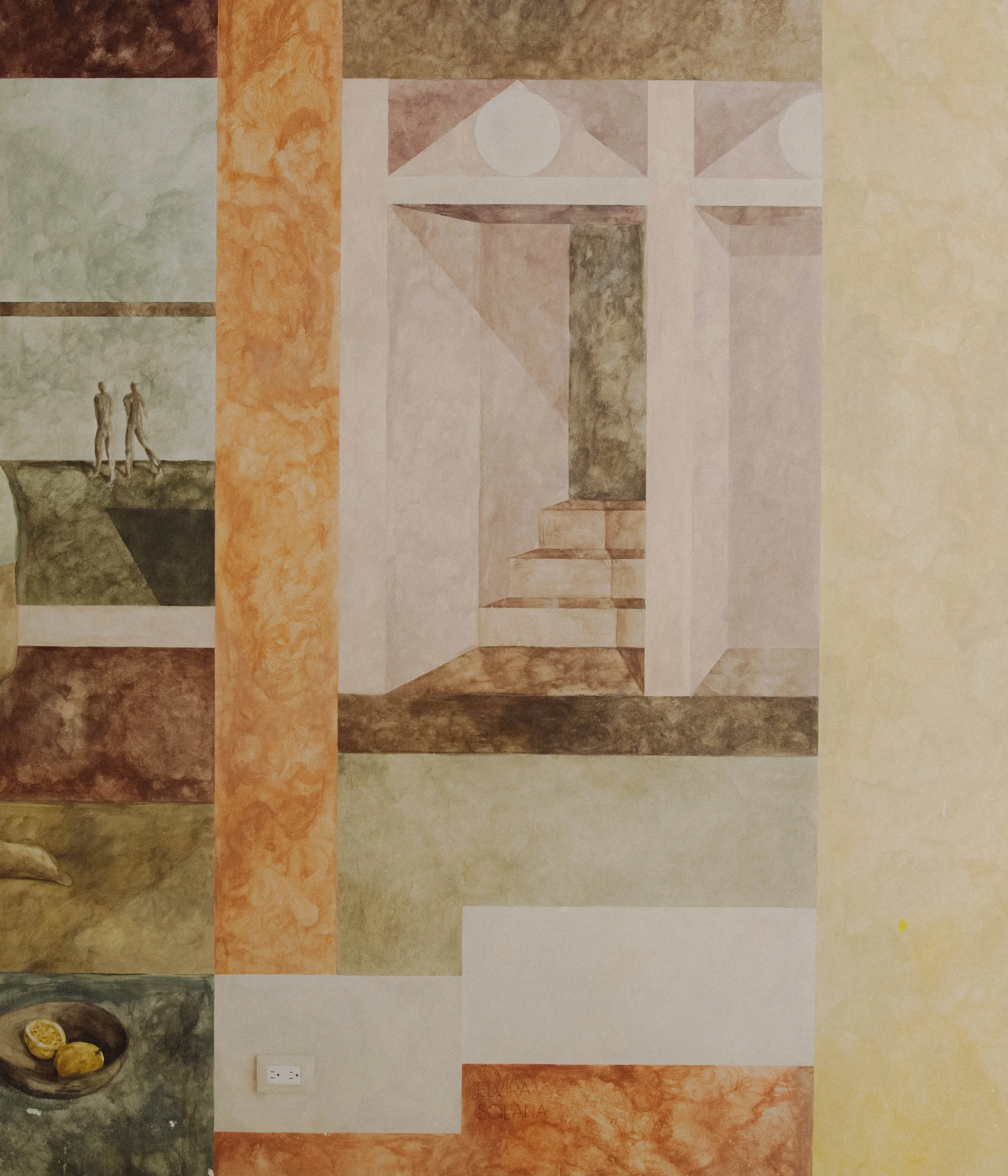
After spending a sunny August morning with Elvira Solana, I feel like I've met a matryoshka, one of those Russian dolls that, when opened around the middle, reveal smaller figures inside. I approach her, attracted by the beauty of her forms, her embellishments and her colour without knowing that, inside her, there is so much more to be found.
During the hour and half that we sit and chat over a cup of tea on her sea-view terrace, she slowly reveals what is beyond the surface of her exquisite work. And, at the same time, I get to discover the layers to Elvira, who takes great care in explaining her work and with it, herself.
Opening the first one, she tells me that she actually studied architecture in Madrid but before long, thanks to several exchange programs, she began to travel: “I went to India, to Barcelona, then I spent some time in Paris and later went to Istanbul. I have always been attracted to the East. It held a certain intrigue for me and, in the end, it was very enlightening.”


Her travels around the world were a great source of inspiration, giving rise to a creativity that she did not get from her university education: “The academic models we have now are good because they are very democratic, but they also somehow standardise everything. And this is what happened to me, that during the training process, I missed out on the manual aspect, a skill that I felt I could contribute.” This, together with her work in several architectural studios in the middle of the economic crisis, created an internal conflict within Elvira that led her to leave architecture behind. “I started painting and decided to try it for a year to see if it would take off. And it did. At first, I painted birds, plants, etc., but after a while I started to connect architecture and painting without even realising it.” After researching murals throughout history, Elvira began to understand that her training as an architect was not entirely unrelated to her approach to murals. “The first muralists in history were architects. I understood why I became curiously fascinated with combining these two aspects and why it wasn't so far from me and my profession.”
“My commitment to the indoor mural is based on researching the relationship that human beings have with space and privacy”
Following this enlightening realisation, Elvira took her brushes and a backpack and left Cantabria to return to Madrid in search of walls to work on. “You see, sometimes the planets align and that's what happened. I ran into a friend from university who had just bought a house: 'It's been closed for sixty years and we have to refurbish it, but you have six months to try out your work there,' he told me.” After five months of work, Elvira inaugurated ‘Real Estate’, convening several media outlets. She still remembers being full of nerves on the days leading up to it. She slept on a mattress in the middle of that empty house’s living room. “I didn't know if what I was doing was going to work or not. It was a miracle. There are many days when I remember that it was only three years ago. The flat turned out to be an incredible place measuring about 350m2, which I enlarged to 10,000m2. With ‘Real Estate’ I established the principles upon which I was going to base the rest of my career.”

“In murals, as in architecture, you need a first project for clients to trust you”, she explains to me. Her case makes perfect sense in theory, and I tell her that at Openhouse, we were amazed when we found out, through Instagram, about the mural that she had done in the house of a relative in Santo Domingo. And on the subject of privacy and social networks, Elvira opens up a new matryoshka. “My commitment to the indoor mural is based on researching the relationship that human beings have with space and privacy. I don't have WhatsApp, and I only have Instagram for work”, a practice that requires a certain break with the system, a lot of courage and a great deal of obstinacy. “We live surrounded by images that we compulsively consume. But the image expires and dies quickly if it is not supported by an idea. Ideas are the structure. They allow an image to remain in time without being immediately exhausted; this is the purpose of my work”.
A month after our meeting, I know that Elvira, a troubadour of mural architecture, may have had countless new revelations that she has captured in her mock-ups and in her many notebooks, her daily work tools. “These notebooks carry ideas that at some point will be turned into murals. They are ideas that allow me to keep moving forward.” In these times of endless accelerated consumption, meeting someone with an elaborated and meditated discourse like Elvira is a true breath of fresh air. “A mural is an overlapping of two languages: that of architecture, which is three-dimensional and volumetric and implies a movement around it; and that of painting, which is two-dimensional and has a frontal perception. I don't want to resolve the idea of continuity but to question all the conflicts about the perception of the human eye versus the scale of the place or its context.”
Opening the last matryoshka takes me to her studio, just a few metres from the flat where she is staying for the summer. There, she also uses an attic-like room as a canvas where she puts many of her ideas into practice. Few people, she confesses, have seen what is hidden at the top of the tower. When I set one last foot in this space of reverie, I feel that I am entering a new space not governed by the physical rules that apply outside it. Perhaps, I think, this is the true purpose behind Elvira Solana's work: the search for a room of our own that transforms our perspective, pulling us to dream of a new reality.
UNA REVOLUCIÓN EN FORMA DE OBRA DE ARTE
ELVIRA SOLANA
ELVIRA SOLANA
-
Perfil acerca de la muralista de arquitectura, Elvira Solana.
-
-
Fotos de Victor Stonem
victorstonem.comElvira Solana
@elvirasolana -
Después de pasar una soleada mañana de agosto con Elvira Solana, me siento como si me hubiera enfrentado a una matrioska. Una de esas muñecas rusas que, abiertas por la mitad, descubren figuras más pequeñas en su interior. Me acerco a ella atraída por la belleza de sus formas, por su ornamentación y por su color sin saber que dentro de ella hay mucho más.
Durante la hora y media que nos sentamos a charlar alrededor de una taza de té en su terraza con vistas al mar, ella misma va extrayendo las capas de madera, desvelando los estratos internos de su exquisito trabajo. Y al mismo tiempo, yo voy descubriendo las capas de la propia Elvira, que intenta con mucho atino explicar su obra y con ello, a sí misma.
Con la apertura de la primera, me cuenta que en realidad ella estudió arquitectura en Madrid aunque en seguida, gracias a varios programas de intercambio, comenzó a viajar: «Estuve en India, en Barcelona, luego pasé una temporada en París y después me fui a Estambul. Siempre he tenido atracción hacia oriente. Tenía cierta curiosidad y fue bastante revelador en realidad».
“Mi apuesta por el mural en interior se basa en la investigación de la relación del ser humano con el espacio y con la privacidad”
Su periplo por el mundo supuso una gran fuente de inspiración; una creatividad que, sin embargo, no le llegó por parte de la formación universitaria: «Los modelos académicos que tenemos ahora están bien porque son muy democráticos pero de alguna manera uniformizan. Y esto es lo que me ocurrió a mí, que en el proceso de formación perdí la parte manual, esa capacidad que es la que yo podía aportar». Algo que, junto a su trabajo en varios estudios de arquitectura en plena crisis económica, creó en Elvira un pequeño conflicto personal que desembocó en una ruptura con la arquitectura. «Empecé a pintar y decidí probar un año para ver si arrancaba. Y arrancó. Al principio pintaba pájaros, plantas… pero después de un tiempo empecé a conectar arquitectura y pintura sin apenas darme cuenta». Tras documentarse sobre el mural a lo largo de la historia, Elvira empezó a comprender que su formación como arquitecta no estaba lejos de su manera de enfrentarse al mural. «Los primeros muralistas de la historia fueron arquitectos. Entendí cuál era el hilo del que estaba tirando y por qué no estaba tan lejos de mí y de mi profesión».
Aquello fue tan revelador que Elvira cogió sus pinceles, una mochila y dejó Cantabria para volver a Madrid en busca de paredes sobre las que trabajar. «Mira, a veces se alinean los planetas y eso es lo que ocurrió. Me encontré con un amigo de la facultad que acababa de comprarse una casa: ‘Lleva cerrada sesenta años y tenemos que reformarla, pero hasta dentro de seis meses tienes tiempo para hacer allí tus pruebas’, me dijo. Después de cinco meses de trabajo, Elvira inauguró ‘Real Estate’, convocando a varios medios de comunicación. Los días previos aún los recuerda llenos de nervios. Dormía en un colchón en medio del salón de aquella casa vacía. «No sabía si lo que estaba haciendo iba a funcionar o no. Fue un milagro. Hay muchos días que pienso que hace sólo tres años de esto. El piso resultó ser un lugar increíble de unos 350m2 que con mi intervención amplié en 10.000m2. Con ‘Real Estate’ establecí los principios sobre los que iba a cimentar el resto de mi carrera».
«En el mural, como en la arquitectura, necesitas un primer proyecto para que los clientes confíen en tí», me explica. Su caso encaja a la perfección en la teoría, aunque en Openhouse nos quedamos maravillados cuando conocimos, a través de Instagram, el mural que hizo en la casa de un familiar en Santo Domingo, le digo. Y a colación de la privacidad y de las redes sociales, Elvira abre una nueva matrioska. «Mi apuesta por el mural en interior se basa en la investigación de la relación del ser humano con el espacio y con la privacidad. No tengo WhatsApp, y tengo Instagram sólo por trabajo». Un ejercicio para el que es necesario cierta ruptura con el sistema, mucho arrojo y una gran obstinación. «Vivimos rodeados de imágenes que consumimos compulsivamente. La imagen caduca y muere rápido si no está respaldada por una idea. Las ideas son la estructura. Éstas permiten que una imagen pueda permanecer en el tiempo sin agotarse inmediatamente y esa es la finalidad de mi trabajo».
Un mes después de nuestro encuentro, sé que Elvira puede haber tenido un sinfín de nuevas revelaciones que esta trovadora de la arquitectura en forma de mural, haya plasmado en sus maquetas y en sus múltiples cuadernos, sus herramientas de trabajo diario. «Estos cuadernos tienen ideas que en algún momento se traducirán en murales y que me permiten avanzar. En estos tiempos de consumo acelerado, enfrentarse a alguien con un discurso elaborado y meditado como Elvira es un verdadero hallazgo. «Un mural es una superposición de dos lenguajes: el de la arquitectura, que es tridimensional y volumétrico e implica un movimiento a su alrededor; y el de la pintura, que es bidimensional y tiene una percepción frontal. Yo no quiero resolver la idea de continuidad sino cuestionarme todos estos conflictos sobre la percepción del ojo humano frente a la escala del lugar o contexto».
La apertura de la última matrioska me lleva a su estudio a escasos metros del piso en el que está residiendo durante el verano. Allí además cuenta con un lienzo en forma de habitación semi abuhardillada donde pone en práctica muchas de sus ideas. Pocas personas, confiesa, han visto lo que se esconde en lo alto de esta torre. Cuando pongo un último pie en este espacio de ensoñación siento que me adentro en un nuevo lugar que no se rige por las reglas físicas del exterior. Quizá, pienso, sea éste el verdadero propósito que se esconde tras el trabajo de Elvira Solana: la búsqueda de una habitación propia que transforme nuestra perspectiva llevándonos a soñar con una nueva realidad.
EN EL CORAZÓN DE LA FAMILIA ARTIGAS
JOAN GARDY ARTIGAS
A medida que avanza nuestra charla, me doy cuenta de que sería más sencillo enumerar quién no ha visitado este insólito rincón.
-
Reportaje sobre la Fundación Artigas de la mano de la familia Artigas.
-
Openhouse magazine Issue Nº15
-
Fotografiado por Marina Denisova
marina-denisova.comFundació Artigas
fundacio-artigas.com -
FUNDACIÓ
ARTIGAS
Un pequeño cartel que indica el ‘Camí de l'Església’ nos lleva al Racó de Gallifa, la masía situada en este pequeño pueblo del interior de Barcelona donde se han creado algunas de las piezas más reconocibles de la historia de la pintura y la cerámica del siglo pasado.
Siguiendo el sendero, entre las hojas de los árboles, se observa un cartel de madera que reza “Fundación J. Llorens Artigas”. Creada en 1989 por el escultor Joan Gardy Artigas, ésta rinde homenaje a su padre, Josep Llorens Artigas (Barcelona, 1892-1980), y reconoce su labor con la cerámica como disciplina artística al tiempo que fomenta la educación, la cultura y las artes.
En esta familia de artistas, cada nueva generación lleva más lejos la obra de su antecesor. Si uno analiza la biografía de Josep Llorens Artigas con respecto a Joan Gardy, pareciera que en lugar de un hijo, este último ejerciera de alter ego. Nacidos en junio, con 2 días y 44 años de diferencia, ambos trabajaron en la galería Maeght, ambos vivieron en París y los dos sintieron la pulsión de la cultura y tradición asiáticas. Juntos, además, colaboraron con diversidad de creadores, entre los cuales, quizá Joan Miró fuera con quien lo hicieran más intensamente y como si los tres fuesen una gran familia.
Isao Llorens forma parte de la tercera generación Artigas que se dedica al arte. Éste compagina su trabajo como director de la fundación con la creación de una obra que plasma en pinturas, tapices y esculturas. Él es quien nos recibe a las puertas del edificio proyectado por Bruce Graham donde se encuentran la galería, la biblioteca, los apartamentos para residentes y los talleres. El mural de Frederic Amat realizado con unos 700 pechos de cerámica en la fachada del primero de estos últimos, da paso a espacios de trabajo interconectados con grandes ventanales y balcones que parecen sumergirse en plena naturaleza.


Los Pits de Gallifa [pechos de Gallifa] se incorporaron a las diversas obras al aire libre que pueblan este espacio en 2002, tras ser cocidos en el horno de leña Koryu —nombre de un tipo de cerámica coreana del siglo XVII—, uno de los siete que posee la fundación. Los mismos hornos que emplearon Miró, Llorens Artigas y Joan Gardy Artigas, para crear los murales para la sede de la UNESCO en París (1955), la Universidad de Harvard (1960) y El Museo Guggenheim de Nueva York (1966) entre otros.
Este lugar es una suerte de laberinto íntimo y en calma donde los problemas del exterior parecen desvanecerse por completo. Siguiendo el camino del racó, llegamos a la masía, al lago y al loft, un micromundo de fusión entre Cataluña, Japón y el mundo donde conocemos a Joan y Mako Artigas. “¿Catalán, castellano o inglés?” pregunta Joan amable mientras nos invita a entrar. El espacio es sumamente acogedor. Joan prepara café y lo sirve en diversas tazas que coloca sobre unos platillos de madera. Isao le reprende jocoso “¡En casa de un ceramista y platos de madera!” Su nuevo hogar con vistas al lago es un loft situado en el antiguo taller en el que Josep Llorens y Joan Miró realizaron obras de grandes dimensiones.
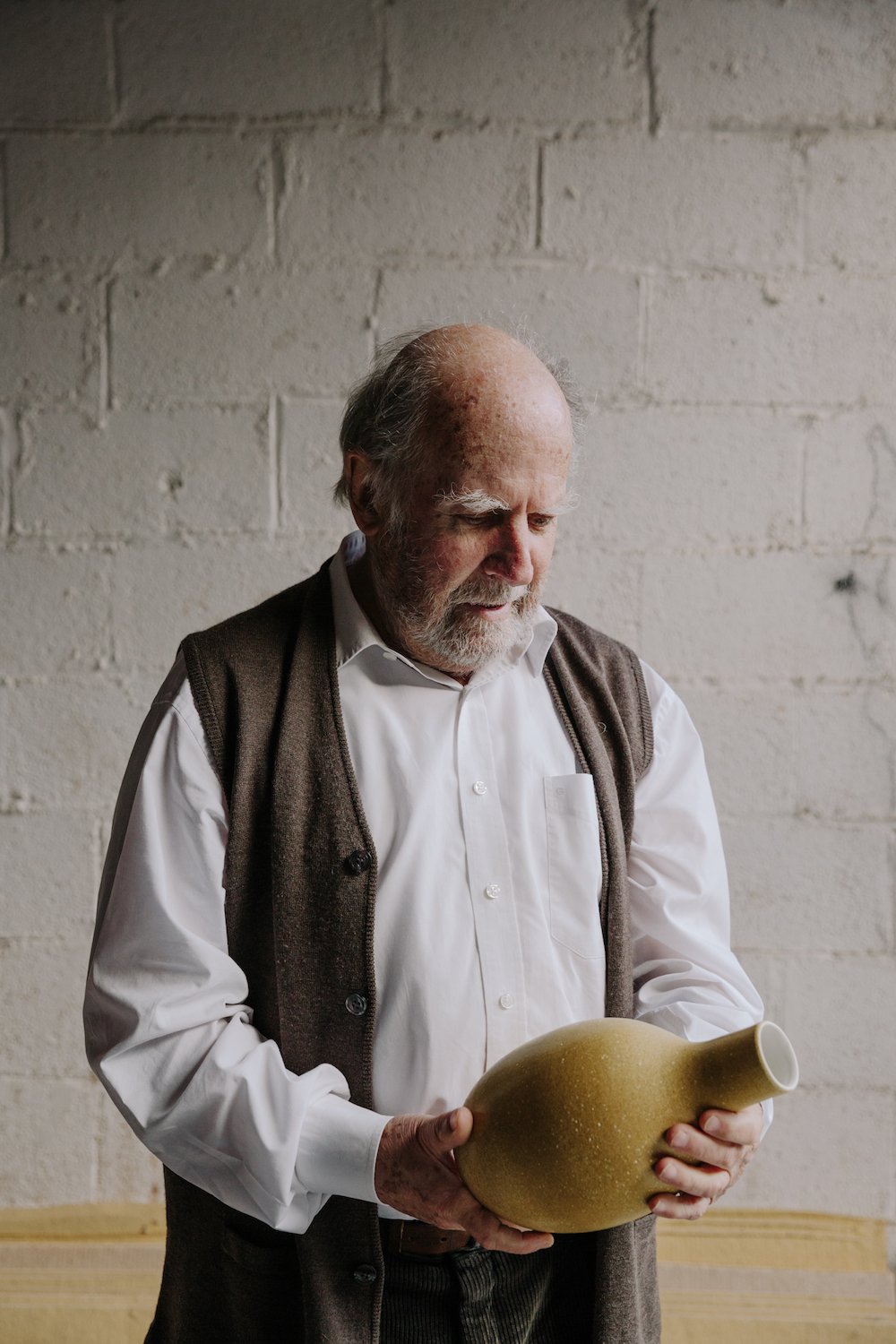
A sus 83 años de edad, Joan Gardy Artigas transmite una gran alegría de vivir pero también la satisfacción de haber vivido como ha querido. “He tenido una vida muy completa”, resume sonriente. Fue Artigas padre, profesor de Mako en la escuela Massana de Barcelona, quien presentó al matrimonio que tengo sentado frente a mi hoy. “Yo me disponía a viajar a Japón de mano de la fundación March. Ella [Mako] estaba estudiando en Barcelona”, me explica Joan. “En aquellos tiempos, ir a Japón no resultaba fácil” continúa Mako. Así que ella le ayudó y fue allí donde se casaron. La impronta japonesa de Mako se respira en cada detalle tanto de la casa como de la fundación. Las ventanas son de estilo shōji —los paneles deslizantes tan característicos del país nipón—. Ésta nos explica que, igual que varios de los muebles que visten la estancia, son originales del hogar en el que creció, de donde los rescató antes de su derribo. “Estos muebles deben de tener más de 150 años” señala riendo.
“A sus 83 años de edad, Joan Gardy Artigas transmite una gran alegría de vivir pero también la satisfacción de haber vivido como ha querido. ‘He tenido una vida muy completa’, resume sonriente”


La galería de la Fundación acoge una muestra del trabajo realizado por Mako (Tokio, 1937), que recientemente ha explorado la cerámica. Ésta vino a España a los 23 años de edad en barco, parando en diferentes puertos durante un mes. “Yo estaba en una escuela de monjas españolas y tenía muchas ganas de salir de Japón por los terremotos, tifones y demás desastres. Así que pensé que, con la ayuda de las monjas, quizá venir a España sería fácil: «voy a España y de ahí luego me voy a París». Pero apareció Joanet y me quedé”. El matrimonio, no obstante, sí acabó viviendo entre París y Barcelona, sin fallar a la visita anual a Japón entre otros lugares.
Salimos al jardín para retratar a la familia. Encantador, presumido y algo tímido, Joan sonríe y se lamenta burlón de no tener la barba más larga “que siempre da un aspecto más interesante, más profundo”. En nuestra conversación aparecen nombres como Picasso, Chagall, Braque y Giacometti, a quienes Joan conoció en París. Los tres recuerdan a Elsa Peretti —muy vinculada a la fundación y amiga de la familia cuya pérdida se produce mientras escribo estas líneas—. Una generación que en los años 60 y 70, se dio en llamar la Gauche Divine. “Todos estábamos en Bocaccio”, resume Joan. La discoteca ubicada en la calle Muntaner de Barcelona entre 1967 y 1985, fue un lugar de encuentro entre artistas e intelectuales como Oriol Maspons, Ricardo Bofill, Joan de Sagarra, Toni Miserachs, Óscar Tusquets y Colita.
Si por Bocaccio pasaron los artistas más relevantes de la escena catalana, por el racó de Gallifa lo hicieron grandes nombres de la escena internacional como Barry Flanagan, Joan Mora, Antoni Tàpies y Sam Szafran entre otros. A medida que avanza nuestra charla, me doy cuenta de que sería más sencillo enumerar quién no ha visitado este insólito rincón. Estamos casi despidiéndonos pero, como casi siempre sucede, las palabras fluyen ahora con mayor facilidad. “¿Eres de Bilbao? Frank Gehry –autor del Museo Guggenheim Bilbao– también estuvo aquí”.
IN THE CORE OF ARTIGAS FAMILY
JOAN GARDY ARTIGAS
As our conversation progresses, I realise that it would be easier to list the people who have not visited this extraordinary place.
-
Story about Artigas Fondation throughout the eyes of the Artigas Family.
-
Openhouse magazine Issue Nº15
-
Photographed by Marina Denisova
marina-denisova.comFundació Artigas
fundacio-artigas.com -
Openhouse magazine Artigas
FUNDACIÓ
ARTIGAS
A small sign with the words “Camí de l’Església” [Church Way] marks the way to El Racó [The Corner], a country house located in Gallifa, a small village in the inland area of the province of Barcelona, where some of the most recognisable pieces in the history of twentieth-century painting and ceramics were created. Following the path, you can see through the leaves of the trees a wooden sign that reads “Fundación J. Llorens Artigas”, This is, the foundation created in 1989 by the sculptor Joan Gardy Artigas as a tribute to his father —Josep Llorens Artigas (b. Barcelona, 1892–1980), to acknowledge his work with ceramics as an artistic discipline while fostering education, culture and the arts.
Each new generation of this artistic family has built on and furthered the work of their predecessors. If you compare the biography of Josep Llorens Artigas with that of his son, Joan Gardy, it would seem that the latter is more of an alter ego than a son. Both were born in June, 44 years and two days apart; both worked at the Galerie Maeght; both lived in Paris; and both were drawn to Asian cultures and traditions. They also worked together on collaborations with a number of different artists, Miró being perhaps the one with whom they had the most in-depth collaboration, as if the three were part of one large family.
Isao Llorens is part of the third generation of the family devoted to art. He combines his work as director of the foundation with the creation of a body of work that includes paintings, tapestries and sculptures. He welcomes us at the door of the building designed by Bruce Graham, where the gallery, library, apartments for residents and studios are located. The mural by Frederic Amat, made with some 700 ceramic breasts studded over the façade, leads to the interconnected work spaces with large windows and balconies that seem to blend in with their natural setting. The Pits de Gallifa [breasts of Gallifa] are but one of many open-air works that fill this space, and were fired in one of the foundation's seven wood-fired kilns used for Goryeo ceramics – a type of seventeenth-century Korean pottery. These same kilns were used by Miró, Llorens Artigas and Joan Gardy Artigas to create the murals for the UNESCO headquarters in Paris (1955), Harvard University (1960) and the Guggenheim Museum in New York (1966), among others.
“At the age of 83, Joan Gardy Artigas exudes an exuberant enjoyment of life, together with the satisfaction of having lived life as he wanted. ‘I’ve had a very full life,’ he says with a smile. ”
This place forms a private and tranquil maze where the problems of the outside world seem to vanish completely. We follow the way of El Racó and arrive at the main house, the lake and the loft—a microcosm that is a fusion of Catalonia, Japan and the world, where we meet Joan and Mako Artigas. “Catalan, Spanish or English?” Joan asks kindly as he invites us in. The space is strikingly welcoming. Joan makes coffee and serves it in several cups that he sets on wooden saucers. Isao playfully chides him, “In a potter’s house—and there are wooden plates...” Their new home overlooking the lake is a loft located in the former studio where Josep Llorens and Joan Miró created the large-scale murals.
At the age of 83, Joan Gardy Artigas exudes an exuberant enjoyment of life, together with the satisfaction of having lived life as he wanted. “I've had a very full life,” he says with a smile. It was Artigas senior, Mako’s teacher at the Escola Massana art school in Barcelona, who introduced the couple sitting in front of me today. “I was going to Japan by the hands of Fundación March. She [Mako] was studying in Barcelona,” Joan explains. “In those days, it wasn’t easy to get to Japan,” Mako continues. So, she offered to help him and that was where they got married. Mako’s Japanese imprint can be felt in every detail of both the house and the foundation. The windows are in the style of shōji screens, the sliding panels that are so emblematic of Japan. She explains to us that they came from the house in which she grew up, like some of the other pieces of the furniture in the room, which she was able to salvage before the house was torn down. “This furniture must be over 150 years old,” she laughingly points out.
The gallery at the foundation houses an exhibition of work by Mako (b. Tokyo, 1937), who has recently begun to explore ceramics. She came to Spain at the age of 23 by ship, stopping off at different ports for a month. “I was at a convent school run by Spanish nuns, and I very much wanted to leave Japan because of the earthquakes, typhoons and other disasters. So, I thought that, with help from the nuns perhaps it would be easy to come to Spain: ‘I’m going to Spain and from there I’m going to Paris.’ But Joanet appeared and I stayed.” However, the couple did end up living between Paris and Barcelona, without missing their yearly visit to Japan, among other places. We go out into the garden to take photographs of the family. Charming, self-conscious and somewhat shy, Joan smiles and jokingly regrets not having a longer beard “which always gives a more interesting and more profound look”. Our conversation brings up names such as Picasso, Chagall, Braque and Giacometti, whom Joan met in Paris. All three recall Elsa Peretti, a figure closely associated with the foundation and a friend of the family (whose death has coincided with the writing of this article). They were part of a generation known as the Gauche Divine in the '60s and '70s. “We all went to Bocaccio,” Joan explains. The night club, located on Barcelona’s Carrer Muntaner between 1967 and 1985, was a meeting place for artists and intellectuals such as Oriol Maspons, Ricardo Bofill, Joan de Sagarra, Toni Miserachs, Óscar Tusquets and Colita.
While the most important figures on the Catalan arts scene frequented Bocaccio, the greats of the international scene, such as Barry Flanagan, Joan Mora, Antoni Tàpies and Sam Szafran among others, frequented El Racó. As our conversation progresses, I realise that it would be easier to list the people who have not visited this extraordinary place. The time has almost come to say goodbye, but, as is almost always the case, our words are flowing more easily now. “Are you from Bilbao? Frank Gehry —architect of the Guggenheim Museum Bilbao, came here, too.”

A disarming voice
Benjamin’s art is not only perceived but is also thought-provoking. As the first notes emerge from the piano, I think of him as an island, wild and small, floating proudly, free and alone near a densely populated archipelago.
BENJAMIN CLEMENTINE
-
Chronicle and story about Benjamin Clementine’s performance at Villa Lena, Italy.
-
Openhouse magazine
Issue 15 -
Photos by Martino di Napoli Rampolla and Guglielmo Profeti
-
BENJAMIN
CLEMENTINE
Between renunciations, farewells and breakups, our existence takes place between moments of mourning for what we leave behind and the excitement of what is to come. Days go by as we choose some things and reject others, and yet, often, a decision can be perceived as a betrayal or a sign of weakness. Other times, however, it can be considered to be an act of optimism; the affirmation that things can not only be different but better. A gesture that brings us closer to knowing ourselves, to drawing the outline of the journey we wish to embark on in this time lapse we call life. In the case of Benjamin Clementine, renunciation appeared very early on; a direct consequence of learning that, in order to be happy, he had to forego all that was not music. This decision led him along an arduous, solitary path on which he was determined to give up everything but himself.
In early autumn, we visited Villa Lena, the art residency in Tuscany where Benjamin had been invited to perform during a period when restrictions in Europe had eased somewhat. It was a cold and sunny Saturday afternoon. As we made our way along the bumpy road leading to the house, a combination of enthusiasm and excitement was in the air.
“I learned to see the positive side of everything. Not having to pay rent allowed me to develop artistically”
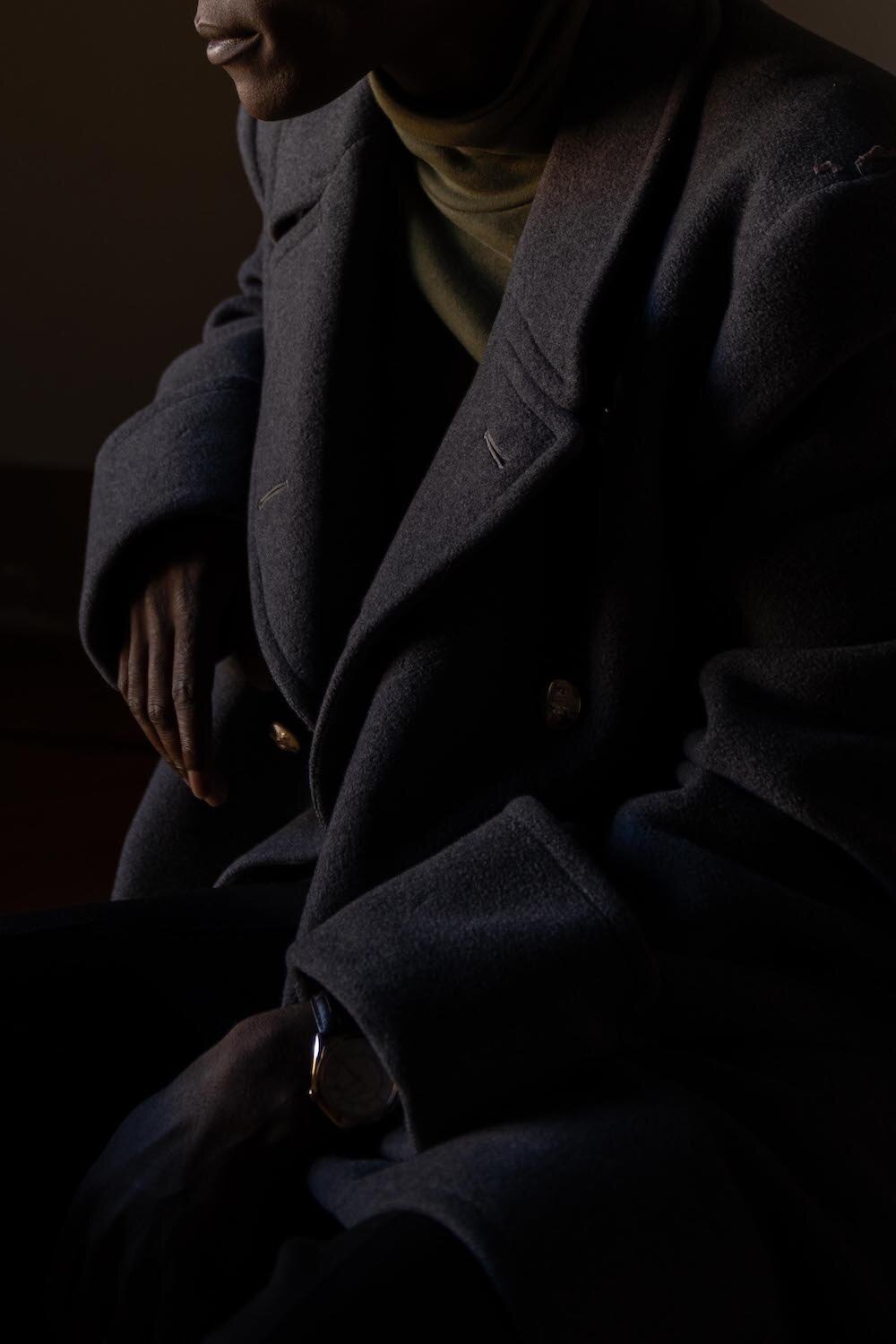
Martino di Napoli Rampolla tries to capture in images something that can only really be enjoyed in person. Benjamin appears on stage with a half-smile. He looks happy to play for the public after a six-month hiatus. His presence is magnetic and curious. He walks softly, and the audience seems to hold its breath for a few seconds. He sits, looks at us, places one foot on the stool and removes his sneakers, as if playing such an impressive instrument were a matter of connection where there is no place for barriers of any kind. He pauses and places his fingertips on the piano keys.
The youngest of five siblings, Benjamin grew up with the love and support of his grandmother but was misunderstood by his siblings, his mother and, particularly, his father. His childhood was marked by loneliness until, at the age of 11 years, he discovered the piano. “As soon as I was able to understand what a piano was, it became my best friend,” he acknowledges. “I didn’t want to be where all the other kids were. I really enjoyed being alone and this allowed me to be very patient when I practiced.
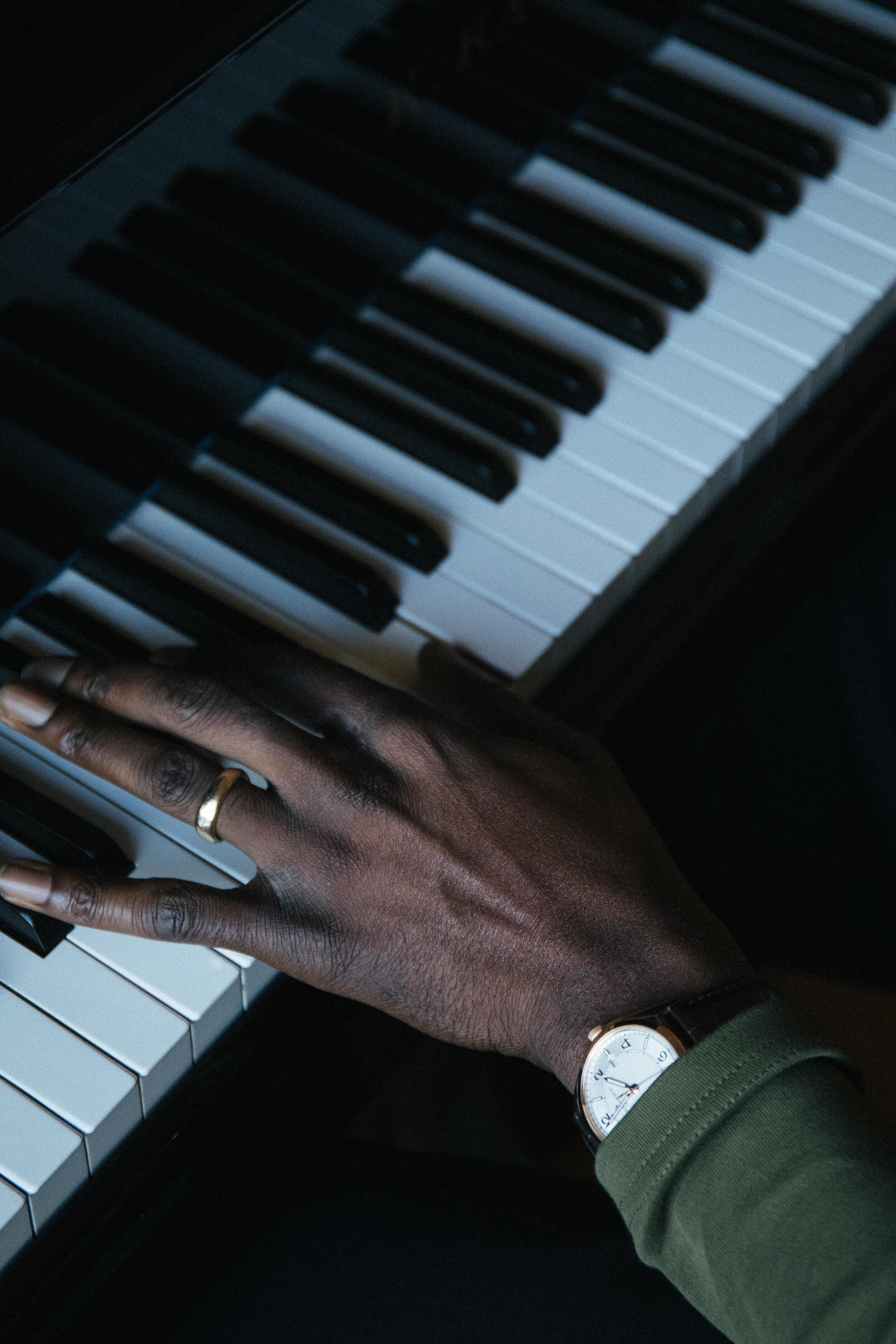

It is kind of like when you train a new skill or you learn a new chord. You have to treat your brain like a small child, give it time and guide your body gently towards that new element.” It was precisely the need to dedicate more time to his music that led him to break away from his family at 16. First on the streets of Camden, in England, and then in Paris, the idea of giving up a roof over his head and becoming homeless did not intimidate him. He almost feels privileged because of it: “I learned to see the positive side of everything. Not having to pay rent allowed me to develop artistically. I was able to practice without having to think about working from 9 to 5. It was a sort of privilege and, although I was suffering socially, my homelessness was a way to get where I am today.”
The subway, where he obtained a large following, became his main stage. His first break came from a passenger who offered him the chance to play in his bar. Benjamin was already a cult figure in the city when EMI came knocking. He released two EPs, Cornerstone and Glorious You, which made him a celebrity. His debut album At Least For Now came in 2015 and, with it, one of the music industry’s most coveted honours, the Mercury Prize. Working with a record label took him to the highest of heights, but it also came with a new renunciation; that of his creative independence. “Signing with a label is a very tough choice. Music generates money, unfortunately, so you have to be bold and look for a good lawyer.”
At the peak of his career, just when he thought he had overcome his fears, the birth of his son Julian took him back to the beginning, to his own childhood. “It made me think of my mum. She experienced depression when I was born and couldn’t take care of me.” This lack of attachment to his parents distorted Benjamin’s idea of fatherhood: “It’s almost as though I was annoyed that Julian needed us. I always thought that anyone could live alone and survive if only they believed in themselves.” Writing down these thoughts brought them out, making him aware of them. The help of his wife, the singer and songwriter Florence Morrissey, was essential. “She had to protect my son, and me also. As she is a great person, she managed to do both.”
“As soon as I was able to understand what a piano was, it became my best friend”
For Benjamin, the binary vision that divides the world in terms of good and bad, ugly and beautiful is only a matter of semantics; something he wants to transmit to Julian: “I know he is an unlucky child for having a father who might say ‘Julian, you’re ugly’ but I believe that it’s good to teach your child to accept criticism and keep going. We should appreciate things as they are.” Words can be twisted and fill up with new meanings. That is, without a doubt, one of his strong points. “I wrote all the lyrics to my first album before even touching the piano. Now I’m interested in a different approach. I think I write too much. So, for the next album I’m going to let the music take the lead.”
There is sadness and pain in Benjamin’s words, but also in his tone. When you listen to him, be it singing or speaking, his voice reveals endless emotions that can disarm, yet you would never imagine that the world could so deeply affect this self-made man, both as a songwriter and as a human being. Benjamin’s art is not only perceived but is also thought-provoking. As the first notes emerge from the piano, I think of him as an island, wild and small, floating proudly, free and alone near a densely populated archipelago. From the shore, in the warm circular room at Villa Lena, we hear the whisper of him like a breeze rustling through the leaves, roaring between the waves, and, as his voice rises it bellows and crashes onto the rocks.

THE PEBBLE AND THE ROUND POUND
FERNANDO CARUNCHO
-
Interview to Fernando Caruncho in his studio, Madrid.
-
Openhouse magazine
Issue Nº12 -
Photographed by Salva López
salvalopez.comCaruncho Garden & Architecture
web.fernandocaruncho.com -
FERNANDO CARUNCHO
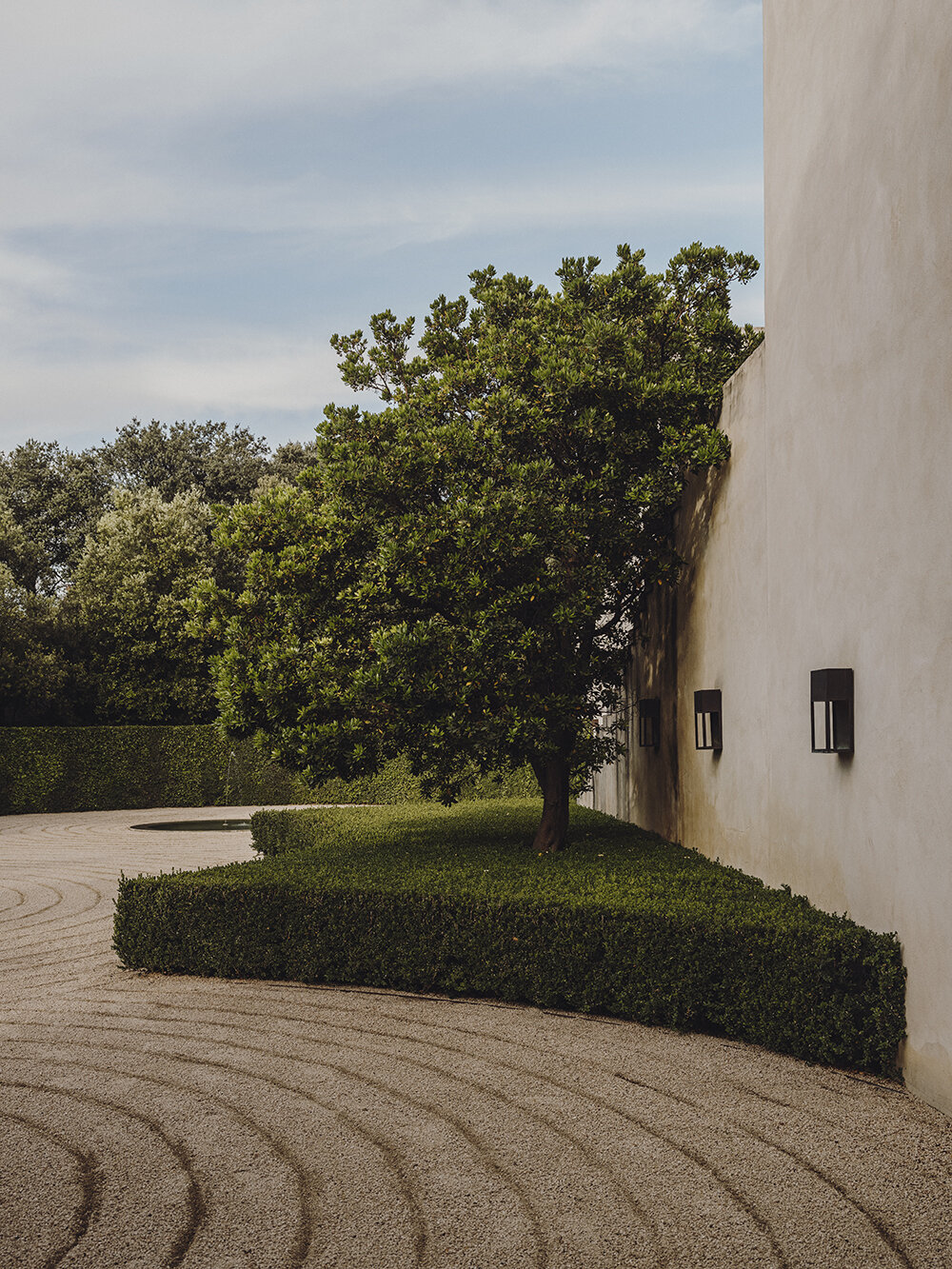
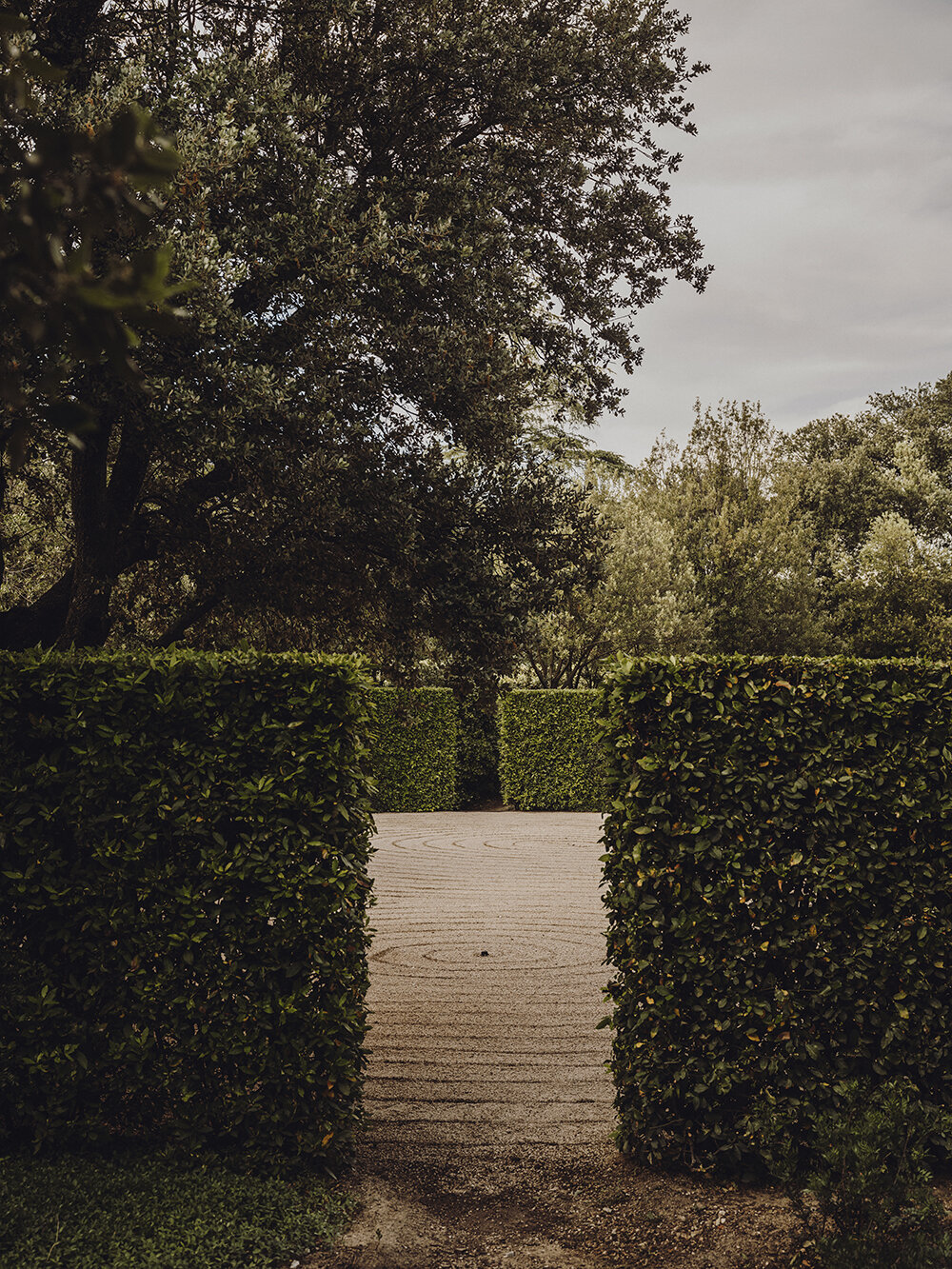
As I walk, I heed the spherical pattern traced on the ground, my mind is engrossed in circular trains of thought... I feel as if I am floating, walking on the ripples caused by an imaginary pebble as it drops into the pond... right in the middle of the circumference.
“All places possess some kind of beauty. There’s no-where in the world without beauty, because their excellence resides in light.”
The person who launched the pebble is Fernando Caruncho, interpreter of a language conveyed through light and nature, expressed in the form of a garden. However, this is not the only way that Fernando imparts its message. Today, on our visit to his studio, there is a magnetic rhythm to Fernando’s conversation that guides us in discovering what underlies that notion commonly known as a landscape or–what is tantamount to the same– what underlies what we call life.
In this little corner of the world on the outskirts of Madrid, there are no shortcuts to the course of events. Time follows its natural order and the passage of time is awarded an almost religious respect. Gardening is based on this same respect. Fernando’s studio has specialized in sparking off dialogue between landscape gardening (in the sense of creating gardens conceived to accompany and enhance architecture) and this last discipline for over forty years.
Lulled by the unusual tempo of Caruncho’s words, we converse with him about the divine, the human and a combination of both. For this creator, one is meaningless without the other. His background in philosophy–whose studies he completed before turning to the world of gardening–exerts a strong influence on his vision of the world. His gentle tones and unhurried pace lend a credibility to words that have a transformational capacity. «Gardens are a question of faith, where desire plays a key role. I believe in love as a universal force. It’s that unfamiliar force that gives us our balance in this chaotic universe.»
Fernando spent part of his childhood in Ronda, Malaga, where his parents had an apartment. «At the end of the tree- lined avenue, La Alameda del Tajo, I would cling onto the railings of a vantage point hovering above a 200-metre drop and gaze at the landscape that stretched out before me», he recalls. «Maybe that was the origin of my passion. Ronda is a place where one feels closely in tune with the landscape.»
“Gardens are like all living things. They are created and they grow, mature and die in a cyclical process. I feel as if I’ve died on many occasions. By dying, I give rise to a new Fernando, whose existence would not be possible without the preceding one.”
Like the conductor of an orchestra, Fernando orders his words organically and guides us along the pathways of a philosophy that is not new but which is so rare that it seems contemporary: «The speed of today’s life trivializes events. We are always waiting for the next thing to occur and so instead of being enriched by experiences, they burn us up.» He explains that a garden’s creation, growth and development form part of that process of enrichment. «A garden takes time to reach its peak and patience is needed until that moment. Gardens are not for people who are in a hurry, but for those who understand that life is a marvellous process, filled with mystery closely tied in with nature.»
One key aspect of gardens is their sense of movement. «It’s marvellous to see how the features that generate the most movement are actually the totally static ones driven into the ground.» This interplay with reflections and surface absorbed light waves originated in the Mediterranean: «It’s an ancient method. Controlling light, empty spaces and volumes. If you can achieve that with architecture, the space is transformed into a concept. This is the case with all Mediterranean architecture. It’s totally conceptual.»

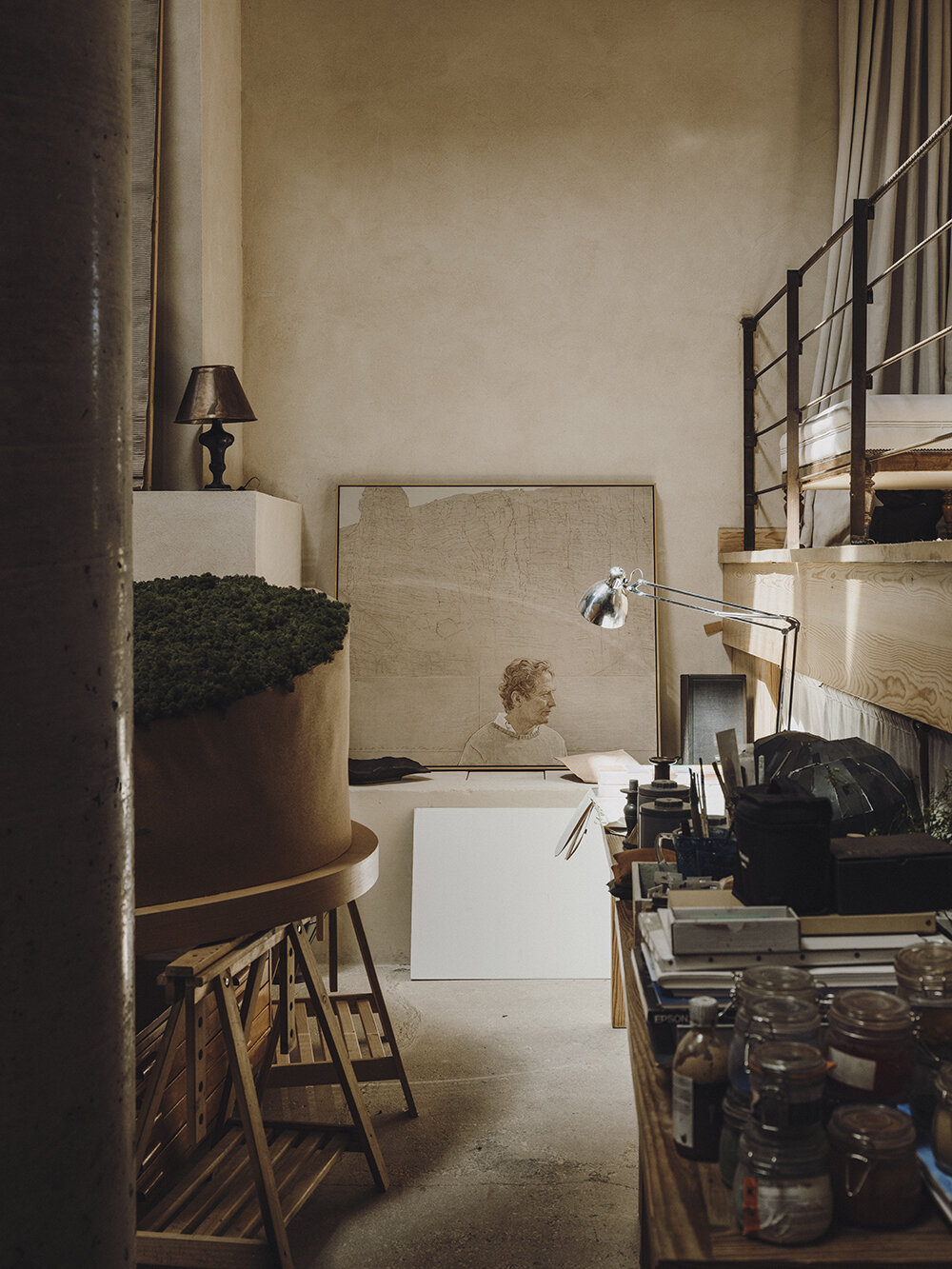
The studio we are in is a good example of this method. It is simple and welcoming, and yet brimming with originality and stylish sobriety, epitomized, above all, by the ever-present light. «A few days ago, my friend Axel remarked that what he likes most about this place is its sense of emptiness. I think he’s right. If there’s something special about it–because basically it’s just a cube with a hole on top– it’s that feeling of emptiness.»
When he embarks on a new project, the starting point is clear: «All places possess some kind of beauty. There’s no-where in the world without beauty, because their excellence resides in light.» Fernando’s work begins when the spirit of that light is expressed. Then he listens to the place and tries to reproduce the message that it conveys to him. «We don’t plan a place. We let it shape our minds through a process of observation where there’s no room for bias.» He sums it all up by saying that in architecture and gardens, «We must summon the spirit of the place.»
The words of this great thinker are guided by the spirit of generosity and he expresses his ideas with keen sincerity. «Gardens are like all living things. They are created and they grow, mature and die in a cyclical process. I feel as if I’ve died on many occasions. By dying, I give rise to a new Fernando, whose existence would not be possible without the preceding one, although this one is different from before.» When we bid farewell to each other at the end of the day, we are no longer the same people because Fernando has taught us a major lesson in life.
LA PIEDRA SOBRE EL ESTANQUE CIRCULAR
FERNANDO CARUNCHO
-
Entrevista a Fernando Caruncho en su estudio, Madrid.
-
Openhouse magazine
Issue Nº12 -
Fotografiado por Salva López
salvalopez.comCaruncho Garden & Architecture
web.fernandocaruncho.com -
FERNANDO CARUNCHO
“Todo lugar posee su belleza. No hay un sólo espacio en la tierra sin ella porque es en la luz donde reside su excelencia”
Mientras camino respetando las líneas esféricas dibujadas sobre el terreno, mi mente se sumerge en un pensamiento circular. Me siento flotar como si caminara sobre las ondas que una imaginaria piedra hubiera provocado al caer en el estanque situado en el centro de la circunferencia. Quien lanza el guijarro es Fernando Caruncho, un intérprete del lenguaje hablado entre luz y naturaleza cuya forma de expresión es el jardín. Aunque decir que ésta es la única forma en la que Fernando traslada su mensaje, sería injusto. Su conversación parece conocer un compás magnético que, durante nuestra estancia en su taller, nos lleva de la mano a descubrir qué se esconde detrás de aquello que llamamos paisaje, o lo que es lo mismo, de lo que llamamos vida.
En este pequeño rincón del mundo situado a las afueras de Madrid, no existen atajos en el devenir de los acontecimientos. El tiempo discurre según su orden natural y el respeto que se profesa a ese lapso temporal se eleva a categoría de credo. La jardinería basa su desarrollo en dicho respeto. Definido como el arte de crear jardines que acompañan y ensalzan la arquitectura, el estudio de Fernando trabaja el diálogo entre estas dos disciplinas desde hace más de cuarenta años.
Mecidos por el inusitado ritmo que acompasa las palabras de Caruncho, conversamos con él acerca de lo divino, de lo humano y de la combinación de ambos. Para este creador, lo uno no tiene sentido sin lo otro. Los estudios de filosofía —que completó antes de sumergirse en el mundo de la jardinería— mantienen una gran influencia en su manera de entender el mundo. Su tono suave y su tempo calmado aportan consistencia a un discurso que resulta transformador. «El jardín es una cuestión de fé donde el deseo es una palabra clave. El amor como fuerza del universo es algo en lo que creo. Es esa fuerza que desconocemos y que hace que estemos de forma equilibrada en este caótico universo».
Parte de su infancia la pasó en Ronda, Málaga, donde sus padres tenían un apartamento. «Allí, al final del camino arbolado de La Alameda del Tajo, me agarraba a los barrotes de la balconada situada al borde de un abismo de 200 metros y observaba el paisaje que se extendía ante mí», recuerda. «Quizá en ese lugar sea donde se encuentra la semilla de mi pasión. Ronda es un lugar donde uno se siente muy unido al paisaje».
“Al jardín le pasa como a todo lo vivo. Nace, crece, madura y muere de forma cíclica. Yo siento que he muerto muchas veces. Muero y doy lugar a un nuevo Fernando cuya existencia no es posible sin el anterior pero que ahora es diferente de antes”
Como un director de orquesta, Fernando ordena de forma orgánica las palabras y nos guía por los senderos de un pensamiento que no es nuevo, pero que de inusitado parece moderno: «La rapidez con la que se vive hoy es una banalización de los acontecimientos. Siempre estamos esperando a que llegue lo siguiente, por lo que, en lugar de enriquecernos de la experiencia, vivimos consumidos por ella». El jardín nace, crece y se transforma bajo ese impulso de enriquecimiento, explica. «Un jardín tarda en llegar a su plenitud y se requiere paciencia para verla cuando al fin llega. El jardín no es para gente que tenga prisa sino para quien entiende que la vida es un proceso maravilloso, lleno de misterio al lado de la naturaleza».
Un aspecto esencial de los jardines es la sensación de movimiento. «Es magnífico ver cómo las piezas absolutamente estáticas que uno fija de manera radical a la tierra, son las que más movimiento proyectan». Un juego producido por el reflejo y absorción de las ondas lumínicas sobre la superficie, cuya metodología nació en el Mediterráneo: «Es un código antiquísimo. El control de la luz, el control del vacío y el control del volumen. Si en arquitectura consigues eso, el espacio se convierte en un concepto. Eso es lo que ocurre con toda la arquitectura del Mediterráneo, que es absolutamente conceptual».
El estudio en el que nos encontramos da buena cuenta de dicho método. Tan sencillo como cálido, el espacio rezuma excepcionalidad y una elegante austeridad cuya máxima expresión es la sempiterna luz. «Precisamente mi amigo Axel me comentó hace unos días que lo que más le gusta de este sitio es el sentido del vacío. Y yo creo que es verdad. Si algo tiene, porque no es más que un cubo con un agujero arriba, es esa percepción del vacío».
A la hora de enfrentarse a un nuevo proyecto, la idea de la que parte es clara: «Todo lugar posee su belleza. No hay un sólo espacio en la tierra sin ella porque es en la luz donde reside su excelencia». El trabajo de Fernando comienza cuando ese espíritu luminoso se expresa. Entonces, éste escucha al espacio y trata de reproducir el mensaje que éste le hace llegar. «No proyectamos el lugar sino que dejamos que éste se proyecte sobre nosotros. Se trata de un acto de observación en el que no caben los prejuicios». Tanto en la arquitectura como en los jardines, resume finalmente, «lo que uno debe hacer es convocar al espacio».
Gran pensador, la generosidad guía las palabras de Fernando, quien las formula de un modo intenso y sincero. «Al jardín le pasa como a todo lo vivo. Nace, crece, madura y muere de forma cíclica. Yo siento que he muerto muchas veces. Muero y doy lugar a un nuevo Fernando cuya existencia no es posible sin el anterior pero que ahora es diferente de antes».

A Keen Photographic Eye
JOANA
BIARNÉS
You can tell from her undeniable charisma, amazing vitality, courage and brilliant sense of humour how she managed to hold her own among her male peers and how -despite ups and downs- she’s never lost her pugnaciously feisty spirit.
-
Interview to the first women photojournalist in Spain, Joana Biarnés.
-
Openhouse magazine
Issue Nº9 -
Archive photos courtesy of
Joana BiarnésPortrait by Lander Larrañaga
landerlarranaga.com -
JOANA BIARNÉS
Truly great people tend to stand out for their humility, at least that is the case of Joana Biarnés, Spain’s first female photojournalist. You can tell from her undeniable charisma, amazing vitality, courage and brilliant sense of humour how she managed to hold her own among her male peers and how -despite ups and downs- she’s never lost her pugnaciously feisty spirit. That spirit has remained intact or may actually have grown since she first decided to hang a camera around her neck and go out into the world to photograph it.
Juanita (as her colleagues call her) wanted to get on with her work as a photojournalist just like any other of her peers, but as she strove along the way to demonstrate her passion for photography and talent for the job, she actually became one of the pioneers of the early 60s struggle for sexual equality.
Joana is a strong-spirited woman who has had several passions in her life. The first one was photojournalism: a profession she was drawn to by her father, a sports photographer himself, whom she assisted in his laboratory since she was a child. His wisdom and integrity inspired Joana to try her hand at her own photographic reports and to embark on a career where she would compete with male rivals with full dedication albeit the undeniable uneven footing. “Photojournalism has to be in your blood. It can get you into trouble or take over your life on occasions, so you have to love it. For me, it’s been like living with someone whose defects you forgive,” she explains.
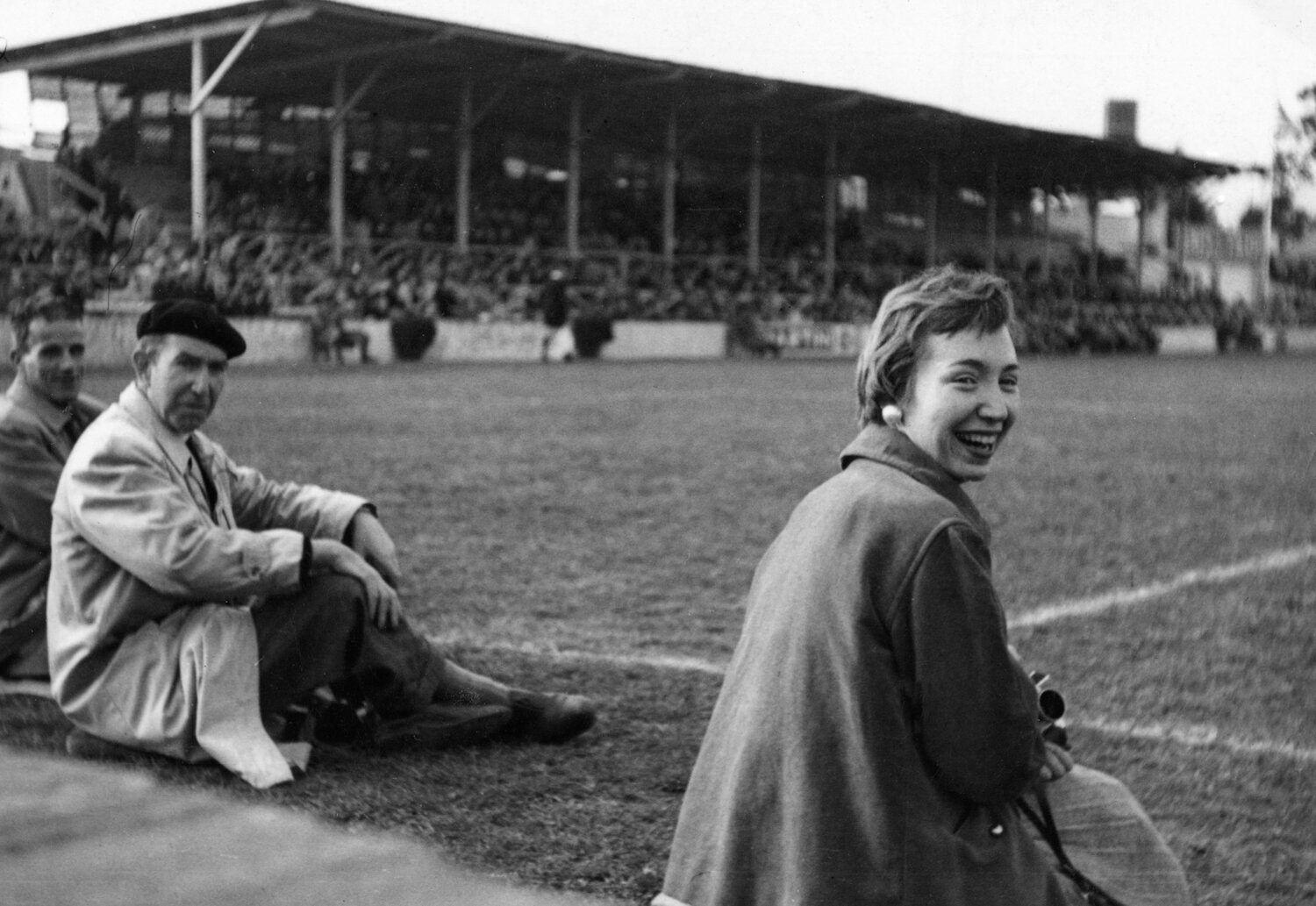
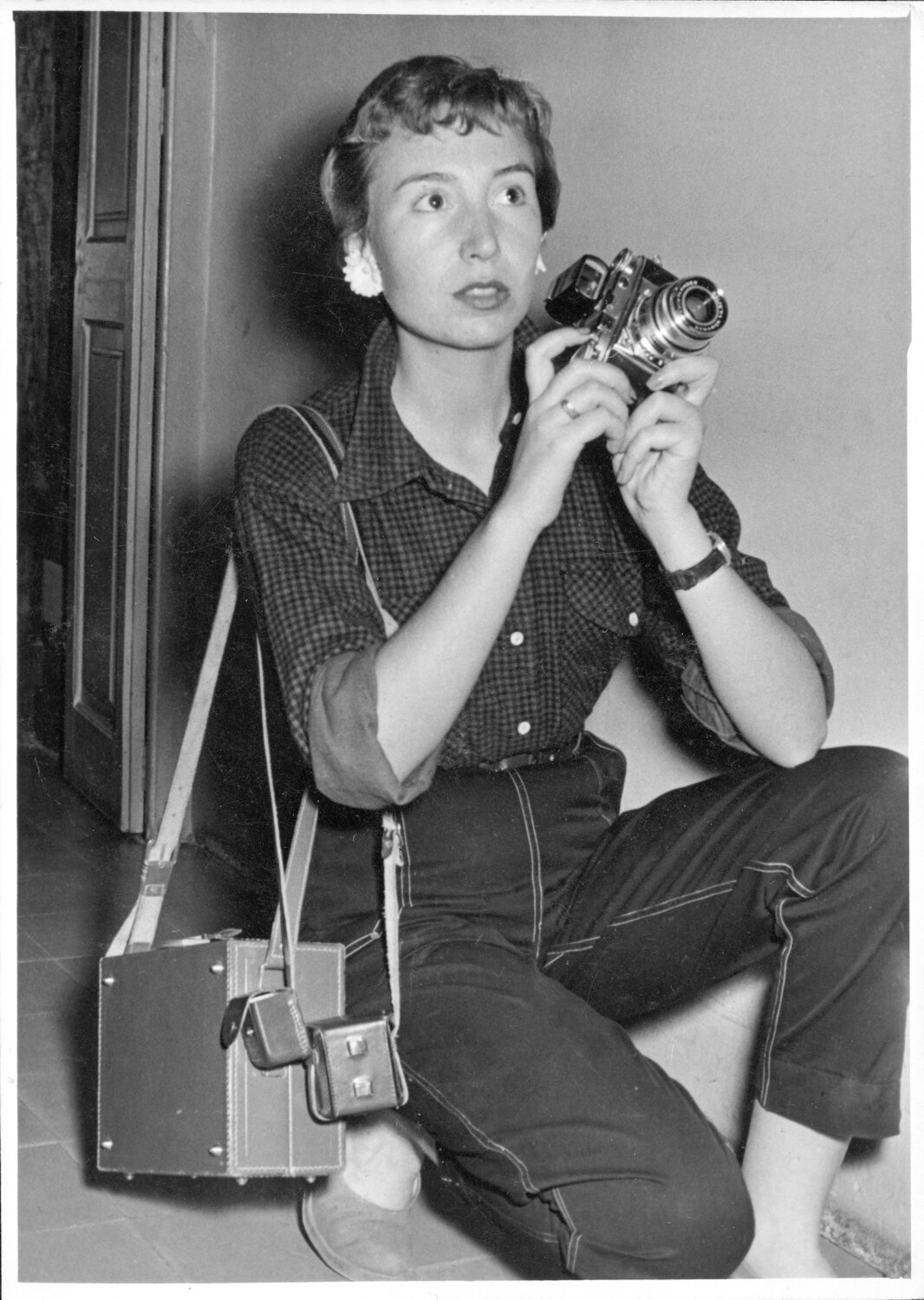
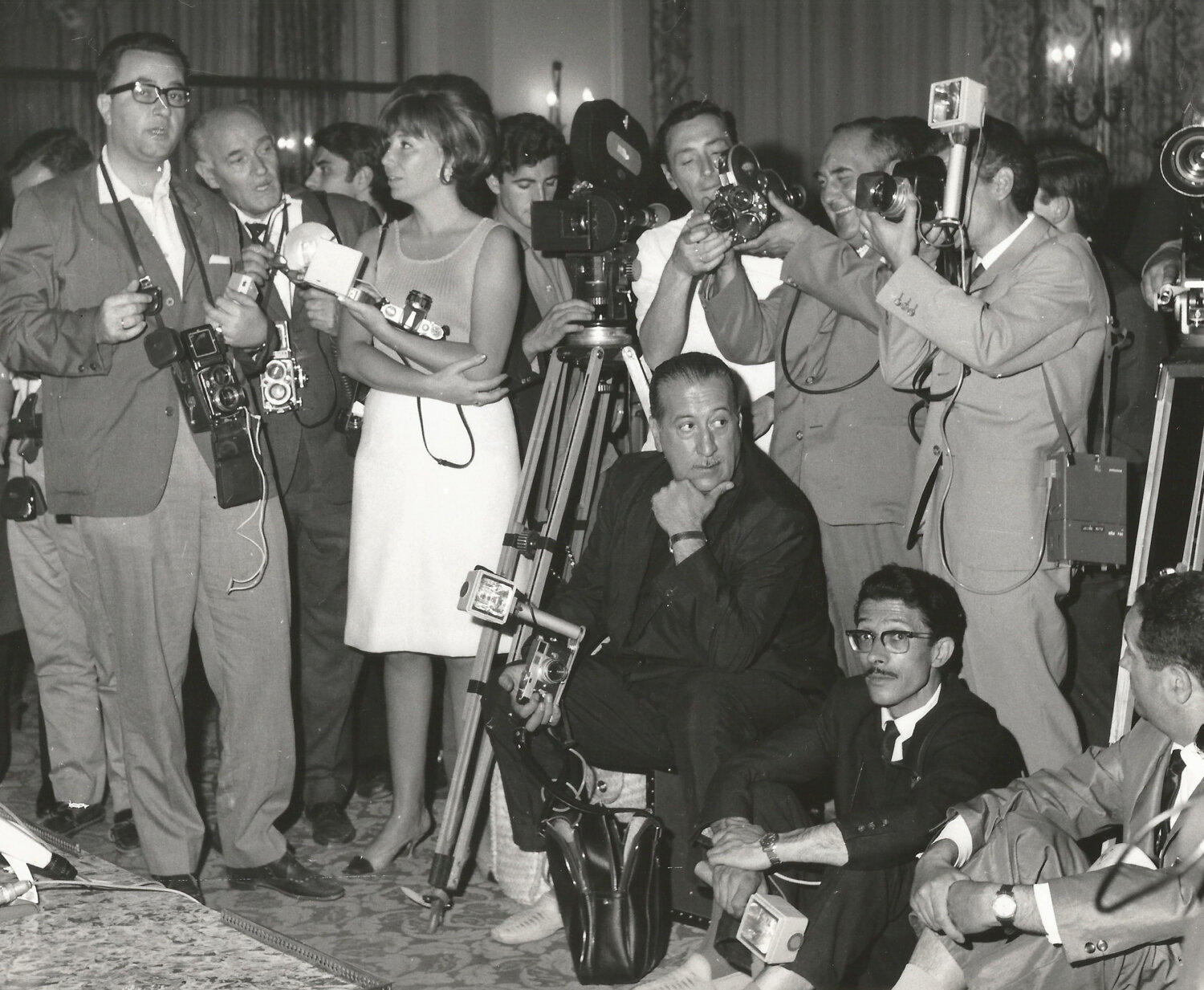
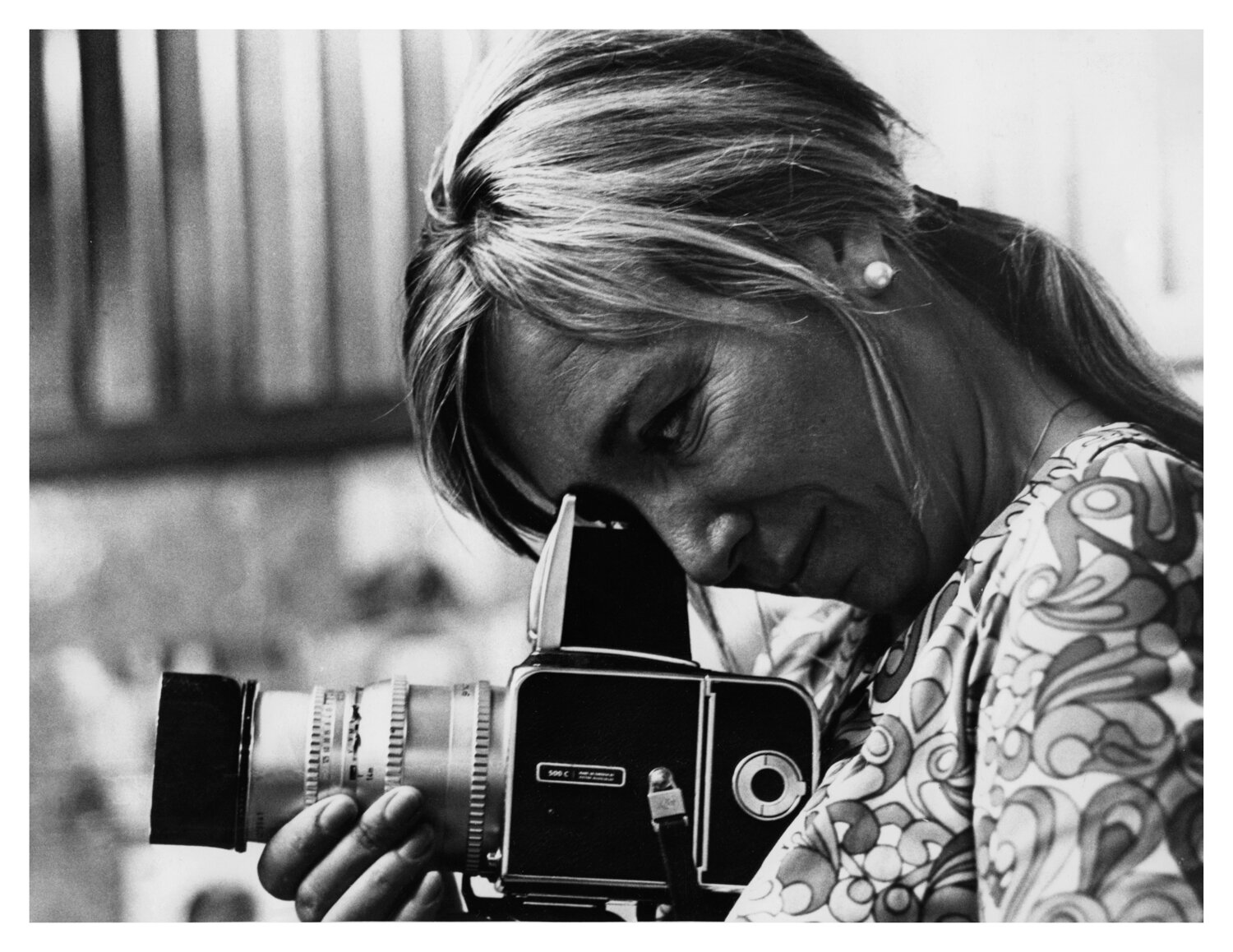
“Photojournalism has to be in your blood. It can get you into trouble or take over your life on occasions, so you have to love it. For me, it’s been like living with someone whose defects you forgive”
If she had to find one word to describe what she came up against in the early years of her career, it would be incomprehension: “A hell of a lot of it! Mainly coming from men who didn’t like the idea of a woman photographing them but also from the government. There was harassment. Not sexual but gender-related harassment because I was both a woman and a photographer,” she says. “The police would systematically throw me out of all official buildings only because I was a woman, even though I had credentials. That’s a huge jolt!” she adds, offended. When talking about her job, Joana always made a point in using the masculine word ‘fotógrafo’ in Spanish (photographer) as opposed to the feminine ‘fotógrafa’. “It would have been a concession to say ‘fotógrafa’: I was one of the boys -but in skirt and heels!”.
Her father always encouraged her to try to capture ‘the photo of all photos’: that one and only photo that is key to stand out from the crowd. Keeping that idea in mind, while she was assisting once in a press conference given by The Beatles in Madrid in 1965, Joana managed to sneak into the hotel where the band was staying. She spent three hours chatting with them, pointing her camera and firing away. “I think they didn’t believe I was a photographer. I guess they thought I was just a groupie who’d made it all up about being a photojournalist”. The newspaper she was working for by then, Pueblo, wasn’t interested in her report on the Liverpool lads so she ended up giving it away to another publication. She never got paid for that world exclusive set of photos but she rose in status. She became famous Spanish singer Raphael’s official photographer and travelled around half the world photographing him while also publishing numerous society reports of her own where she captured major celebrities from that time such as Lola Flores, Sara Montiel, Orson Welles, Joan Manuel Serrat or Audrey Hepburn.
In the early 80s, when sensationalism took over the pages of newspapers to the detriment of real journalism, her passion for photojournalism ended in disillusion and her career stopped when she turned 50. She left the profession, sold all her cameras and moved to Ibiza where she had a house. There, she would constantly be visited by friends, lured by her flair and talent for cooking. She realized she could turn this other passion of hers into a new career. Her husband Jean Michel Bamberger supported her idea and together they transferred her talents into “Cana Joana”, a restaurant where Jean Michel waited the tables while Joanna would be in charge of the kitchen. “The restaurant we created was a huge success in an Ibiza that was marvellous back then”.
“The police would systematically throw me out of all official buildings only because I was a woman, even though I had credentials. That’s a huge jolt!”
She devoted herself to her new trade for twenty-two years, never taking photographs of all of the famous people who visited Cana Joana, like Roman Polanski or Juan María Arzak. Nonetheless, she has an endless list of anecdotes just like that day when Naomi Campbell came for dinner. “The second time she came in, Jean Michel got her a table at the back. That way the clients could see her every time they would go to the toilets! She was wearing a miniscule miniskirt and a belt with a huge buckle and she walked like a gazelle. You should’ve seen the diners’ faces! For a second, there was total silence, everyone stopped eating!”.
But in 2011, Joana was unexpectedly reunited with photography -her true passion in life- thanks to her first piece of photographic work published back in 1962: a report about major floods in Terrassa, the city where she was born on the Spanish coast. Journalist Cristóbal Castro was preparing an exhibition to mark the 50th anniversary of that tragedy and he contacted her to see what kind of material she had. When Castro discovered her amazing original archives, Joana was actually on the verge of destroying them all, convinced no one would ever find any value to them.
Cristóbal Castro helped Joana to resuscitate, not only as Spain’s first female photojournalist but also as a photographer with a remarkable eye. Despite the odds, Joana has no regrets for having had to giving it all up back then. “I’d do it all again though because time has shown that it was worth it. And now out of the blue, I’m reaping the rewards!”. Now 83 years old, Joana has several projects in the pipeline, her camera slung round her neck again and the same avid enthusiasm that always characterized her. If her eyesight might be weaker today, she has not lost her keen photographic eye because, in her own words, “my shots are always coming from the heart”.